
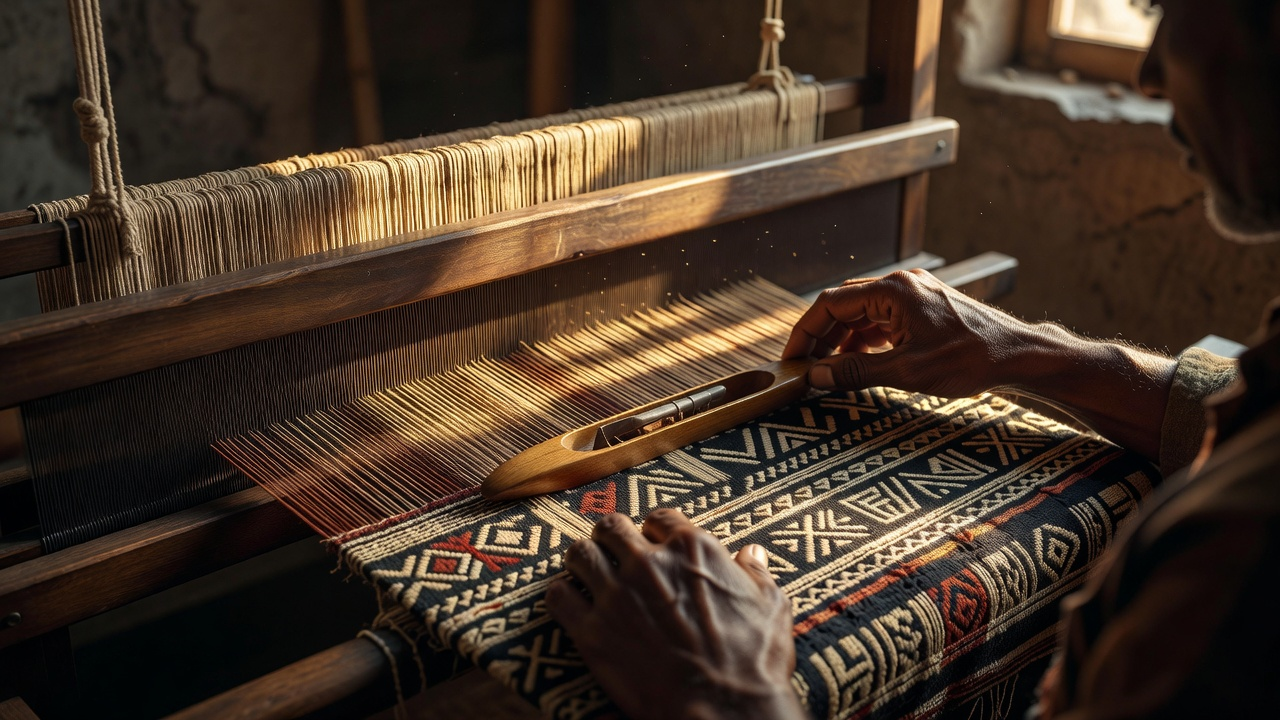
Culture as Loom: Weaving Symbolic Anthropology, Thick Description, and Material Culture into Everyday Meaning
Picture a bustling Moroccan souk, where the air hums with haggling voices, the flash of silver jewelry, and the scent of saffron mingling with leather. Is this just a marketplace, a list of exotic trades and colorful stalls? Or is it a living tapestry, threads of meaning pulled tight by gestures, glances, and unspoken rules that bind strangers into temporary allies and rivals? Culture, in the lens of symbolic anthropology, is no static catalog of traits. It's an ongoing making, a loom where symbols, objects, and actions weave the fabric of everyday life. This is culture and meaning in motion—not a museum exhibit, but the pulse of human existence.
Forget the outdated view of culture as a bounded checklist: kimonos in Japan, spicy curries in India, polite queues in Britain. Such snapshots flatten the dynamism. Instead, enter everyday anthropology, where Clifford Geertz's thick description invites us to peel back layers, revealing not just what people do, but why it matters to them. Here, we explore how material culture anchors these webs, turning pots, paths, and plazas into carriers of collective wisdom. For students of existence tired of stereotypes, this article unravels the loom, showing culture as a verb, a verb of profound making.
From Trait Lists to Thick Description
Anthropology's journey began in the 19th century with grand, evolutionary schemes. Edward Tylor defined culture in 1871 as "that complex whole which includes knowledge, belief, art, morals, law, custom, and any other capabilities and habits acquired by man as a member of society." It was a trait list, a inventory for comparing "primitive" to "civilized" societies—a pathway now critiqued for its hierarchical biases.
The early 20th century shifted to functionalism. Bronisław Malinowski, on the Trobriand Islands, saw culture as needs met: yams for food security, kula exchange for social bonds. Useful, but still mechanical. Then came the interpretive turn in the mid-20th century, catalyzed by symbolic anthropologists like Victor Turner and Clifford Geertz. Geertz, in his 1973 book The Interpretation of Cultures, championed thick description—a term borrowed from philosopher Gilbert Ryle. Thin description notes a wink; thick description unpacks whether it's a twitch, a parody, a signal in a conspiracy of conspirators.
Geertz's famous example? The Balinese cockfight. Outsiders see bloodsport; locals see status dramas, family honor, village politics encoded in bets and birds. This shift—from dissecting functions to interpreting meanings—marks symbolic anthropology's core. It treats culture as a system of symbols, publicly acted out, where culture and meaning emerge from shared interpretation. No more evolutionist ladders; instead, a mosaic of unique weaves.
Symbols That Do Work
Symbols aren't passive billboards representing ideas; they do work. In symbolic anthropology, they organize experience, mediate conflicts, build communities. Think of weaving itself, our guiding metaphor. In Navajo traditions, rugs aren't mere textiles. The loom's rhythmic click-click embodies harmony, the patterns—zigzags of lightning, diamonds of mountains—encode cosmology. Weaving women pass down not just techniques, but stories of creation, balance between chaos and order.
Food rituals thread similar magic. A Thanksgiving turkey in the U.S. isn't poultry; it's abundance incarnate, family reunion after migrations, a bulwark against autumn's scarcity. The carving knife slices not meat, but narratives of Pilgrim-Pilgrim encounters, contested histories now layered with gratitude. Contrast Japan's New Year's osechi: boxed delicacies symbolizing longevity (black seaweed), prosperity (lotus root). Eating performs renewal, each bite reinforcing cyclical time over linear progress.
Greetings seal the deal. A firm American handshake asserts equality, contracts futures in a single grip. In Thailand, the wai—palms pressed, bow slight—honors hierarchy, elder to junior, diffusing tension with deference. These aren't arbitrary; they lubricate social machinery, turning potential friction into flow. Everyday anthropology reveals such symbols everywhere: the coffee break chat weaving workplace alliances, the emoji heart fortifying digital bonds. Symbols work tirelessly, shaping reality as we live it.
This connects to the Pattern Room in Aetheria's doors, where recurring symbols across cultures—like spirals for life cycles or thresholds for transitions—reveal universal threads amid local dyes.
Material and Ecological Threads
Enter material culture, the tangible warp and weft. Objects aren't inert; they pulse with intent. Archaeologist Ian Hodder's work at Çatalhöyük shows plastered skulls not as trophies, but memory anchors, faces revisited in domestic rites. Today, material anthropology—via Arjun Appadurai's "social life of things"—tracks commodities' journeys: a fair-trade coffee bean carries ethics from Ethiopian farms to Seattle mugs, weaving global inequalities into morning sips.
Environments, too, encode knowledge. Tim Ingold speaks of wayfaring: Inuit snow houses (igloos) aren't shelters; they're meshes of wind, snow, breath—ecological attunement. Australian Aboriginal songlines map country via stories sung over land, stars as mnemonic aids. These material culture threads link body to biosphere, past to present. Urban parks become green lungs, breathing resilience into concrete sprawl.
Bridge to Sacred Places: ordinary spaces sacralize through repeated acts— a kitchen altar thick with incense, a park bench etched with lovers' initials, turning locale into locus of meaning.
Difference Without Hierarchy
Pathways of Weaving, Not Rungs of Progress
Cultures differ wildly in their looms, yet no pathway ranks higher. Western individualism weaves self-actualization: résumés as life stories, selfies curating identity. Collectivist Japan threads group harmony (wa): business cards exchanged with ritual care, consensus over solo glory. Both functional, context-bound.
African Ubuntu philosophy posits "I am because we are," relational webs trumping isolated egos. Indigenous Andean reciprocity (ayni) cycles gifts through communities, echoing ecological balance. Variation abounds: hunter-gatherers like the Hadza emphasize immediate sharing; agrarian societies layer inheritance. Present-day authority? Neuroanthropology shows brains plastic, attuned to cultural grooves—proving difference as adaptive richness, not deficit.
Link to The First Laws: norms emerge not imposed, but woven from these differences—taboos on eye contact in some places foster respect; prolonged gazes elsewhere signal trust.
Reading Culture Responsibly
How to interpret without colonizing? Distinguish emic (insider's view: Balinese see cockfights as existential theater) from etic (outsider's grid: economists tally bets). Thick description demands humility: suspend judgment, layer contexts. Kenneth Pike coined emic/etic; Geertz wielded it to urge "experience-near" concepts over imposed universals.
Today, decolonial anthropology amplifies voices: indigenous scholars like Vine Deloria Jr. critique outsider gaze. Practice everyday anthropology ethically—observe your commute: traffic lights as synchronized obedience, horns as impatient poetry. Avoid stereotypes; seek polyvocality.
Weaving Your Own Thread
Culture's loom invites participation. Journal this: pick one everyday practice—your morning coffee ritual, the family dinner dance. Apply thick description. What symbols flicker? Which materials anchor it? How does it weave you into larger meanings? In noticing, you unravel stereotypes, reclaiming culture and meaning as intimate craft. The fabric awaits your hand.