
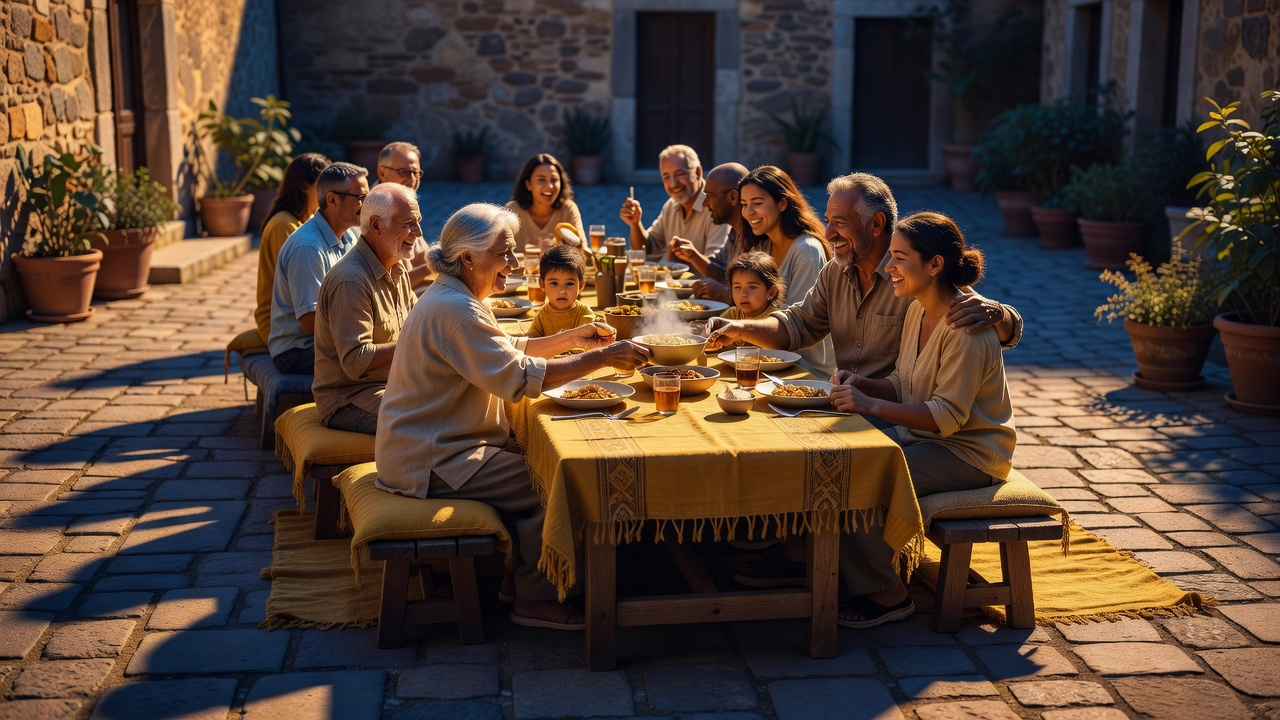
Kinship Beyond Blood: Anthropology's Take on Adoption, Households, and Chosen Families
Picture a vast savanna where a boy, orphaned by conflict, finds not just shelter but a new lineage etched into his name. Among the Nuer of South Sudan, this isn't tragedy's footnote—it's kinship in action, a deliberate weave of social bonds overriding biology. What if your family wasn't forged in the womb but in the hearth, the ritual, the choice? Anthropology kinship reveals belonging as a cultural craft, not a genetic given. For seekers charting how cultures organize belonging, this lens shatters blood's monopoly, unveiling household membership, adoption kinship, and fluid kinship systems that pulse through human history.
Redefining Kinship: A Social Practice, Not Just Biology
Anthropologists long ago ditched the blood-is-thicker myth. Kinship emerges from shared practices—nurturing, inheritance, rituals—not DNA alone. In anthropology kinship, descent traces biological or fictive ancestry, but true ties hinge on recognition. A child born in one hut might claim allegiance to another through naming ceremonies or economic pacts. This distinction frees us: households swell with aunts-by-rite, uncles-by-oath, siblings-by-fosterage.
Consider the pivot. Biological ancestry maps genes; household membership maps daily life—who cooks the stew, guards the herd, sings the lullabies. Adoption kinship formalizes this shift, folding outsiders into core lines. Fosterage, often temporary, circulates kids for alliances or skills. Chosen kin? That's the wildcard: friends elevated to family via covenants, echoing ancient rites in today's tattoos and vows.
Untangling the Threads: Biological, Household, Adoption, and Beyond
Drill down. Biological kin link via procreation—mother's milk, father's seed. Yet household membership defies this: migrants bunk with strangers, becoming co-parents overnight. In agrarian pockets, coresidents till fields as kin, blood be damned.
Adoption Kinship: Claiming the Lineage
Adoption isn't Western paperwork; it's global alchemy. It grafts strangers into descent groups, securing posterity. Fosterage lightens loads—rural parents send kids to urban kin for schooling, forging ties that outlast stays.
Chosen Kin: The Intentional Bond
Here, agency reigns. Comrades in crisis become kin through shared trials, mirroring tribal initiations. Anthropology spots these in urban diasporas, where biology fades but loyalty endures.
Kinship Systems Among the Nuer: A Living Mosaic
Turn to the Nuer of South Sudan, where anthropologist E.E. Evans-Pritchard mapped kinship systems in the 1930s-40s, patterns persisting amid modernity and strife. Segmentary lineages dominate: patrilineal clans fission into subclans, united against foes, feuding internally. Diversity thrives—pastoralists clash with settled farmers, yet kinship bridges divides.
Adoption kinship shines in "ghost marriage," where a widow bears for her dead husband's spirit, or a lineage adopts a boy to perpetuate a name. Household membership flexes: boys herd with uncles' sons, girls foster in allied homes. Evans-Pritchard noted a man claiming an outsider's child as his own, ritually speared to mark the bond. Today, amid displacement camps, Nuer weave refugees into folds, language sealing deals—"rwac" for lineage mates, extended to adoptees. No folklore here: these are adaptive strategies in a living world, blending tradition with turmoil.
- Biological ancestry: Tracks patrilines via cattle names.
- Household membership: Fluid camps of herders and wives.
- Adoption kinship: Lineage grafts via ritual.
- Fosterage: Circulating youth for balance.
Why Words Forge Worlds: Language in Kinship
Terms aren't labels—they're blueprints. Nuer "dom" means household head, blurring bio and social. In English, "cousin" muddies degrees; Japanese "oyako" nests parents-children tightly. Anthropology kinship insists: map local lexicons to grasp systems. Mislabel, and you miss the map.
Chosen Families Today: Anthropology's Echo
Urban nomads craft chosen kin from roommates, mentors, lovers—kinship systems reborn. Anthropology traces roots to Polynesian "fakaleiti" networks or African compadrazgo godparenting. Link this to our History Door for ancient precedents, or Family Door for personal lineages.
Chart Your Own: Kin Terms vs. Household Roles
Pause. List your household—who shares the fridge? Now, kin terms: who merits "sister," biology aside? Overlay: where do roles diverge? This exercise unveils your kinship system, inviting curiosity over assumption.
Kinship isn't inherited—it's inhabited, a daily devotion beyond blood's whisper.
Anthropology kinship beckons: explore, redefine, belong. In Nuer savannas or your street, families form where hearts align. What threads bind you?