
Language and Identity: How Dialects Signal Belonging, Boundaries, and Sociolinguistic Power
Imagine a young woman from the Appalachian hills stepping into a bustling city job interview. Her words rise and fall with the melodic drawl of her home, "y'all" slipping out like a familiar embrace. The panel shifts uncomfortably. In that moment, her dialect—a badge of belonging in her speech community—becomes a boundary, marking her as outsider. This is the quiet power of language and identity: dialects don't just convey meaning; they whisper who we are, who we claim, and who claims us back.
In sociolinguistics, we see how speakers wield variation like a social compass. A rising intonation here signals solidarity; a dropped 'g' there draws lines of inclusion or exclusion. These aren't random quirks but tools for navigating belonging and boundaries, shaped by speech communities where shared norms bind people together.
Speech Communities: The Invisible Threads of Dialect and Belonging
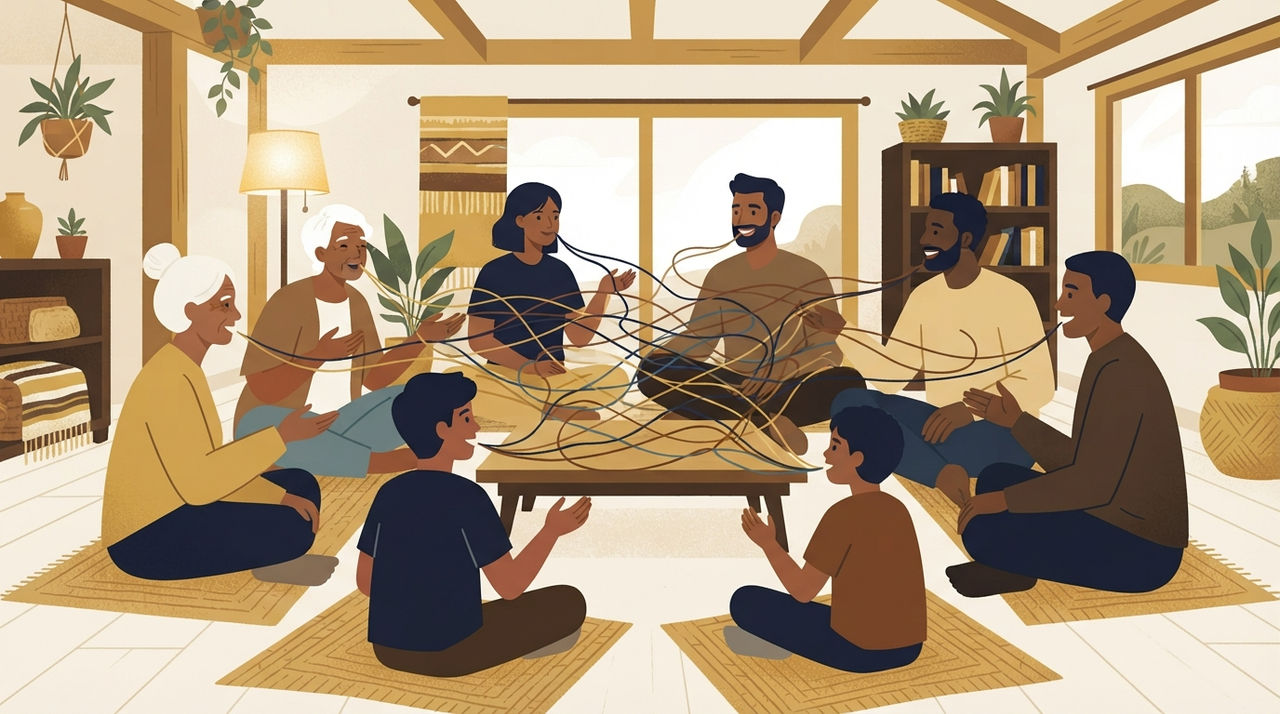
A speech community isn't a map on a wall but a living network of speakers who share linguistic features and attitudes toward them. Think of it as a family recipe passed down—not uniform, but recognizable. Within these groups, dialects emerge as hallmarks of identity, signaling stance on everything from local pride to global aspirations.
Dialects thrive on variation: lexical choices like "pop" versus "soda," grammatical twists such as double modals in Appalachian English ("might could go"), or phonetic shifts in African American Vernacular English (AAVE) like habitual "be" ("she be working," meaning ongoing action). These aren't errors; they're precise tools for expressing nuance, distinguishing folk stereotypes from linguistic evidence.
Dialects in Action: Voices from Appalachia to the Andes
Appalachian English and AAVE: Roots of Resilience
In Appalachia, speakers draw on Scots-Irish heritage with phrases like "fixin' to," forging bonds across hollers. Yet schools and media often frame it as "backward," ignoring its grammatical sophistication. Similarly, AAVE's complex aspect system—copula deletion, zero past tense in narratives—powers hip-hop and literature, but language attitudes in workplaces label it "unprofessional." Community authority pushes back, reclaiming these dialects as cultural capital.
Quechua in the Andes and Sign Languages Worldwide
High in the Andes, Quechua speakers code-switch with Spanish, using evidential markers ("I hear-say it's raining") to signal epistemic stance and communal trust. State policies once suppressed it, but revitalization efforts restore its role in identity. Sign languages, like American Sign Language (ASL), form vibrant speech communities too—visual dialects varying by region, with non-manual markers flashing belonging or boundary, defying auditory biases.
Language Attitudes, Institutions, and Sociolinguistic Power
Language attitudes—our gut reactions to dialects—wield real power. Prestige varieties dominate media and schools, gating access to jobs and education. Yet speakers resist: multilingual repertoires let them shift registers, from formal standard to intimate vernacular, asserting agency. Present-day communities, via social media and activism, redefine authority, challenging institutional gatekeeping.
Grammar shapes thought not as a tyrant but as a habitual toolkit. Quechua's evidentials encourage speaker accountability, habitual in discourse without dictating cognition—bilinguals toggle freely, countering determinism. No brain scan proves otherwise; evidence lies in fluid use across contexts.
Fluid Identities: Multilingual Repertoires and Beyond
Today's speakers curate repertoires like playlists, blending dialects for stance-taking. This fluidity blurs belonging and boundaries, echoing deeper human ties. Explore more in our Relationships (Belonging and Boundaries) series or trace ancestral echoes in The Ancestors.
Reflect: Your Linguistic Self
Journal prompt: Recall a time your dialect bridged or built a boundary. What words signaled your speech community? How did it feel? What stance did you take?
Language and identity entwine us all. In honoring every dialect's humanity, we dismantle false hierarchies, celebrating the symphony of voices that makes us whole.