
Revitalizing Indigenous Languages: Community-Led Documentation, Consent, and Living Traditions
A Living Pulse in Every Word
Imagine a child in New Zealand's rolling hills, giggling through a pepeha—a traditional Māori introduction that weaves identity from mountain, river, and ancestor. This isn't a relic from a museum; it's 2024, and that scene unfolds in a Kōhanga Reo, one of hundreds of language nests pulsing with life. Indigenous languages aren't fading echoes; they're vibrant systems carried by communities who lead their own language revitalization. For seekers drawn to ethical language documentation, the path forward honors community authority, consent, and the profound difference between recording words and breathing new generations into them.
At Aetheria AI, we explore this as part of understanding living systems—where community linguistics meets human stewardship. It's not about saving tongues on the brink but amplifying traditions that communities actively shape today.
Documentation vs. Revitalization: Two Distinct Paths
Capturing Forms with Care
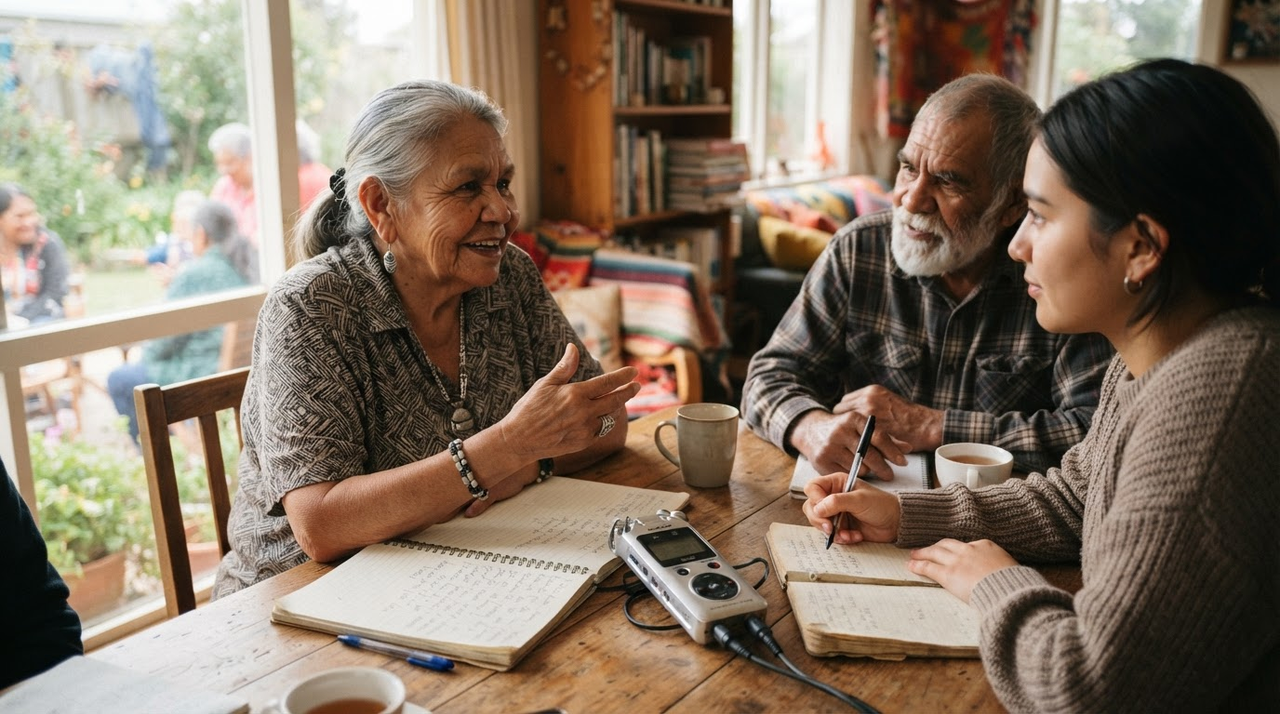
Language documentation records the forms, genres, and nuances of Indigenous languages—stories, songs, protocols—with explicit consent. Think elders sharing oral histories via audio, video, or text, archived under community protocols. It's descriptive, not prescriptive: linguists note grammar and vocabulary, but communities hold interpretive power.
Revitalization: Broadening the Web of Use
Language revitalization, by contrast, expands domains. It's social engineering at its most humane: immersion schools, media, policy shifts fostering intergenerational transmission. Documentation feeds this—recordings become teaching tools—but revitalization thrives in homes, courts, and markets.
Distinguishing these prevents pitfalls. Linguistic description maps structures; community knowledge infuses meaning; external interpretation risks distortion without guidance.
Real-World Vitality: From Kōhanga Reo to Sámi Strongholds
Te Kōhanga Reo o Aotearoa launched in 1982 amid Māori activism, creating pre-school immersion centers. Today, over 800 operate, with graduates fueling kura kaupapa (K-12 schools) and wharekura (high schools). Public access? Through community-led sites like Te Kōhanga Reo National Trust.
Hawaiian Pūnana Leo began in 1984, countering near-loss of 'Ōlelo Hawai'i. Now, a network of immersion schools feeds into K-12 systems, with the 'Aha Pūnana Leo overseeing standards and resources, freely available via their portals.
In Sápmi, across Scandinavia and Russia, revitalization spans nine languages. Institutions like the Sámi University of Applied Sciences in Norway host teacher training and digital archives, with protocols ensuring Sámi control. Chronology matters: post-WWII suppression gave way to 1980s-90s parliaments and media like NRK Sápmi.
- 1982: Māori nests spark global model.
- 1984: Hawaiian immersion rises.
- Ongoing: Sámi media and education expand domains.
These aren't curiosities; they're living languages adapting—podcasts, apps, legislation—all community-driven.
Consent and Sovereignty: The Ethical Core
Ethical language documentation demands consent at every layer: who records, what, how it's used. Data sovereignty means communities decide access—who views recordings, under what protocols. Repositories like the Māori Language Commission or Hawaiian 'Aha Bōwai hold materials, often with restricted tiers.
True partnership flips the script: outsiders serve community goals, not extract data.
Beware reductionism—packaging a language into an app ignores relational depth. Revitalization echoes shared stewardship (environment door) and care systems (health door): land protocols in tongue, healing narratives revitalized.
Humility in the Work Ahead
Uncertainty lingers—success metrics evolve, protocols shift. No savior narratives here; it's ongoing co-creation. As seekers, we approach with humility, recognizing our knowledge gaps.
Next step: Journal this—what does care look like for you entering this space? A visit to a Kōhanga Reo site? Listening protocols for Sámi stories? Let reflection guide ethical engagement with living languages.