
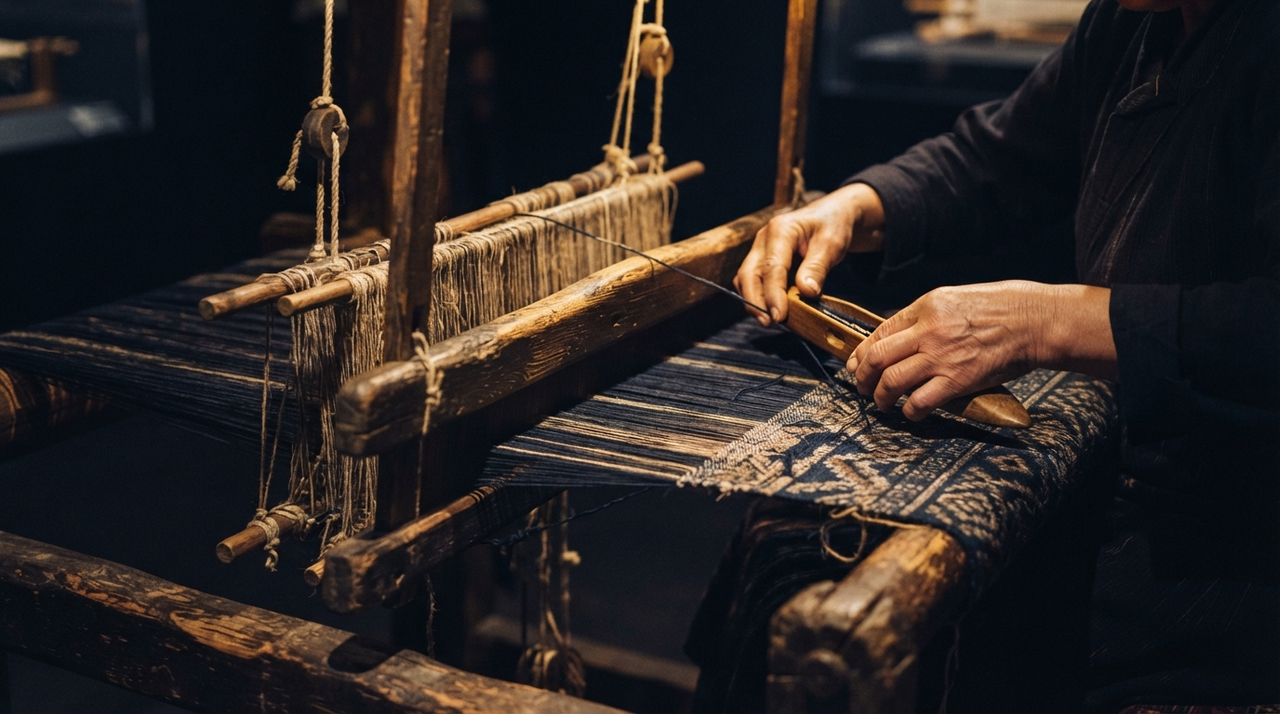
Technology and Power: Ancient Tools Like Adzes and Looms Reveal Authority, Labor, and Material Culture
Welcome, seeker, to the Technology Door of Aetheria: A Cosmic Library of Human Knowledge. Here, amid the hum of ancient workshops and sun-baked fields, we sift through the material culture of tools—not as neutral gadgets marching toward progress, but as charged vessels of technology and power. What if an adze's edge or a loom's warp whispered of hierarchies etched in stone and fiber? In this exploration of ancient technology anthropology, we dissect artifacts, practices, labor, and authority, drawing lessons from distant soils: a Neolithic ground-stone adze from the Levant, an Egyptian New Kingdom warp-weighted loom, and an Andean backstrap loom. Each reveals how tools bind body to institution, labor to control.
The Material Artifact: A Window into Constraint and Craft
A tool begins as artifact, shaped by place and period. Consider the Neolithic ground-stone adze from the Levant, around 8000 BCE. Polished from basalt or limestone, its hafted blade—bound to wood with resin—demanded hours of grinding against river sands. This was no hasty invention; material constraints dictated form. Hard stone resisted hasty shaping, yielding a wedge that cleaved timber with percussive force. Such material culture of tools embeds environment: Levantine flint for edges, olive wood for hafts, all under seasonal rains that swelled rivers for polishing.
Contrast this with looms. The Egyptian New Kingdom warp-weighted loom, circa 1500 BCE, draped vertical warps over a clay-weighted frame in sun-scorched Nile workshops. Linen threads, spun from flax, hung taut against gravity's pull. Far south, the Andean backstrap loom tethered weaver to body, warps tensioned by straps across chest and back, woven from camelid wool amid highland winds. These artifacts weren't abstract; they were stubborn partners, their fibers fraying under humidity, stones chipping in dry heat.
Embodied Practice: How Tools Teach the Body
From Adze Swing to Loom Rhythm
Tools don't just cut or weave; they inscribe technique into flesh. The Levantine adze taught a two-handed overhead swing, shoulders rolling in sync with haft's rebound. Novices blistered palms until muscle memory aligned blow with grain, a loom as technology parallel in the weaver's sway. Egyptian loom workers stood for hours, beating weft with bone shuttles, spines curving to the warp's vertical demand—postures fossilized in tomb reliefs showing bent backs under pharaonic gaze.
Andean backstrap weavers embodied mobility: crouched or reclined, they manipulated heddles with feet or fingers, adapting to terraced fields. Practice here was intimate, tool reshaping body as body reshaped tool—calluses from straps, eyes trained to pattern drafts etched in memory, not paper.
Authority and Artifacts: Who Controls the Workshop?
Power emerges in ownership. Levantine adzes, found in communal sites like 'Ain Ghazal, suggest shared fields where elders controlled quarries, distributing tools as authority and artifacts intertwined. Egyptian looms clustered in state temples, warp-weighted frames owned by divine houses, weavers as corvée labor under overseers' rods—evident in Deir el-Medina records of tool rations.
Andean backstraps democratized access; portable, woven by women in ayllu communities, they evaded central control, slipping through Inka storehouses. Yet even here, elite sumptuary laws dictated motifs, binding artifact to hierarchy.
Tools, then, are not wielded in isolation—they anchor institutional infrastructures, from tribal commons to royal ateliers.
Labor's Shadow: Whose Hands, Whose Yield?
Labor reveals the human cost. Neolithic adzes likely fell to young men in kin groups, clearing forests for barley fields, their sweat fueling village feasts. Egyptian looms conscripted women and captives, producing linen for mummy wrappings and trade—labor extracted, surplus to gods and kings. Andean backstraps empowered female networks, weaving ponchos for reciprocity feasts, yet colonial eyes later recast them as domestic toil.
Distinctions sharpen: artifact endures, practice habituates, labor burdens, power extracts. Cross to our Writing & Memory Door for cuneiform tallies of loom quotas, or Sacred Kingship for pharaohs claiming adze-hafted scepters.
Ethical Readings: Beyond Neutrality
No tool progresses unburdened. These artifacts urge ethical scrutiny: Who profits from the adze-cleared field? Whose backs warp under the loom? In ancient technology anthropology, power isn't additive—it's relational, tools amplifying divides or, rarely, bridging them.
Seeker's Prompt: Unearth a tool from your life. Trace its artifact to practice, controller to laborer. What power does it quietly wield?
Journal Marker: "Today, I held [tool] and saw its hidden throne." Return to Aetheria, seeker—more doors await.