
Xenia: Ancient Greece's Sacred Guest-Host Bond Beyond Kinship and Friendship
At the Household Threshold: Bread, Salt, and the Stranger's Shadow
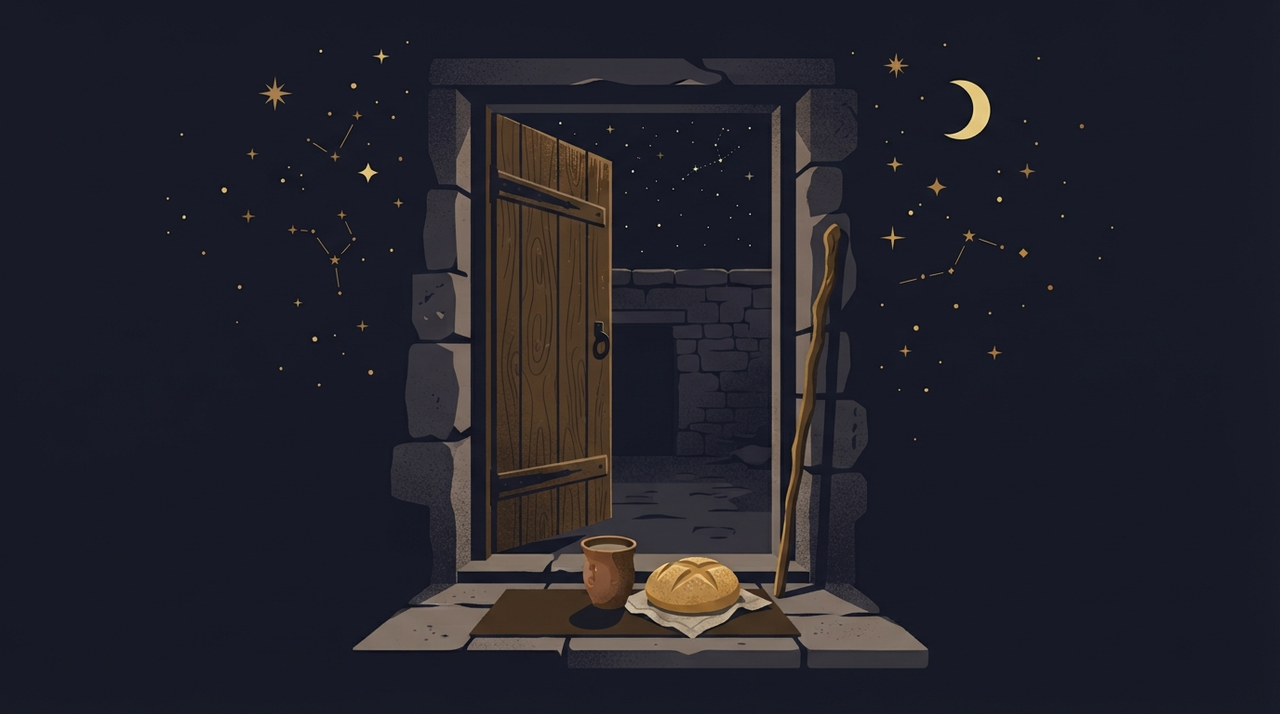
Imagine a sun-baked doorway in ancient Greece, dust settling from a traveler's sandals. The host steps forward, not with a handshake or a casual greeting, but with a ritual offering: bread, water, and sometimes salt or olive oil. These simple gifts mark the threshold, that liminal space where outsider becomes guest. No questions yet, no demands for origin or intent. This is xenia hospitality ancient Greece revered, a sacred pact enforced by Zeus Xenios, the god who watched over strangers and hosts alike.
In Homer's Odyssey, the ritual unfolds vividly. Odysseus, ragged and unknown, arrives at the hut of Eumaeus the swineherd. Without pause, Eumaeus pours water over the wanderer's hands, sets bread before him, and shares his own modest meal. Only later comes the inquiry: a name asked or withheld, a story hinted at but not demanded. This opening gesture transforms the household threshold from barrier to bond. Xenia was no mere courtesy. It bound host and guest in reciprocity, distinct from the warmth of philia (friendship) or the duties of kinship. Here, at the door, began a relationship of mutual obligation, fragile yet inviolable.
Poetry like Homer's captures the essence, but inscriptions from Pausanias and later customs reveal its institutional weight. Temples bore warnings: violate guest-right, and divine wrath follows. Xenia hospitality ancient Greece was a structured institution, a guest right history etched in stone and story, where the stranger and host met as equals under divine gaze.
Sorting the Arrivals: Guest, Refugee, Trader, Pilgrim, Spy
Not every figure at the gate received the same welcome. Ancient households navigated a spectrum of visitors, each carrying distinct implications for the host. The xenoi, or strangers, might be traders bartering amphorae of wine, pilgrims bound for Delphi, or refugees fleeing war's ruin. Hospitality ethics demanded discernment without delay. Bread and water extended first; judgment came after.
Consider the refugee, driven by necessity rather than choice. In the Iliad, suppliants like Priam cross enemy lines, invoking xenia to claim temporary sanctuary. Traders, often repeat visitors, wove networks of guest-friendship, their bonds formalized across generations. Yet even these carried risks. A pilgrim might bless the hearth; a spy could unravel it.
Enslaved captives posed sharper dilemmas. Captured in raids, they crossed thresholds as property, not guests. Still, tales whisper of xenia's extension, as when Odysseus tests his hosts' virtue. Surveillance shadowed welcome: hosts watched gestures, weighed words, fulfilling obligations while guarding the household. The spy, unmasked, forfeited rights; the genuine guest earned protection, even escort to the next door.
Obligations in the Shadows
This duality defined xenia. Guests owed respect, no overstay, and often a gift in parting. Hosts provided shelter, food, and safe passage. Reciprocity was not immediate friendship but a ledger balanced by gods. In a world of city-states and shifting alliances, the stranger and host relationship hinged on these rituals, a guest right history where trust emerged from protocol.
The Limits of the Sacred: Violations, Exclusions, and Gendered Doors
Sacred did not mean boundless. Xenia's power lay in its defined edges. Homer recounts violations with chilling clarity. The Cyclops Polyphemus devours Odysseus's men, scorning guest-right; retribution follows. Paris abducts Helen from Menelaus's house, shattering xenia and igniting the Trojan War. These stories warn: breach the bond, invite nemesis.
Yet exclusions shadowed the ideal. Enemies in declared war found no welcome. Heralds of foe states might claim partial rights, but households barred those deemed threats. Women at the threshold faced acute risks. In a patriarchal world, a lone female traveler invoked pity or peril. Penelope fends off suitors in her hall, their presumption twisting xenia into assault. Gendered risk lingered: hosts protected women guests vigilantly, knowing violation tainted the house.
Who Never Crossed
Barbarians beyond Greek ken, or those ritually impure, stood outside the circle. Hospitality ethics here were local, not universal. The household threshold marked community bounds. Inscriptions from Eleusis affirm: certain strangers barred from mysteries. Xenia hospitality ancient Greece thrived within these limits, a structured grace amid peril.
Beyond Greece: Hospitality Institutions Across Eras and Lands
Xenia's ritual echoes in other host-guest institutions, each shaped by place and time. In Near Eastern traditions, meals sealed treaties. Hittite texts describe kings hosting rivals with bread and beer, forging pacts under divine witness. The stranger and host shared salt, a bond as binding as oath.
Abrahamic Narratives: Welcoming the Divine Stranger
Genesis paints vivid thresholds. Abraham rushes to greet three men at Mamre's oaks, offering curds, milk, and a fatted calf. Lot shields visitors from Sodom's mob, prioritizing guest-right over kin. These tales, interpreted across millennia, embed hospitality ethics in divine command: welcome the stranger, for one might be God.
Islamic Diyafa: Community and Ethical Practice
Diyafa lives today as structured welcome. A guest receives three days' full hospitality, then aid for the journey. Community authority upholds it: neighbors share burdens, ensuring no house buckles. Hadith recount the Prophet's care for travelers, framing diyafa as faith's proof. Living practice, authorized by communities, adapts yet endures.
Indigenous Giveaways and Potlatch: Authorized Reciprocity
Among Northwest Coast nations, potlatch and giveaway ceremonies host guests with lavish sharing. Blankets, canoes, food flow outward, affirming status and alliance. Meaning resides with living nations; observers note the structured welcome, where guests witness generosity, reciprocate in kind later. Hospitality here builds enduring ties, distinct from casual exchange.
Medieval Hostels: Pilgrimage and Institutional Shelter
Europe's xenodocheia and hospices lined pilgrimage routes. Cluny monks manned doors for Canterbury or Compostela wayfarers, offering bed, meal, and alms. Charters regulated intake: pilgrims yes, vagrants vetted. These institutions formalized guest-right history, blending Christian duty with practical bounds.
Modern Shadows: From Xenia to the Hospitality Industry
Today's Airbnb listings and hotel chains claim the mantle of hospitality, yet diverge sharply. Ancient xenia demanded personal risk, divine accountability, no profit motive. Platforms commodify the threshold, rating hosts like merchants, anonymizing bonds. Guests arrive as consumers, not xenoi under Zeus's eye.
Refugees knock on modern doors amid policy debates, evoking ancient suppliants. Yet bureaucracy supplants ritual. The hospitality industry packages welcome as service, stripping sacred reciprocity. Recognizing this gap invites reflection: what lingers of the household threshold in our wired world?
Cross-Doors: Hospitality's Threads Through Existence
Hospitality weaves through Aetheria's doors. In Ethics, it probes duties to the unknown. Anthropology unpacks rituals as social glue. The Great Journey Room sees travelers' pacts as waymarks. Religion frames divine strangers. Politics weighs asylum against security. Each lens reveals facets of the stranger and host encounter.
- Ethics: Obligation or choice at the door?
- Anthropology: Institutions shaping societies.
- The Great Journey: Bonds on the path.
- Religion: Sacred commands across faiths.
- Politics: Refugee rights in nation-states.
Invitation: Who May Sit, and Who Decides?
Pause at your own threshold. Notice who may sit at your table: the friend by kinship or choice sits easy; the stranger tests the rite. Who writes the rule? Gods, custom, community, or conscience? Ancient xenia reminds us: hospitality ethics forge humanity's web.
Bring one question to Aetheria's Community: How does your household honor the guest-right history today? Inquire openly. Protect the journey.
The door stands open. Bread awaits. What name do you offer?