
Ancient Technology Defined: Why a Pot Isn't Just a Pot – Tools, Techniques, Infrastructure & More
Imagine unearthing a simple clay pot from the dusty strata of a Neolithic site. It's unassuming—coiled walls, uneven rim, faint scorch marks. But to students of ancient technology and archaeology, this isn't mere pottery. It's a portal to a vanished world, whispering secrets of ancient technology definition: not just the object itself, but the intricate web of tools, techniques, infrastructure, materials, institutions, user practices, and even later interpretations that gave it meaning. Why isn't a pot just a pot? Because its function hinged on everything from clay quarries to communal feasts, trade routes to ritual fires. Let's unpack these layers, drawing on real archaeological evidence to reveal how material culture breathes life into the past.
Unpacking the Layers: Beyond the Object in Ancient Technology
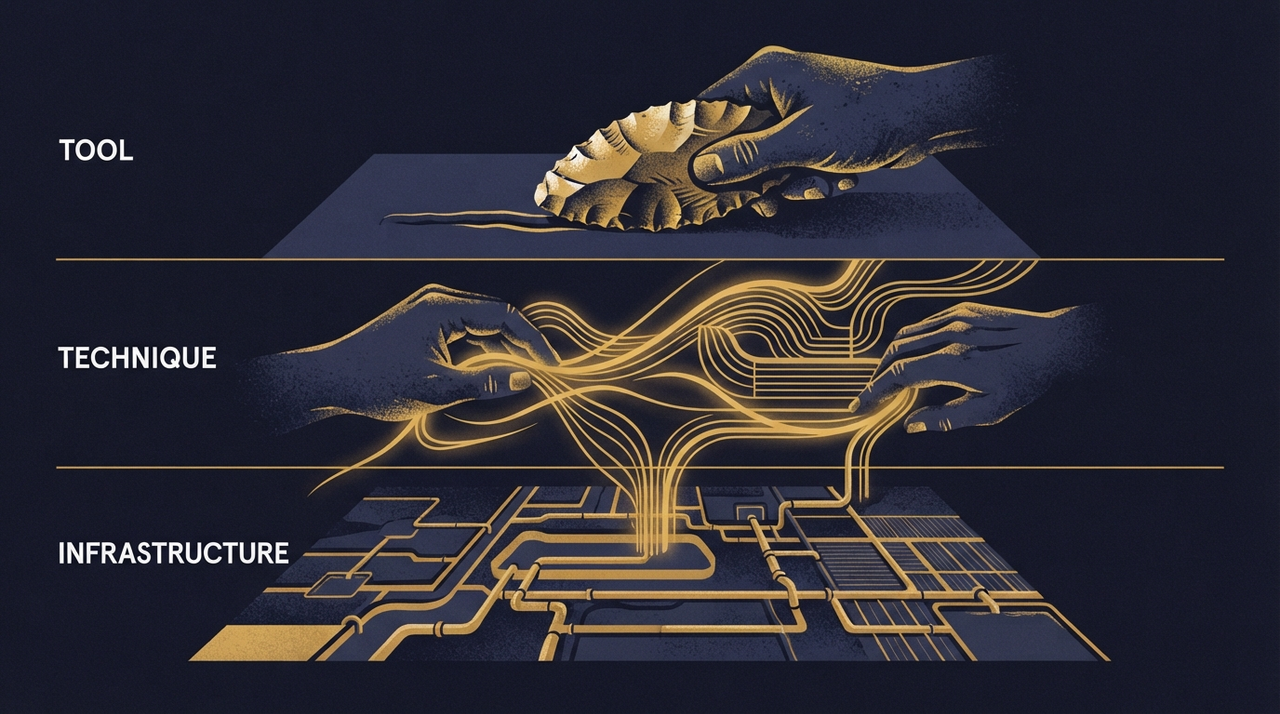
Archaeologists long ago moved past viewing artifacts in isolation. The archaeological method demands we dissect tool technique infrastructure systems holistically. A pot embodies this: its creation and use reflect a symphony of elements, each revealing societal ingenuity without implying deterministic progress or lost super-civilizations.
Tools: The Hands-On Essentials
Start with the basics. Tools are the tangible implements—paddles for shaping clay, spatulas for smoothing, or turntables for symmetry. At Çatalhöyük in Turkey (circa 7000 BCE), bone awls and stone polishers mark early pottery tools, enabling coiled construction over simple pinching.
Techniques: The Skillful Arts
Techniques breathe expertise into tools. Firing a pot at 800°C versus open bonfires demanded controlled pyrotechnology. Minoan Crete's Kamares ware (2000 BCE) showcases wheel-throwing techniques, with thin walls signaling mastery, as analyzed in petrological studies of sherds.
Materials: Sourcing the Substance
Clay isn't uniform. Neutron activation analysis on Mesopotamian Uruk pots (4000 BCE) traces recipes to specific riverbed sources, blending local levigated clay with temper like straw or shell. This material culture choice dictated durability for storage or fragility for rituals.
Infrastructure: The Supporting Framework
Kilns, quarries, and workshops form infrastructure. At Tell Brak, Syria (3500 BCE), updraft kilns clustered near habitation, fueling mass production for trade—evident from waster heaps of failed firings.
Institutions, Practices, and Interpretations: The Human Element
Institutions: Organized Knowledge
Specialized potters likely formed proto-guilds. Standardized Halaf pottery (6000 BCE, northern Mesopotamia) suggests communal workshops, where knowledge transfer ensured consistency amid diverse motifs.
User Practices: Everyday and Ritual Life
A pot's role shifted with use. Wide-mouthed vessels from Jomon Japan (10,000 BCE) cooked salmon-rich stews, residue analysis confirms. Narrow-necked ones stored grains; painted ones served in Andean rituals, smashed post-ceremony at Huaca Prieta (3000 BCE). Trade amphorae from Roman Gaul carried olive oil across empires, their shapes optimized for stacking on ships.
Later Interpretations: The Archaeological Lens
Our view adds another layer. Ethnoarchaeology tempers bias—studying modern potters in India reveals firing techniques mirroring ancient ones. Yet limits persist: organic tools vanish; elite goods overshadow domestic ones; soil chemistry skews preservation. No single pot tells all; triangulation via stratigraphy, typology, and science paints the picture.
Why It Matters: A Pot's Many Lives in Material Culture
Consider a single vessel from Poverty Point, Louisiana (1700 BCE): baked clay, sourced locally, fired simply, used for cooking earth oven meals in a mound-building society. Was it trade ware? Ritual offering? Storage for mound feasts? Multifaceted analysis reveals adaptation to flood-prone lands, not technological superiority. This ancient technology definition enriches our grasp of human resilience, unbound by linear evolution.
In the quiet turnover of soil, a pot unfolds not as relic, but as roadmap—through tools hammered by callused hands, techniques whispered across generations, infrastructures etched into landscapes.
Step Through the Archaeology Door
On Aetheria AI's Archaeology Door, dive deeper into these layers with interactive models of kiln reconstructions and residue simulators. Limitations acknowledged—data gaps invite your scrutiny.
Ready to redefine the past? Join us at the Archaeology Door. Your turn to unearth what a pot—or any artifact—truly means.