
Artifact Biography: An Ancient Oil Lamp's Chaîne Opératoire from Clay to Museum
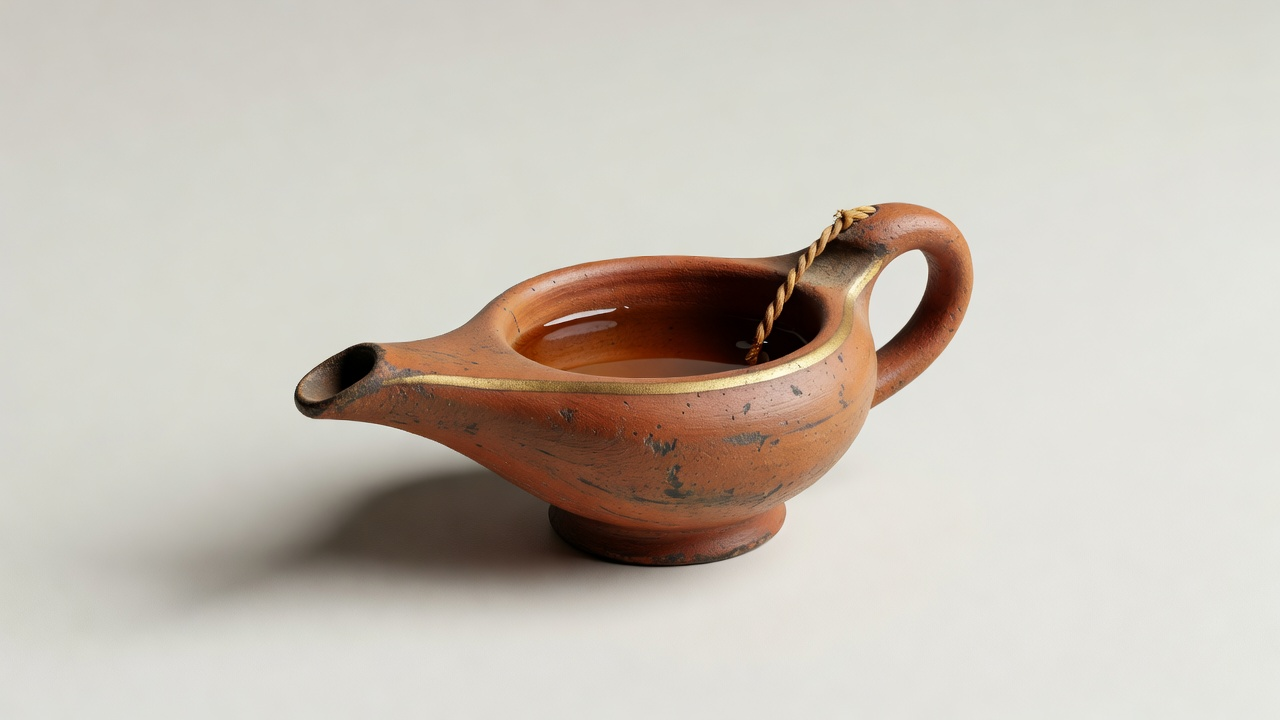
Picture this: a fist-sized lump of terracotta, no bigger than a modern teacup, etched with the faint swipe of a thumb from two millennia ago. Its nozzle blackened by countless flames, its belly scarred from repairs. This is no mere relic—it's an archaeological object with a full artifact biography, a story etched in clay and soot. Through the lens of chaîne opératoire—the archaeological concept tracing an object's operational sequence—we follow this ancient oil lamp from riverbed clay to glass case. For those who savor the intimate details of the past, this object history reveals layers of human touch, illuminating lives long buried.
Sourcing the Clay: Birth from the Earth
Our journey begins in the sun-baked floodplains of the ancient Mediterranean, perhaps near Corinth or Jerusalem around 100 BCE. Potters scoured riverbanks for illite-rich clay, its fine grains ideal for molding without cracking in the kiln. Petrography—thin-section analysis under a microscope—later confirms the quarry: quartz flecks and limestone nodules matching local geology. No overblown claims here; these minerals whisper origins, not owners.
Preparation: Kneading Life into Dirt
Clay arrives gritty, laced with grit. The potter wedges it on a worn wooden board, slamming and folding to purge air pockets. Water tempers it to a pliable dough. A thumbprint lingers—a maker's signature, casual yet profound.
Shaping the Lamp: Hands at Work
On a slow-turning wheel or by hand-pressing into molds, the form emerges. Base flattened, walls pinched up, a spout nozzle crimped for the wick. Incised decoration—palm fronds or rosettes—added with a bone tool. This chaîne opératoire peaks in the bisque firing: 800°C transforms soft earth into hardy ceramic. Slip glaze might follow, burnished to a sheen. Finished, it weighs mere ounces, engineered for olive oil and flax wick.
Daily Glow: Use, Wear, and Repair
Lit at dusk in a humble home or grand villa, it flickers through evenings of meals, mending, murmured prayers. Use-wear tells tales: soot crust on the nozzle from soot-choked flames; interior residues of oxidized olive oil, analyzed via gas chromatography. Scratches from wick-trimming knives. A crude mend—drilled holes plugged with lead—hints at thrift, not poverty. But beware the single-purpose trap: was it votive in a shrine one night, mundane the next? Wear marks suggest frequent handling, yet context can't decode private beliefs—did it light a philosopher's scroll or a child's bedtime?
- Universal access: Cheap to produce, oil lamps democratized light across classes.
- Private faith: Deposits in tombs evoke rituals, but household finds blur sacred-secular lines.
End of Days: Breakage, Burial, Rediscovery
Shattered and Forgotten
One slip—a dropped tray, an earthquake—and it shatters. Fragments scatter in trash middens or wells, buried under silt. Centuries layer atop: Roman roads, Byzantine walls, Ottoman rubble.
Excavation: Unearthed Anew
19th-century spade bites soil; today, trowels tease it free. Context stratigraphy dates it: below a coin of Nero, above Hellenistic pottery. Reconstructed from sherds, gaps filled with plaster for study.
Conservation and Museum History: From Lab to Label
In the lab, consolidants stabilize fragile edges; X-rays reveal hidden repairs. Cleaned gently—no harsh solvents to erase residues. Now, the museum history unfolds: accessioned in 1925, cataloged with findspot coordinates. Its label reads: "Wheel-made oil lamp, Eastern Mediterranean, 1st c. BCE–1st c. CE. Use-wear indicates domestic use." Spotlights catch the thumbprint, inviting close looking.
What residues reveal use, contexts suggest patterns—but personal devotion? That's the shadow light can't pierce.
Echoes in Sacred Places and Written Memory
This lamp bridges to Sacred Places, where similar finds cluster in temples, blurring ritual and routine. Trace its light to Writing Memory Doors—ink dried by such flames preserved scrolls that named gods and kings. No universals imposed; just human threads woven tight.
Your Turn: Trace an Object's Layers
This artifact biography isn't ancient alone. Pick a personal heirloom—a chipped mug, a worn keychain. Map its chaîne opératoire: sourced, shaped, used, mended, shelved. What scars speak? In close looking, every object hums with untold stories.