
Bones Whisper Secrets: Limits of Paleopathology and Bioarchaeology in Reconstructing Ancient Health
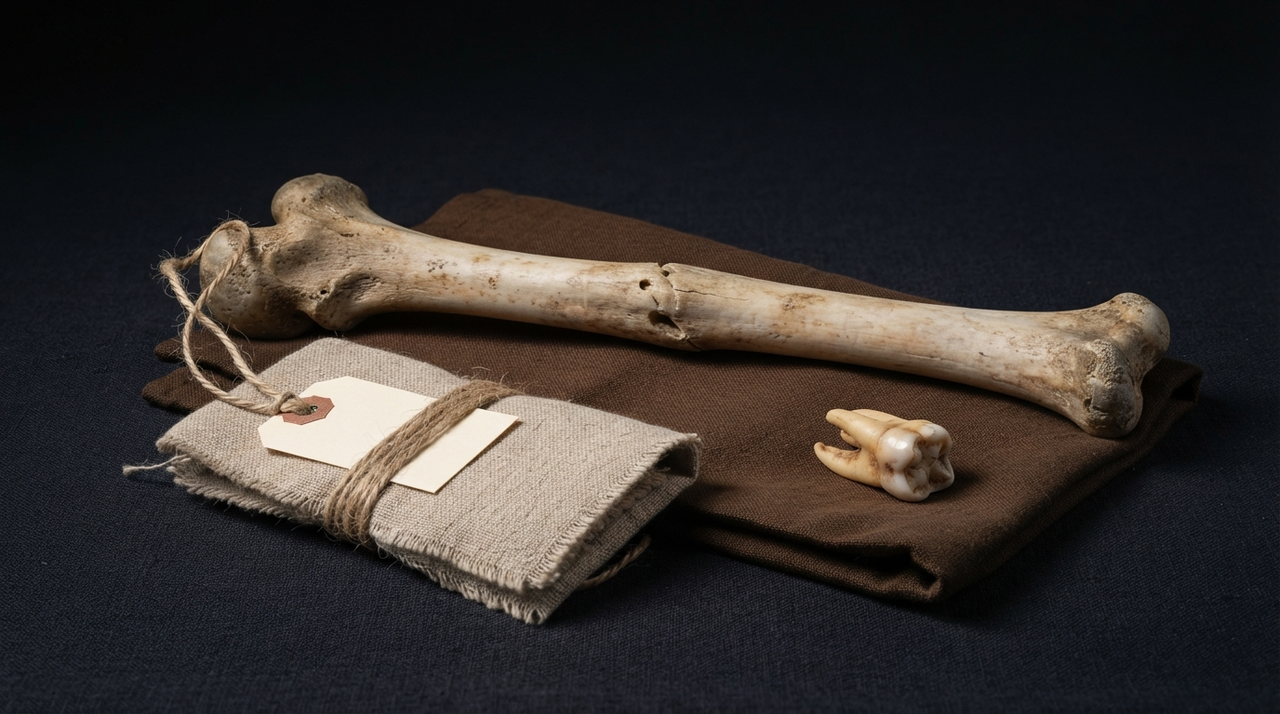
Imagine a dusty trench on a windswept hill in ancient Britain. An archaeologist's trowel scrapes away layers of soil, revealing a skeleton curled in fetal position, dated to the Iron Age by pottery shards nearby. Among the bones lies a femur, its midshaft thickened and bridged by a callus of new bone. This healed break speaks of survival: a fall from a height, perhaps a hunt gone wrong, followed by months of careful tending. Yet as the bones lift into daylight, questions swirl. Should this individual end up under museum glass, body on display? Or returned to kin, if any claim them?
Such finds draw us into paleopathology, the study of ancient disease through skeletal remains. Here, thoughtful readers encounter how experts infer past illness without spectacle. This essay explores bioarchaeology methods, their power and boundaries, always with respect for the dead. Note: This historical discussion offers no personal medical guidance.
Distinguishing Marks: From Lesion to Lived Experience in Paleopathology
A lesion on bone marks change, but leaping to disease, let alone cause of death or daily pain, demands caution. Paleopathology starts with observation. A pit in the cranium might signal infection or tumor. Rib erosions could hint at tuberculosis. Osteoarchaeology disease interpretation builds layers: first, describe the anomaly. Was it active, with inflamed edges, or healed smooth?
Next comes context. Age at death from tooth wear or bone fusion. Sex from pelvis shape. Diet hints from tooth microwear. But inferring disease risks modern bias. A porous skull vault resembles treponemal syphilis, yet could stem from other spirochetes or even fungal invasion. Cause of death stays elusive; bones endure trauma or chronic ills, but acute fevers leave no trace.
Lived experience proves thornier. Did osteoarthritis in knees hobble a farmer's stride? Bones show joint erosion, but pain levels varied. Modern categories like "rheumatoid arthritis" fit poorly; ancient bodies responded differently, without today's drugs or diets. Bioarchaeology ethics remind us: these were people, not case studies. Reconstructing health means honoring uncertainty.
What Bones Can Reveal: Trauma, Infections, and Patterns in Osteoarchaeology Disease
Trauma's Lasting Signature
Broken bones dominate paleopathology records. That Iron Age femur? Healed fractures appear across eras, from Neanderthal tibias to medieval longbones. Angled breaks suggest violence; spiral fractures, twists in falls. Healed cases imply community care: splints from wood impressions, or rest when labor was survival.
Surgical marks appear too. Trepanations, drilled skull holes, show survival in 70 to 90 percent of cases from Neolithic Europe. Bone regrowth seals the wound, whispering of healers wielding flint.
Infections That Etch the Skeleton
Not all ills mark bone, but some do vividly. Treponemal diseases, like those causing periosteal reactions on tibias and fibulas, appear in pre-Columbian Americas and Old World sites. Cavities and saber shins mark advanced stages. Tuberculosis leaves Pott's disease: collapsed vertebrae hunch the spine. Such lesions cluster in urban graves, hinting crowded living fueled spread.
- Periostitis: Layered new bone on shafts, from bacterial climbs.
- Osteomyelitis: Pockets of dead bone in long bones, often from open wounds.
- Leprosy: Resorbed nasal bones, shrunken hands and feet.
These interpretations carry uncertainty. DNA confirms some TB cases now, but older diagnoses relied on lesion resemblance alone.
Wear and Stress: Osteoarthritis and Enamel Tales
Osteoarthritis etches joints: lipping on vertebrae, eburnation polishing bone ends. Common in laborers' spines, less in elites' graves. Enamel hypoplasia, grooves on teeth, signals childhood stress: famine, weaning woes, or illness disrupting growth. Multiple lines mark repeated hits.
These offer history of health evidence, population-level. High OA in a group suggests heavy toil; widespread hypoplasia, unstable times. Yet individual stories blur: one person's wear might reflect age, another's work.
The Silence of Bones: Limits in Reconstructing Ancient Health
Bones endure, but whisper selectively. Most infections rage briefly in soft tissues: plague, smallpox, malaria vanish without skeletal scars. Mental distress leaves no mark; grief, anxiety, psychosis evade detection. Nutrition defies simple reads: isotopes trace diet, but scurvy needs specific signs like porous orbits, rare in adults.
Cancer favors soft organs, sparing bone often. Diabetes, heart disease, stroke? Invisible. Even chronic ills like anemia show indirectly: porotic hyperostosis on skulls, mimicking other lacks.
What fraction of ancient suffering do we glimpse? Perhaps one-tenth, the rest lost to soil.
Population biases compound limits. Skeletons skew adult, male sometimes, from preserved burials. Infants dissolve; poor folk's shallow graves erode. Inferring "average health" risks overstatement.
Mummies and Modern Eyes: Insights and Mummy Pathology Limits
Preserved bodies expand the canvas. Egyptian mummies, wrapped elites, yield to CT scans. Heart disease clogs arteries; gallstones burden gallbladders; schistosomiasis scars bladders. A 2010 study of 137 mummies found atherosclerosis widespread, challenging hunter-gatherer myths.
Yet mummy pathology limits persist. Preservation biases wealth; embalming alters tissues. Scans non-invasive, but who consents? Egyptian authorities oversee, but descendant voices? Distant, complicated.
Display raises stakes. Museums unwrap mummies for study, then rewrap or exhibit. Virtual scans sidestep handling, but digitize the dead eternally. Bioarchaeology ethics demand balance: knowledge versus dignity.
Bioarchaeology Ethics: Honoring Remains in Pursuit of History of Health Evidence
Indigenous Perspectives and Repatriation
NAGPRA in the US mandates return of Native American remains to tribes. Similar laws emerge globally: Australia's Indigenous repatriation, Kenya's restrictions on Leakey-era collections. What of pre-colonial dead? Communities assert ongoing ties.
Museums shift: storage to consultation. The British Museum consults Maori on ta moko skulls. Ethics codes from World Archaeological Congress urge permission before study.
Display and Spectacle
Body worlds exhibits thrill, but paleopathology shuns gore. Ethical display contextualizes: labels note trauma's social meaning. Virtual reality offers access without exposure.
- Consent proxies: descendant groups approve projects.
- Non-invasive priority: X-rays over dissection.
- Reburial options post-study.
Cross-Doors: Connecting Threads in Aetheria
Paleopathology bridges rooms. In Archaeology, it contextualizes tools with bodily tolls. Anthropology weighs group health against culture. Death & Afterlife Room ponders burial intents. Ethics debates knowledge's cost.
What a Lesion Cannot Tell: Invitations to the Health Door
A worn molar or fractured rib hints at struggle, but silences the rest: laughter amid pain, kin support, spiritual solace. What stories do bones omit? Carry that question to the Health Door. Here, methods meet humanity, limits fuel curiosity. In Aetheria's cosmic library, seekers code compels open inquiry into existence's frail wonders.
Bones whisper secrets, yet teach humility. Their limits remind: ancient health was as complex as ours, demanding respect over revelation.