
Deir el-Medina's Hieratic Ostraca: Strikes, Family Letters & Daily Life in New Kingdom Egypt's Workmen Village
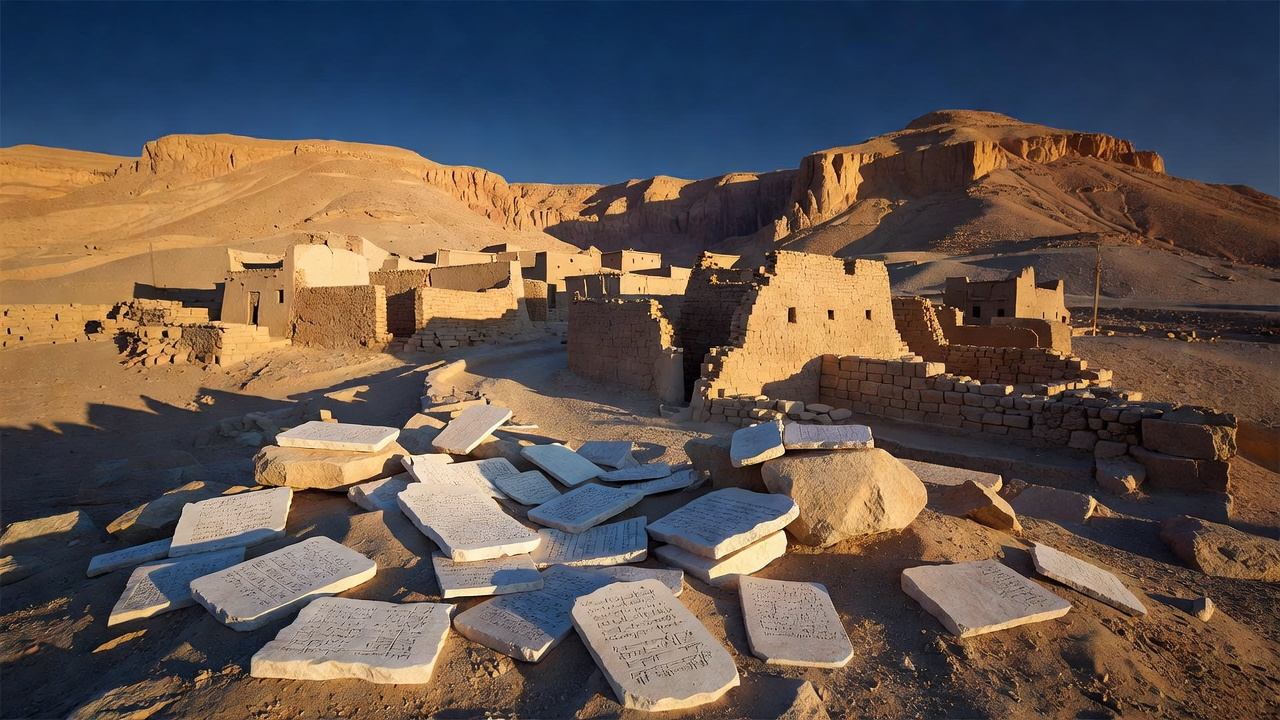
Picture a sun-baked flake of limestone, no bigger than a modern smartphone, etched with hurried strokes of ink. This humble hieratic ostracon from Deir el-Medina doesn't record royal decrees or epic battles. Instead, it gripes about late beer rations. In the workmen village of Thebes, on the west bank of the Nile during New Kingdom Egypt (1550–1070 BCE), such scraps reveal the pulse of ordinary lives—raw, relatable, profoundly human.
Deir el-Medina wasn't a sprawl of mud-brick slums for faceless slaves. It housed skilled artisans—scribes, draftsmen, quarrymen, and painters—who carved and decorated the pharaohs' tombs in the Valley of the Kings. These were agents of their own destinies, organized in crews with hierarchies, wages, and even vacation days. Their story survives vividly through thousands of hieratic ostraca, casual writings on limestone shards that outlasted fragile papyrus.
The Workmen Village of Thebes: A Hub of Craft and Community
Nestled against cliffs on the Theban west bank, Deir el-Medina thrived for over four centuries. Its 120 homes clustered around temples and bakeries, with streets alive to the rhythm of hammers on stone and children chasing stray goats. Excavations since the 19th century have unearthed this snapshot of New Kingdom Egypt's working class, but it's the hieratic ostraca—over 5,000 fragments—that breathe life into the dust.
Why limestone over papyrus? Papyrus, imported and pricey, was for official scrolls. Local limestone flakes were free, abundant, and perfect for jottings: shopping lists, love poems, school exercises. Their durability preserved intimate glimpses that might otherwise vanish, offering unparalleled evidence of daily life in the workmen village Thebes.
Family Letters: Hearts on Limestone
Tender Exchanges Amid Tomb-Building Toil
Hieratic script dances across ostraca in these personal notes. A wife writes to her husband at the quarry: pleas for extra grain, worries over a sick child, or simple longing. One fragment captures a mother's scolding: "Why haven't you sent cloth for the boy?" Another, from a lovelorn worker, begs his beloved not to stray.
These aren't elite missives but grassroots chatter, hinting at high literacy rates—perhaps 20-30% among men, rarer but present among women. Families navigated debts, illnesses, and festivals, much like us. Medical ostraca prescribe honey for coughs or spells against scorpions, blending practical remedies with magic.
The Great Strike: Echoes of Labor Power
In the 29th year of Ramesses III's reign (c. 1156 BCE), history's first documented strike erupted at Deir el-Medina. Ostraca and tomb inscriptions detail how workers, unpaid for weeks amid grain shortages, downed tools and marched to the temple, chanting "We are hungry!" Pharaoh's officials scrambled, eventually paying up.
Multiple strikes followed, underscoring the villagers' agency. They petitioned viziers, invoked oaths to gods like Amun. These events challenge old views of passive laborers, revealing a proto-union mindset in New Kingdom Egypt.
Scholarly Debates: Unraveling the Ostraca's Secrets
Literacy, Social Structure, and Survival
Experts debate the ostraca's implications. Were literacy levels so high due to job demands, or village schools? Some argue women’s letters show broader education; others see scribal mediation. Strike causes—corruption or economic woes?—fuel discussion, with ostraca as key evidence.
- How did limestone's ubiquity skew preservation toward casual texts?
- Do family letters reflect egalitarian marriages or patriarchal norms?
- Strikes: organized protest or desperate survival?
Catalogs like those from the Griffith Institute continue decoding these treasures, refining our grasp of Deir el-Medina.
Legacy: Deir el-Medina and the Ancestors Door
Through hieratic ostraca, Deir el-Medina opens an "Ancestors Door," linking us to New Kingdom forebears. These workmen weren't myths but people haggling over onions, adoring their kids, demanding fair pay. Their limestone legacy humanizes ancient Egypt, reminding us: across millennia, daily struggles bind us.
Next time you gripe about a late paycheck, whisper thanks to those Theban scribes. Their voices, scratched on stone, endure.