
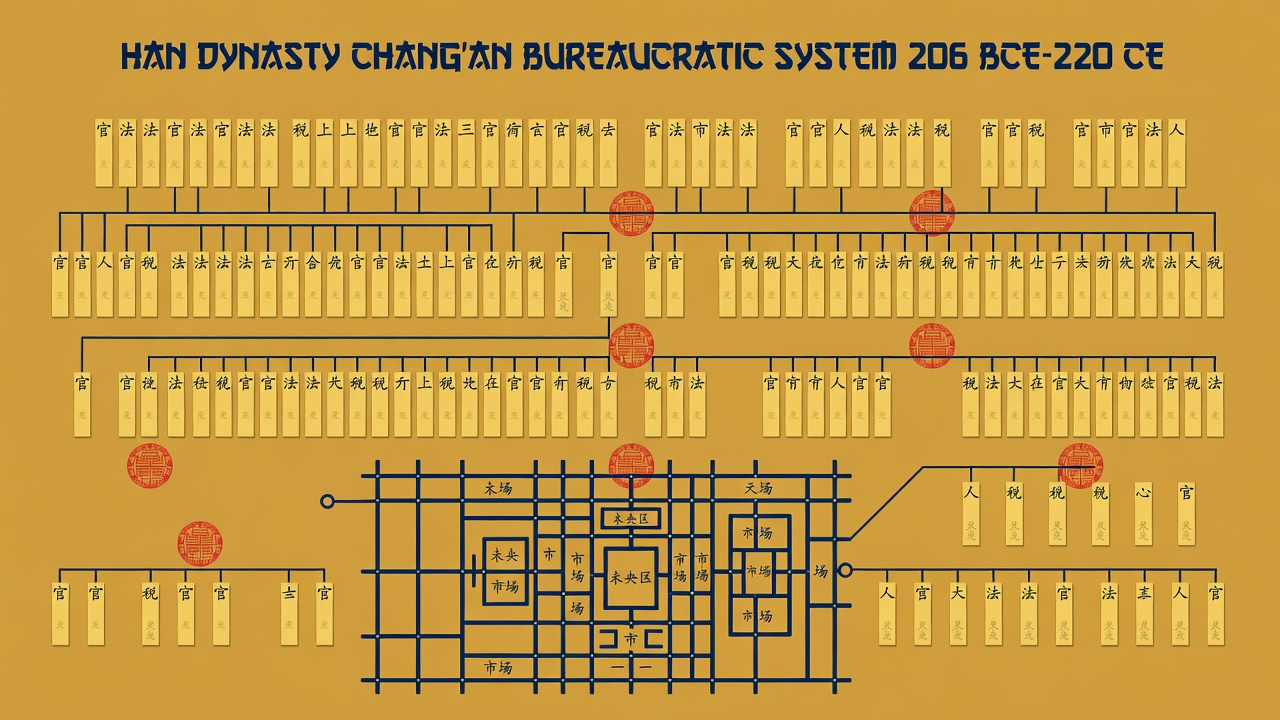
Han Dynasty Chang'an: Bamboo Slips Unlock Secrets of Chinese Bureaucracy and Early Empire Archives
Imagine unearthing a dusty bundle of thin bamboo strips, etched with faded ink, whispering the mundane machinations of an empire that shaped billions. In the shadow of Shaanxi's rugged hills, archaeologists have pried open these fragile time capsules from Han Dynasty Chang'an—the beating heart of China's early imperial might from 206 BCE to 220 CE. These bamboo slips aren't mere relics; they're the raw DNA of Chinese bureaucracy, revealing how emperors wielded power through ink and order.
Chang'an, today's Xi'an, sprawled across 36 square kilometers, its towering rammed-earth walls encircling palaces, markets, and granaries. Seals stamped into clay and the ghosts of those walls endure, but it's the bamboo slips—tens of thousands recovered from wells, tombs, and military outposts—that breathe life into the early empire archives. Written in crisp Classical Chinese, they catalog taxes, soldier rosters, and official missives, painting a portrait of administration as both lifeline and leash.
The City's Pulse: Chang'an as Bureaucratic Epicenter
Han Dynasty Chang'an wasn't just a capital; it was a meticulously planned machine. Grid streets funneled 500,000 souls—merchants haggling silk, scholars debating Confucian edicts—while at the core, the Weiyang Palace loomed as the emperor's nerve center. Archaeological digs expose this order: massive foundations, drainage systems rivaling modern engineering, and everywhere, the imprint of control.
Yet the real revelations emerge from the slips. Unearthed at sites like the Xuanquanzhi relay station along the Silk Road, these artifacts detail daily governance. A slip might list a corvée laborer's quota for wall repairs or tally grain shipments to avert famine. Such granularity shatters romanticized views of ancient China, exposing the gritty gears of empire.
Bamboo Slips: Archaeology's Quiet Revolution
From Tomb Dust to Digital Decoding
Bamboo slips, bound by cords into scrolls, served as paper's precursor. Dry climates preserved them, unlike the humid south where they rotted. Key finds hail from Han Dynasty Chang'an's fringes: the Shuihudi tomb in Hubei yielded legal codes, while Gansu deserts coughed up military dispatches. In Shaanxi itself, Chang'an's own dumpsites brim with administrative chaff.
- Over 120,000 slips from Juyan, cataloging border guards' rations.
- Zhangjiashan slips outlining penal statutes with bureaucratic precision.
- Local ledgers from Chang'an tracking noble households' taxes.
Modern tech amplifies their voice—AI scans pierce lacquer layers, though degradation limits many names and dates, fraying the edges of history. These aren't grand histories like Sima Qian's records; they're the empire's unvarnished plumbing.
Deciphering Chinese Bureaucracy Through the Slips
Peek into a slip, and bureaucratic titles leap out: tingwei (court overseer), taishou (provincial governor), sili xiaowei (imperial inspector). Hierarchies rigidify power—emperors delegated via nine ranks, merit mingling with nepotism. One slip from Chang'an reprimands a clerk for falsified accounts, echoing eternal tensions between center and periphery.
Archives weren't static vaults but dynamic tools. Officials filed reports in triplicate, cross-checked by roving censors. This system, refined under Emperor Wu, spanned 400 years, influencing every dynasty after. Power flowed not from divine right alone, but from ledgers that could topple ministers or stabilize frontiers.
In the quiet script of a bamboo slip lies the empire's true sovereignty: the ability to count, command, and coerce through paperwork.
Archives of Power: Limits and Legacies
Challenges in the Slips' Shadows
Lacquer coatings, meant to protect ink, often obscure text today, erasing names and nuances. Fragmentation scatters narratives— a tax roll ends mid-entry, a promotion decree lacks its recipient. Still, patterns emerge: bureaucracy as double-edged sword, enabling expansion yet breeding corruption scandals chronicled in the slips themselves.
Connect this to the First Laws Door: like Hammurabi's codes etched in stone, Han slips codify conduct, but on perishable bamboo, underscoring fragility amid ambition. Chang'an's archives remind us—empires rise on records, falter when they fade.
Echoes for Today: Lessons from Han Chang'an
Students of history, grasp these slips: they humanize the machine. A clerk's hurried stroke, a commander's tallied dead—these threads wove China's golden age. As Aetheria AI peers deeper with computational eyes, Han Dynasty Chang'an's secrets propel us toward understanding how paperwork built—and bound—the world's oldest continuous civilization.
Next time you file a form, think of Chang'an's scribes. Their legacy endures, inked in bamboo, archived in eternity.