
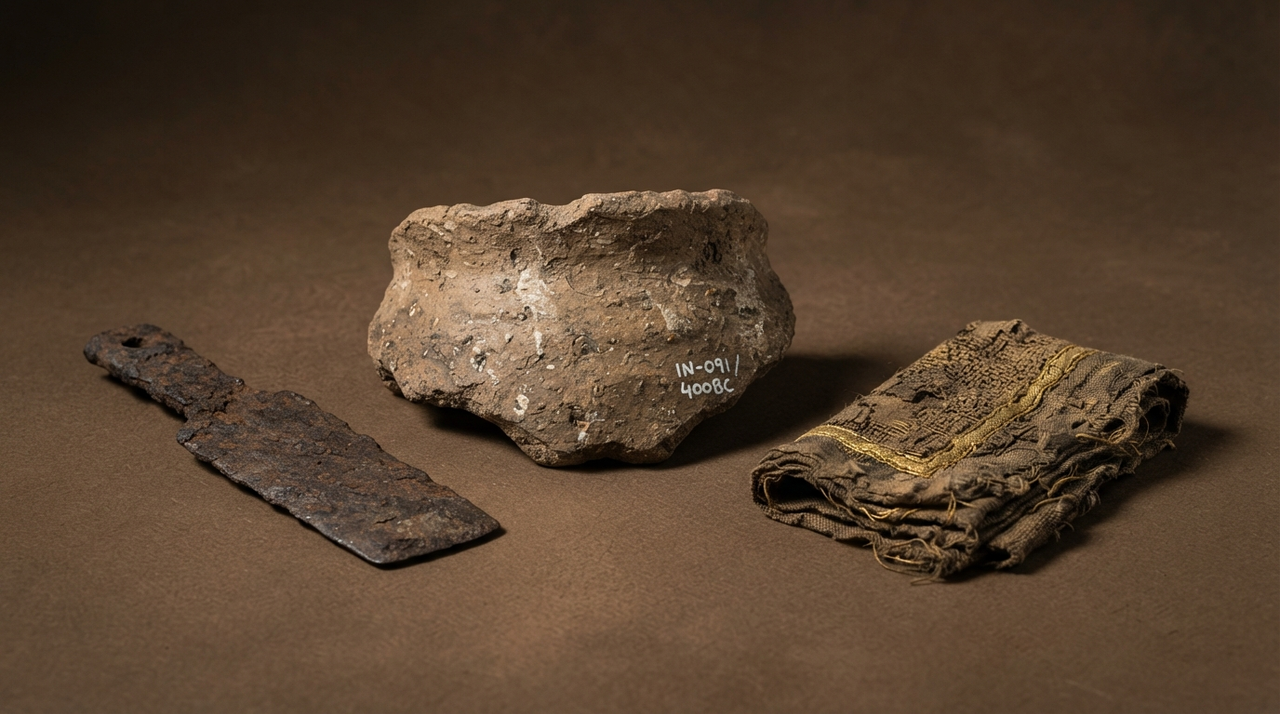
Objects as Evidence: Unlocking History Through Material Culture and Artifacts
Imagine cradling a weathered shard of pottery in your palm, its surface etched with faint ridges from a potter's thumb four thousand years ago. This unassuming fragment, unearthed from a dusty Mesopotamian tell, whispers secrets of ancient hands at work. It's not gold or a crown, but a piece of material culture—one of countless historical artifacts that serve as objects as evidence in the grand puzzle of history. For history explorers drawn to archaeology and history, these remnants offer a tangible bridge to the past, revealing what texts alone cannot.
In the hands of skilled archaeologists and historians, such objects unlock layers of human experience. They speak of production techniques, trade networks, spiritual beliefs, and the rhythms of daily life. Yet, they also impose silence, their mute surfaces hiding personal emotions or unwritten events. This is the allure of material history: a discipline grounded in what survives, ever mindful of what does not.
Reading Objects: Context, Comparison, and Laboratory Insights
Historians approach historical artifacts methodically, first anchoring them in context. Where was the object found? Stratigraphy—the layering of soil—places a pottery sherd in a specific chronological horizon, often cross-checked with radiocarbon dating for organic residues. A shard from Level III of a site might align with the Early Dynastic period around 2500 BCE.
Pottery Dating and Beyond
Pottery dating exemplifies this precision. Variations in clay composition, firing temperature, and decorative motifs allow comparisons to typologies—catalogs of styles evolving over centuries. Laboratory work amplifies this: thermoluminescence measures the last firing of ceramics, while petrography analyzes mineral inclusions to trace clay sources, mapping ancient supply chains.
Comparison extends the story. A vessel's form might echo imports from distant regions, hinting at trade. Residue analysis reveals diets—fish oils in one, grains in another—painting vivid scenes of meals shared under reed-thatched roofs.
What Objects Tell Us: Production, Trade, Belief, and Daily Life
What objects tell us extends far beyond form. A tool's wear patterns disclose labor intensity; grave goods reflect status hierarchies. Yet limits persist. Objects embody collective practices but rarely individual voices. They archive actions, not intentions, leaving gaps in the record—what scholars call archival silence.
Distinguishing evidence types sharpens focus: primary remnants like a cuneiform tablet offer direct traces; reconstructions infer from fragments; interpretations weave narratives; retellings risk embellishment. Uncertainty demands humility—counterevidence, like an outlier sherd, can upend assumptions.
Comparative Worlds: Tablets, Tomb Goods, and Mundane Pottery
Consider three exemplars of material culture. Mesopotamian clay tablets from Uruk (circa 3100 BCE) bear proto-cuneiform script, functioning as administrative records. Their mass production—thousands baked for durability—evidences early bureaucracy and economic pathways from Sumerian heartlands outward.
Contrast Egyptian tomb goods from the Old Kingdom (2686–2181 BCE), like gilded ushabti figurines in a noble's pyramid. These served afterlife rituals, their faience glazes sourced via Nile trade, embodying beliefs in eternal labor. Function diverges sharply: tablets managed the living, goods provisioned the dead.
The Everyday Counterpoint: Mundane Pottery
Mundane pottery from a Greek colony like Naukratis (7th century BCE) grounds these elites. Wheel-thrown amphorae, stamped with origins, trace wine trade from Aegean ports to Egypt. Chronology via style sequences reveals evolution; differences in fabric signal local vs. imported wares. Counterevidence—a coarse, handmade pot amid fine imports—hints at social diversity, challenging elite-centric views.
These comparisons illuminate archaeology and history's interplay, distinct from anthropology's ethnographic lens on living cultures or ancient civilizations' textual deep dives.
The Power of Interpretation: Who Controls the Narrative?
Objects' stories hinge on stewardship. Who excavates, curates, displays? Colonial-era collections often stripped context, renaming artifacts to fit imperial tales. Today, repatriation debates reclaim agency, restoring cultural pathways. Museums like the British Museum grapple with this, balancing global access against origin rights.
Interpretation evolves: a 19th-century "barbaric idol" becomes a revered ancestor figure. This underscores material history's dynamism—evidence endures, but meaning shifts.
Bridging to Archaeology, Civilizations, and Anthropology
Material evidence anchors doors to archaeology's digs, ancient civilizations' chronicles, and anthropology's cultural patterns—complementary pillars, each illuminating facets of human endurance.
Step Back: Journal Your Inquiries
Pause amid these shards. What questions do they stir in you? Pull out a private journal. Sketch a fragment's curve, note its untold silences. In this act, you join the chain—interrogating objects as evidence, ever curious, ever human.