
Reading Layers: Demystifying Stratigraphy in Archaeology
Picture this: a dusty trench on a sun-baked hillside in ancient Mesopotamia, where each scrape of the trowel peels back time itself. A shard of pottery emerges from the earth, its faded glaze catching the light. Is it a casual discard from a long-forgotten meal, or a ritual offering? The artifact alone can't say. Enter archaeology stratigraphy—the art and science of reading the earth's layered diary. It's not a tidy narrative handed down from the past, but a raw sequence of deposits that demands careful deciphering. For the intellectually curious, stratigraphy unlocks the silent language of sites, bridging the gap between buried objects and human stories.
The Foundation of Archaeology Stratigraphy: Layers as Sequences, Not Stories
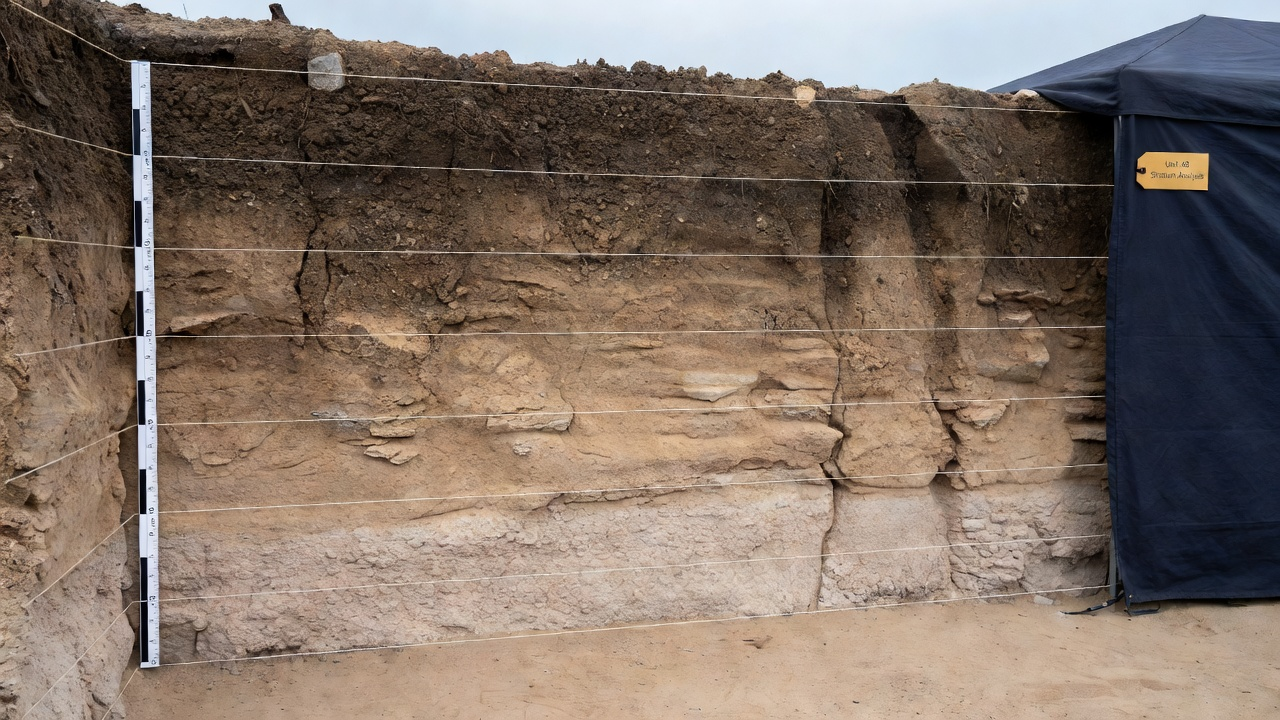
At its core, archaeology stratigraphy studies the vertical and horizontal ordering of soil, sediment, and debris that accumulate over time. Think of it like pages in a disordered book: each layer, or stratum, records events through natural deposition or human activity. But unlike a novel, these pages don't arrive in order. Floods jumble them, animals churn the soil, and later builders slice through with foundations.
The guiding principle here is the law of superposition, first articulated by geologist Charles Lyell in the 19th century and adapted by archaeologists. In undisturbed sequences, the oldest layers lie at the bottom, with younger ones stacking atop. A simple idea, yet profound: dig down, and you're traveling back in time. Yet superposition holds only where layers remain intact—a rarity on most sites.
Distinguishing Artifacts from Archaeological Context
Here's where precision sharpens the lens. An artifact is the tangible remnant—a pot, tool, or bone. Its archaeological context is the who, what, where of its discovery: the specific layer, its position relative to other finds, and associated materials. Interpretation? That's our human overlay, the story we weave from evidence. A flint arrowhead in a layer of ash might suggest a hearth in context, but inferring a hunting ritual requires more layers of proof. Confusing these leads to pitfalls; stratigraphy insists we honor the distinction.
Deciphering Excavation Layers and Site Formation Processes
Excavation layers aren't arbitrary cuts; they're defined by changes in soil color, texture, or content—excavation layers that mirror site formation. Formation processes divide into cultural (human-made, like middens of discarded food waste) and natural (rivers depositing silt or wind-blown sand). A thick, ashy layer might signal repeated fires from occupation; a sterile clay band, a period of abandonment flooded by a nearby stream.
Complications arise with cut and fill. Humans dig pits for storage or trash, filling them later with debris. These intrusions slice through earlier, undisturbed strata, creating complex interfaces. Imagine a Bronze Age village overlaid by a Roman road: the road's foundation cuts into village layers, mixing eras. Archaeologists map these disturbances meticulously, tracing cuts by their sharp edges against surrounding soils.
- Cultural deposition: Hearths, walls, and floors build structured layers.
- Natural agents: Erosion strips tops; bioturbation—roots, worms, burrowing rodents—stirs contents, blurring boundaries.
- Anthropogenic disruption: Later graves or wells plow through prior deposits.
Understanding site formation reveals how contexts form. A scatter of tools in a single layer suggests contemporaneity; vertical spread hints at post-depositional mixing. It's detective work, layer by layer.
The Harris Matrix: Mapping Stratigraphic Relationships
No trench tells its tale linearly. Enter the Harris Matrix, devised by Edward Harris in the 1970s—a deceptively simple diagramming system for archaeology stratigraphy. Picture boxes connected by lines: each box represents a context (layer, cut, or fill). Vertical stacks show superposition; horizontal lines denote same-age units; crossing lines mark cuts or bonds.
In plain language: if Layer A sits cleanly atop Layer B, A is younger. If Pit C slices into B, C postdates it. The matrix ignores depth alone, focusing on relative sequencing. On complex urban sites like Pompeii or medieval York, it transforms chaos into clarity, letting teams visualize the buildup of history.
The matrix isn't a timeline but a relational web, reminding us that stratigraphy captures sequences, not absolute dates—those come from radiocarbon or ceramics.
The Limits: Why Layers Don't Tell the Full Tale
Challenges in Reading the Record
Stratigraphy shines, but falters under scrutiny. Bioturbation—soil life in motion—reworks fine layers, especially in temperate zones. Rodent tunnels relocate artifacts meters away; tree throws upend contexts. Later pits, whether ancient quarries or modern cellars, obliterate sections entirely.
Excavation choices compound this: arbitrary spits (fixed-depth slices) ignore natural boundaries, mangling archaeological context. Salvage digs under time pressure sample unevenly. Even pristine sites suffer truncation from plowing or erosion. These sources of error demand humility—no layer "proves" a single purpose or belief system outright.
- Record natural mixing agents first.
- Document every cut and interface photographically.
- Cross-check with off-site coring for broader site formation.
Stratigraphy's Echoes in Anthropology and History
Beyond dirt and diagrams, archaeology stratigraphy feeds into Aetheria's Anthropology Door, illuminating human behaviors through formation processes—how communities discarded waste or revered the dead. It syncs with the History Door, where layers calibrate written records: a coin in a destruction layer dates Nero's fire precisely.
This interplay fosters humane curiosity. Layers don't judge; they accumulate traces of lives—feasts, floods, funerals—inviting us to ponder shared humanity across epochs.
Your Turn: Observation Versus Inference
Stratigraphy teaches patience: observe first, interpret later. Grab your journal. Next time you visit a site museum or read a dig report, note one raw observation from an excavation layer—say, "charcoal flecks in red-brown soil." Then, one inference: "Possible cooking area." What emerges? The gap reveals where evidence meets imagination.
In this practice lies the thrill of archaeology—not certainties, but layered questions propelling us deeper into the human past. Keep reading the layers; the earth has volumes yet to share.