
Art as Action: Ritual Objects and Sacred Functions Beyond the Gallery | Aetheria Art Door
Art That Moves: Ritual vs. Gallery Frameworks
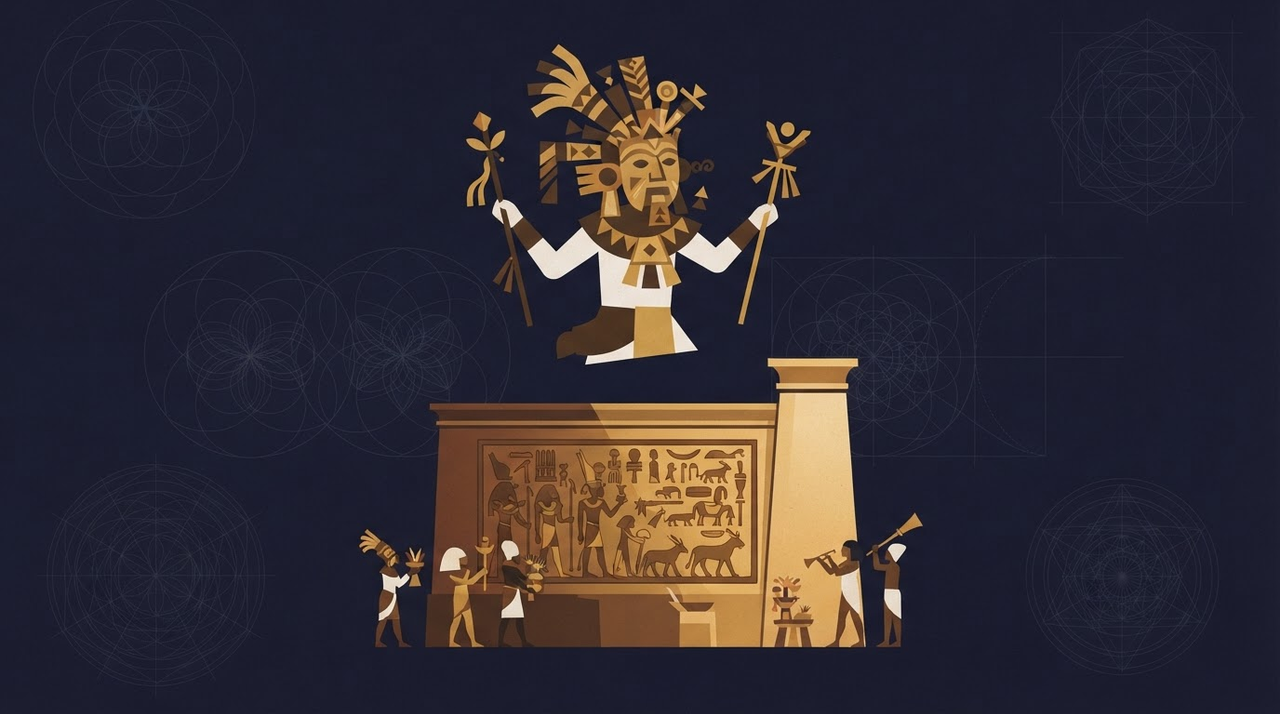
Picture a carved wooden figure not poised on a pedestal for quiet admiration, but lifted in trembling hands during a midnight ceremony, its surface slick with palm oil and invocations. This is art and ritual in motion—performative, participatory, alive. Unlike gallery art, which invites detached contemplation of form and color, ritual-framed works demand activation. They are ritual objects embedded in sequences of gesture, chant, and communal rhythm, their sacred art function unfolding only through human enactment.
Gallery pieces often prioritize visual harmony and individual interpretation; ritual art prioritizes efficacy. Does the object compel divine presence? Channel ancestral wisdom? Mark a threshold between worlds? These questions drive its creation and use, shifting focus from aesthetic stasis to dynamic process. At the Aetheria Art Door, we explore this shift, revealing art as practice—a verb, not a noun.
The Ensemble: Roles in Ritual Object Worlds
No ritual object stands alone. It emerges from a web of distinct roles, each calibrated to the object's activation. The maker crafts with esoteric knowledge, often in secluded workshops attuned to seasonal or lunar cycles. Patrons—communal elders or initiates—commission based on need, funding materials charged with symbolic potency like rare woods or consecrated pigments.
Ritual specialists—priests, diviners, or masqueraders—wield the object, trained in protocols that unlock its power. The audience, far from passive viewers, participates: witnesses who respond with calls, offerings, or trance. This ecosystem ensures the object's sacred art function as a performative object, its meaning co-created in the moment.
Vivid Examples: Places, Periods, and Performances
Egyptian Temple Reliefs at Karnak
In the vast hypostyle hall of Karnak (c. 15th century BCE), limestone reliefs depict pharaohs offering to gods amid swirling processions. These carvings served ritual: priests circulated incense before them during festivals, reciting hymns to animate the scenes. Access was restricted—initiates only during New Year rites—when the Nile's inundation mirrored cosmic renewal. Public glimpses came via smaller replicas paraded outside.
Yoruba Egungun Costumes
Among Yoruba communities in West Africa, performative objects like Egungun masquerade costumes—layered raffia, cloth, and beads—embody ancestors. Worn by trained society members during annual festivals, they dance through villages, dispensing blessings or justice. The full regalia is seen only in motion; static, it conceals its power. Audiences engage by prostrating or petitioning, the ritual binding living and dead.
Byzantine Icons
A gold-ground icon of the Virgin (c. 14th century), venerated in Orthodox liturgy, invites proskynesis—bowing, kissing, circumambulation. Monks or laity access it in church during Vespers or feast days, its surface accumulating candle wax and prayers. Not mere imagery, it functions as a window to the divine, activated by the gaze and touch of the faithful.
Evidence, Interpretation, and Echoes Over Time
What do we truly know? Direct evidence—temple inscriptions, ethnographic accounts, liturgical texts—anchors understanding, yet gaps persist. Interpretations by scholars bridge these, drawing on context like Yoruba oral histories or Byzantine hagiographies. Later reception, from colonial museums to modern revivals, layers new meanings, sometimes diluting original intent. Present-day authority rests with descendant communities and rigorous archaeology; we name uncertainties where records falter.
Bounded Comparisons: Charting the Differences
- Chronology: Gallery art timelines its creation; ritual objects cycle through repeated activations.
- Pathway: Display case vs. processional route or altar integration.
- Function: Contemplation vs. invocation or mediation.
- Community: Solitary viewer vs. collective participants.
These bounds illuminate without universalizing—each tradition's art and ritual contours unique.
Cross-Door Explorations at Aetheria
The Aetheria Art Door opens to kin doors: delve into mythic origins via the Mythology Door, trace religious evolutions at the Religion Door, or map sacred geographies through the Sacred Places Door. Ritual art thrives in these intersections.
Step Into the Action
What if your next encounter with art demanded participation? Through the Aetheria Art Door, consider crafting a simple ritual object—a stone etched with intention—and observe its shift from inert to alive. In this practice, art reveals its deepest pulse: not decoration, but doorway.