
Beyond Gallery Walls: The History of 'Art' from Techne to Museums
A Mask Meant for Movement
Picture a wooden mask from the Sepik River region of Papua New Guinea. Its fierce eyes bulge, feathers sprout from the crown, and ochre pigments streak its surface. This object did not emerge from a studio to grace a white gallery wall. Village carvers shaped it for initiation rites, where boys became men amid chants and dances. Its power lay in performance, not passive viewing. Today, such a mask might sit in a case at the Metropolitan Museum, labeled simply as "art." This shift traces the history of the art category, a modern umbrella that gathered older, local terms for making and gathered them under one roof.
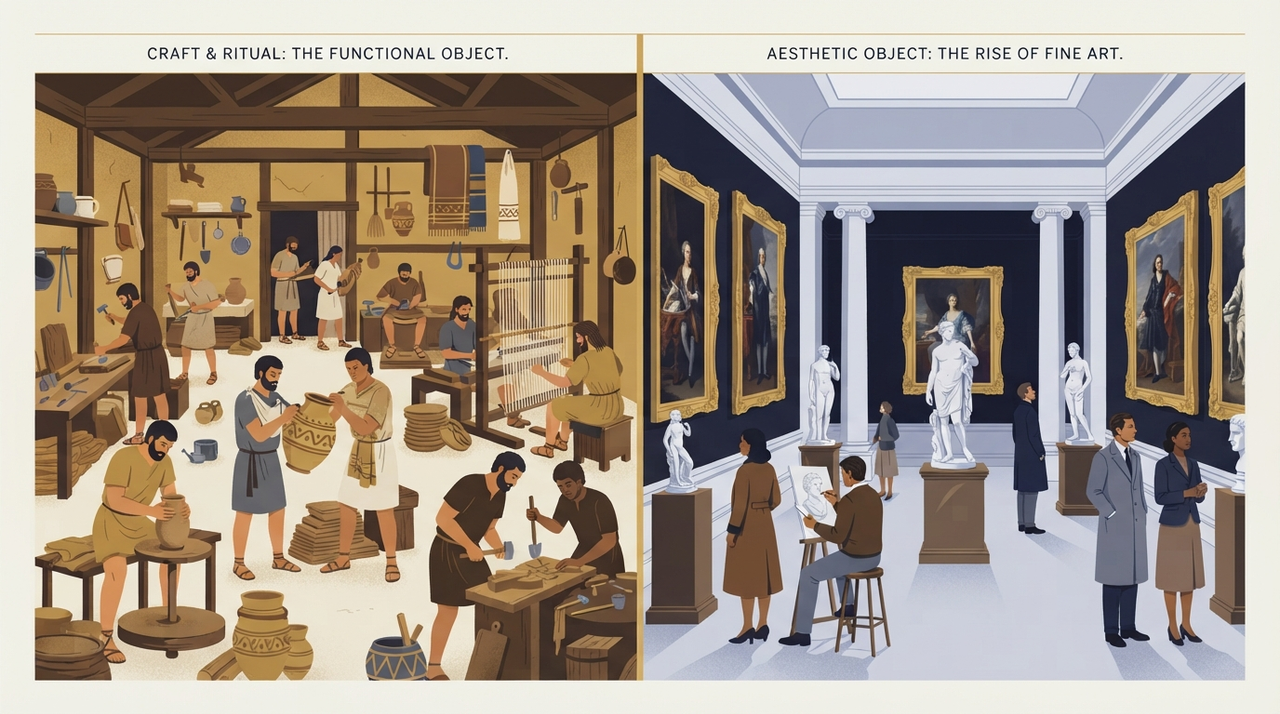
Objects like this mask remind us that making once served specific lives: rituals, labor, decoration, monuments. Terms stayed close to purposes. A Greek potter spoke of techne, the skill of hand and eye applied to vessels or weapons. No glow of transcendence separated it from daily work. Romans borrowed ars for similar breadth, from rhetoric to metalwork. These words named competence, not a realm apart.
Local Terms Before the Umbrella
Across places, vocabularies hugged functions. In medieval Europe, craft guilds ruled trades: goldsmiths, weavers, masons. Each had names tied to output, like bild in German for carved images in churches, distinct from mere objects. Chinese painters pursued hua, brushwork expressing moral harmony for scholar-officials, far from market wares. Islamic traditions weighed sura or calligraphy against image debates, where figural work served books or tiles, not autonomous display.
Techne and Ars as Starting Points
Techne and ars offer entry to these local terms for making. Neither implied beauty for its own sake. Plato critiqued techne as mere imitation, yet craftsmen filled cities with functional finery. Ars covered liberal pursuits too, but always with patrons in mind: emperors, churches, courts. Performance lived in theaters or festivals; ornaments clad bodies and buildings. No single word bundled them until later.
Academies and Collections: Forging the Category
Seventeenth-century Europe birthed academies and museums that reshaped these terms. In 1648, France's Académie Royale de Peinture et de Sculpture ranked painting and sculpture above craft. Hierarchies emerged: history painting topped portraits, which outranked still lifes. Salons opened these works to paying audiences, turning private patronage into public spectacle. Italy's academies followed, training artists as intellectuals, not tradesmen.
Aristocratic collections fueled this. Cardinal Maffeo Barberini amassed paintings as status symbols, precursors to Louvre galleries. By the 1750s, British virtuosi displayed "pictures" in homes, blending connoisseurship with commerce. Academies and museums professionalized judgment: experts decided what counted as elevated making.
Museum Labels and Their Quiet Power
Public museums sealed the shift. The Louvre, opened in 1793 amid revolution, reframed royal holdings as national heritage. A Benin bronze, once an altar piece guarding ancestors, became "African art." Labels impose categories: medium, date, artist. They flatten ritual weight or community claims into aesthetic narrative. Provenance fades; contested heritage quiets. Yet these institutions preserve, offering glimpses of distant makings.
Academies and Museums as Gatekeepers
Together, academies and museums built the modern art category. They elevated select images and objects, sidelining craft or performance unless reframed. Labor vanished; genius shone.
What This History Does Not Settle
European timelines do not map the world. Chinese theory prized literati spontaneity over academy polish. Islamic courts valued geometric splendor without figural canons. Local terms endure: Navajo weavers call rugs 'azee'í blankets, tied to ceremony. Sacred works retain living authority; repatriation debates reclaim them from glass cases.
The umbrella "art" obscures patrons, audiences, contested access. It does not dictate value or beauty, which vary by context.
Crossings in the Aetheria Art Door
Explore further through Aetheria doors. The Creativity Door unpacks making's sparks. Religion Door revives cult objects' roles. Anthropology Door honors local meanings; History Door timelines patronage.
A Invitation to Discern
Next time a label reads "art," pause. What local term for making does it overlay? Techne's skill? A craft's utility? A ritual's potency? This history of the art category invites such questions, keeping older worlds visible beyond gallery walls.