
Creativity and Institutions: How Patronage, Canons, and Gatekeepers Shape Recognition and Suppression
Picture a moonlit palace in Heian-era Japan, 794–1185 CE. A courtier's waka poem, thirty-one syllables capturing fleeting cherry blossoms, lands in the imperial anthology Kokin Wakashū. Overnight, obscurity yields to eternity. Yet for every verse enshrined, countless others dissolve into silence. This is creativity and institutions at work: systems of patronage and creativity that anoint some works as canonical while others fade.
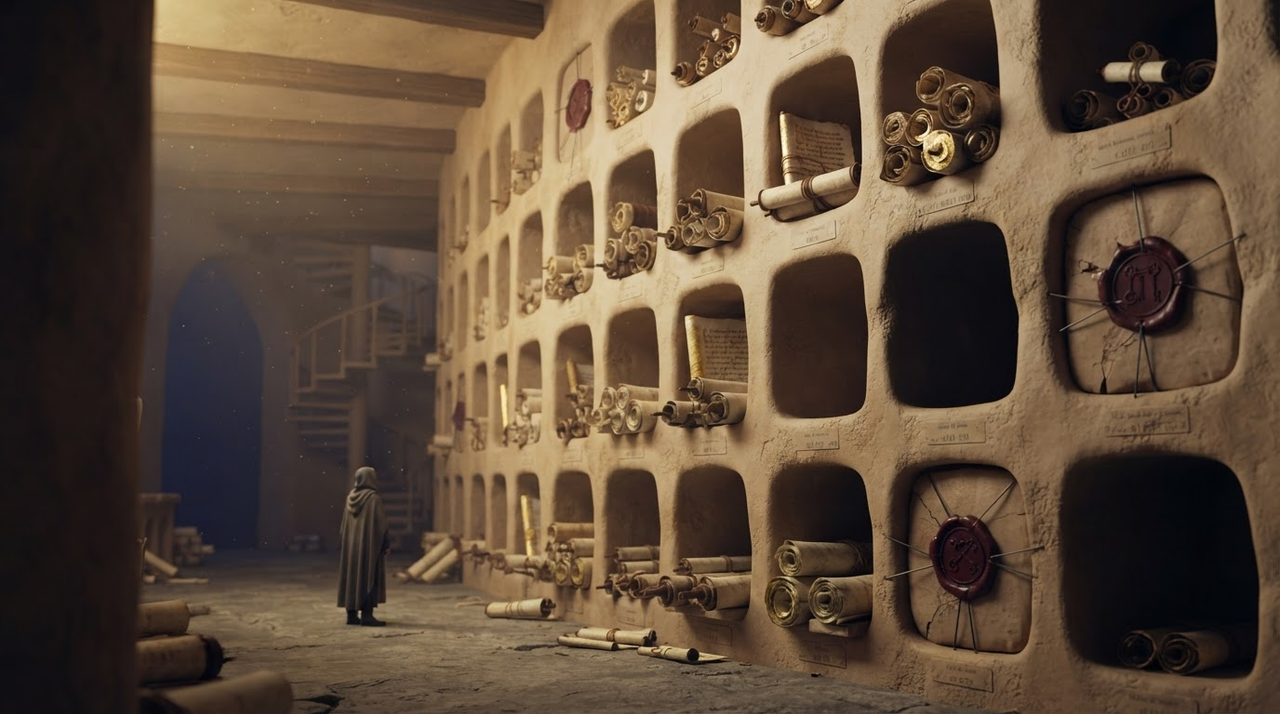
Societies do not discover genius in a vacuum. Recognition hinges on access to authority—through courts, guilds, salons, or archives. Suppression follows when labor, medium, or community falls outside these gates. This piece traces historical pathways, from enclosure to evasion, revealing how artistic recognition emerges not from isolated brilliance but collective validation shaped by place, period, and power.
Patronage and Court Taste: The Heian Pathway
In the Heian court, patronage and creativity intertwined via imperial anthologies. Poets vied for inclusion in compilations like the Kokin Wakashū (905 CE), curated by literati under emperor's sanction. Selection functioned as a filter: court taste favored refined allusion over raw innovation, privileging waka's utamakura—poetic place-names—over experimental forms. Chronology mattered; early compilers set precedents, ossifying canons.
Counterevidence abounds: women like Ono no Komachi gained entry through noble patrons, yet many courtiers' works vanished without such access. This system enabled diffusion—anthologies circulated widely—but limited scope to elite, Chinese-influenced aesthetics, suppressing vernacular voices.
Salons and Juries: 19th-Century Paris as Gatekeeper
The Salon Jury's Grip on Artistic Recognition
Fast-forward to 19th-century Paris, where the Salon jury embodied guild-like control. From 1673 onward, the Académie des Beaux-Arts juried submissions, dictating artistic recognition. History paintings trumped landscapes; academic nudes outshone realist scenes. Édouard Manet’s Olympia (1865) shocked, rejected initially, forcing alternative paths like dealer exhibitions.
Here, labor met bureaucracy: artists queued, networked, paid fees. Differences by medium persisted—sculpture demanded state commission. Suppression of innovation peaked; Impressionists bypassed via Société Anonyme des Artistes Peintres (1874), yet Salon's shadow lingered, shaping markets.
Institutional Enclosures: Bauhaus and Beyond
The Bauhaus in Dessau (1925–1932) illustrates modern enclosure. Walter Gropius's school fused art, craft, design under state funding, yet Nazi closure in 1933 suppressed its functionalist ethos. Faculty like Kandinsky navigated patronage via relocation; students dispersed, innovations fragmented.
Parallel controls: religious sanction stifled Renaissance heresies; colonial archives curated Eurocentric canons, marginalizing indigenous forms; museums today perpetuate this via acquisition biases. Guilds, from medieval weavers to 20th-century unions, guarded techniques, blending protection with stasis.
Evasions and Outsiders: Andean Weavers' Quiet Persistence
Not all creativity seeks gates. In Andean highlands, Quechua women weavers sustained ikat and supplementary warp techniques across centuries, outside colonial archives or museum canons. Passed matrilineally, these innovations evaded suppression through community authority, adapting to Spanish rule without formal recognition. Labor was communal, medium tactile, place remote—defying institutional pathways.
Such cases counter enclosure narratives, highlighting suppression of innovation as selective, not total.
Beyond Psychology: Historical Gatekeeping in Context
Psychological gatekeeping theories posit cognitive biases blocking novelty. Yet history demands nuance: Heian anthologies reflected deliberate curation, not mere prejudice; Salons enforced class hierarchies. Institutions channel labor via access (who submits?), authority (who judges?), and community (whose tastes prevail?). Canon formation emerges from these frictions, varying by period and medium.
Echoes Today: Markets, Museums, and Legitimacy
Contemporary parallels abound. Algorithmic platforms echo juries; biennials curate canons. Explore further in our Politics Door on legitimacy or Economics Door on markets and value, where creativity and institutions intersect capital and power.
Who does the archive remember? Not the lone genius, but those navigating—or sidestepping—institutional currents. In probing creativity and institutions, we uncover not villains or heroes, but the intricate dance of recognition and erasure. What overlooked labors shape tomorrow's canons? The inquiry endures.