
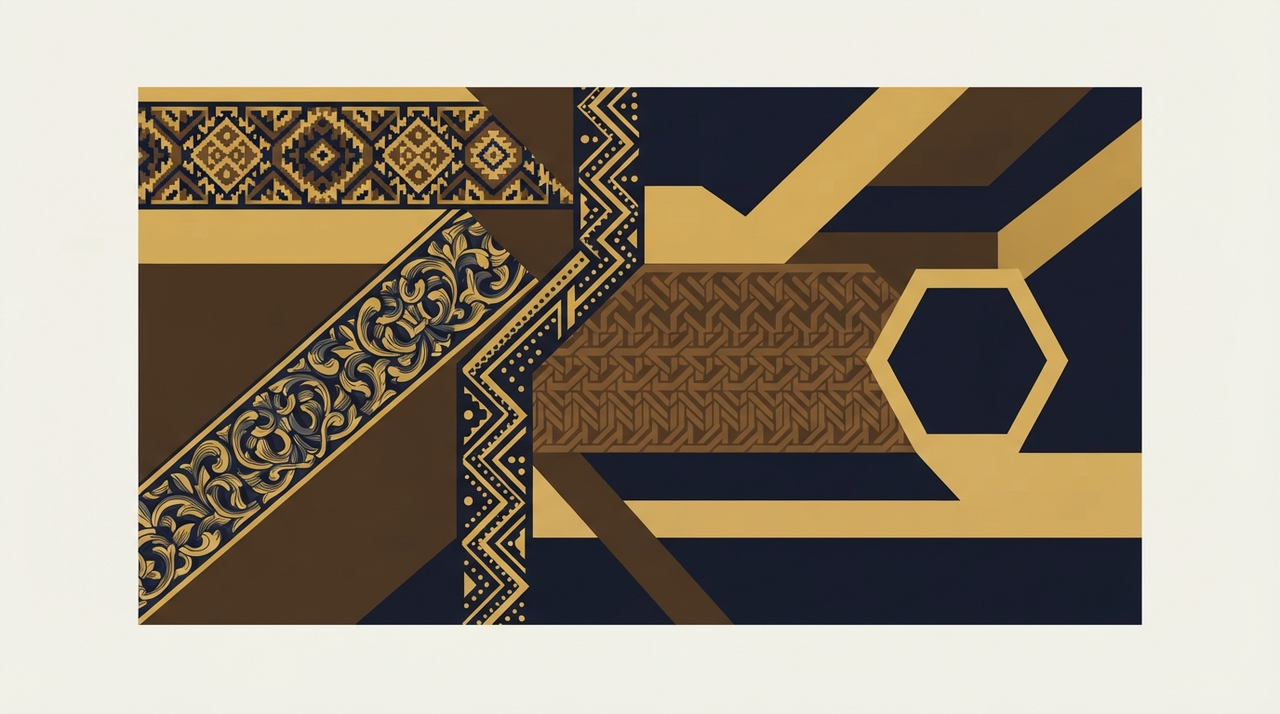
Ornament and Decoration History: Unpacking the Minor Arts Debate and Craft vs. Fine Art
Imagine a Renaissance workshop humming with activity. Painters sketch grand figures on canvas, their gestures bold and solitary. Nearby, a team of weavers threads intricate patterns into silk, their hands moving in quiet rhythm. One path leads to marble halls of academies; the other, to market stalls and guild halls. This split defines the ornament and decoration history we inherit today—a hierarchy that crowned painting and sculpture as fine arts while relegating textiles, metalwork, and inlay to the so-called minor arts.
Why did this happen? The minor arts debate reveals not a natural order, but a constructed one, rooted in European academies of the 17th and 18th centuries. As art academies formalized training, they elevated individual genius and narrative subjects over collaborative craft. Ornament, with its repeating motifs and functional ties, seemed too mechanical, too tied to tradition. Yet this view overlooks the depth in a simple border or embroidered edge.
The Roots of the Craft Versus Fine Art Divide
In the 1660s, France's Académie Royale de Peinture et de Sculpture drew sharp lines. History painting topped the pyramid, followed by portraiture and genre scenes. Sculpture ranked high too, for its illusion of life in stone. But tapestries? Jewelry? Those belonged to craft versus fine art distinctions, dismissed as decorative trades. The reasoning hinged on originality: fine arts expressed universal ideas through human form; crafts served utility, repeating patterns for walls or tables.
This hierarchy traveled with colonialism and Enlightenment ideals, framing global traditions through a narrow lens. Islamic tilework, with its interlocking geometrics enforcing devotional order, became mere surface play. East Asian lacquer boxes, layered with skill over months, reduced to exotic curios. The debate persists in museums today, where a single canvas commands space while a embroidered hanging folds into storage.
Textiles and Inlay: Depth Beyond the Surface
Patterns That Encode Worlds
Consider textiles and inlay in medieval Europe. Guilds of weavers in Flanders produced Arras tapestries, vast scenes woven with gold thread that rivaled paintings in detail. These were not afterthoughts but status symbols for nobility, demanding years of labor from specialized teams. Inlay work on furniture or chests—ivory against ebony, following precise repeats—held secrets of geometry and trade routes.
Across oceans, Ottoman çini tiles sheathed mosques in blue symmetry, their patterns a visual jurisprudence against idolatry. Japanese urushi lacquer, polished to mirror depths, embedded poems or crests in layers of sap. These traditions challenge the minor label: ornament here structures space, signals devotion, asserts identity.
Workshops and the Hands Behind the Repeat
Labor shaped this divide. Fine arts favored the lone master; crafts thrived in workshops where apprentices learned motifs by rote. Women often dominated spinning and embroidery, their work undervalued in patriarchal tallies. Metalworkers hammered repoussé silver, chasing patterns that caught light like sculpture. Yet academies prized the sculptor's chisel over the smith's hammer.
Challenging the Hierarchy in Aetheria Art Door
Here in the Aetheria Art Door, we unpack these tensions without flipping the pyramid. Ornament and decoration history invites curiosity: not every culture ranked media this way. Architectural ornament fused building and art seamlessly, from Gothic tracery to Mughal jali screens. The minor arts debate exposes choices—economic, social, gendered—that linger in how we value a vessel's glaze over a portrait's gaze.
Decoration binds function to feeling, pattern to person. Who taught the repeat matters as much as the motif itself.
A Invitation Across Doors
Next time you trace a textile's border or a metalwork's inlay, pause. Who passed down that skill? What law or story does it hold? This question bridges to Creativity, where making defies rank, and Anthropology, where objects speak of hands and homes. In Aetheria, we see craft versus fine art not as battle lines, but as threads in the larger weave of human expression.
The hierarchy endures, but understanding it frees us to value the workshop's quiet genius alongside the studio's flash.