
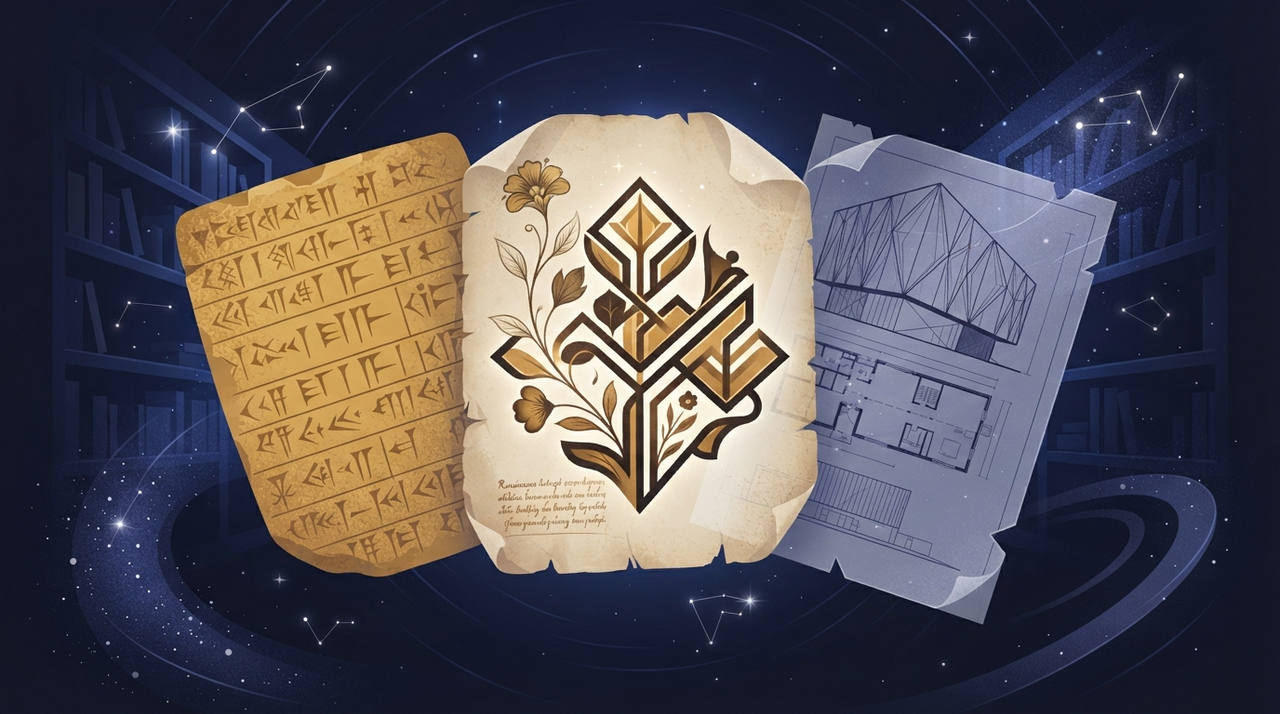
Recombinant Creativity: How Blending Traditions Fuels Human Innovation
In the shadowed scriptoriums of ancient Babylon, around 1800 BCE, a scribe etched lines that would echo through millennia. The Enuma Elish, the Babylonian creation epic, did not spring from void. Its thunderous tale of Marduk slaying Tiamat drew directly from Sumerian motifs centuries older—stories of Enki shaping order from chaos in the watery abyss, preserved on clay tablets from Uruk, some 2500 BCE. This was no mere echo; it was recombinant creativity, a deliberate fusion where familiar elements reshaped to serve a new imperial city's cosmology. Here, imagination and recombination intertwined, revealing how human innovation thrives not in isolation, but through cultural transmission.
Recombinant creativity names this process: the juxtaposition of existing cultural materials—motifs, forms, techniques—with keen attention to their pathways of transmission, altered functions, and telling differences. Psychological theories like conceptual blending, proposed by Gilles Fauconnier and Mark Turner in the 1990s, describe mental mappings that merge ideas into novel ones. Yet history and artistic practice reveal something earthier: labor-intensive selection, community-vetted transformation, and contextual adaptation. What theory abstracts, evidence grounds in place, period, and medium.
Historical Threads: From Sumer to Song
Consider the Enuma Elish again. Sumerian precursors, oral and cuneiform tales from southern Mesopotamia's temple economies, emphasized primordial waters and divine craft. Babylonian poets, writing in Akkadian on seven clay tablets for New Year rituals, elevated Marduk—patron of the rising city-state—while demoting older gods. This innovation as blending inverted hierarchies, aligning myth with political ascent. Differences mattered: Sumerian harmony became Babylonian combat, reflecting empire's edge.
Eastward, in Medieval Japan
Centuries later, across the Pacific, Japanese poets transformed waka—elegant 31-syllable court verses from the Heian period (794–1185 CE)—into renga, linked poetry chains flourishing in the Muromachi era (1336–1573 CE). Waka stood alone, introspective blooms on silk scrolls. Renga demanded collaboration: poets alternating stanzas in communal gatherings, often under cherry blossoms or temple eaves. A single waka's seasonal allusion might pivot into another's cosmic drift, creating hundred-verse sequences. This creative borrowing honored lineage—masters like Fujiwara no Teika set standards—yet required judgment: shifts in tone, imagery, avoiding repetition deemed stale by poetic circles. Not copying, but communal alchemy.
West Africa's Griot Legacy
In the Mandinka courts of the Mali Empire, from the 13th century onward, griots wielded the kora—a 21-string harp-lute of calabash and cowhide. Oral epics like the Sundiata saga blended ancestral praise songs with chronicles of fresh conquests. A griot in 15th-century Gao might pluck rhythms inherited from Gambia riverine traditions, overlaying them with verses on Mansa Musa's hajj gold. Community elders policed fidelity; innovation shone in modulation—faster tempos for triumph, dissonant bends for betrayal. Here, cultural transmission creativity pulsed through living performance, medium of voice and vibration.
Institutions of Borrowing: Honored or Handcuffed?
Recombination flourishes or falters by institutional winds. In ancient Mesopotamia, temple scribes copied Sumerian texts as sacred duty, blending freely within scribal guilds. Japan's renga linked verses were judged in uta-awase contests, where borrowing from anthologies like the Kokinshu (905 CE) signaled mastery, not theft. Griot lineages passed kora techniques patrilineally, with innovations ratified in royal griot corps.
Contrast modern copyright regimes, post-18th century Europe, which police borrowing as infringement. Yet counterevidence persists: hip-hop's sampling thrives in communal nods to sources, much like griot adaptation. What endures? Visibility of labor, sources, authority, and community—themes obscured by genius myths.
Echoes in Myth and Pattern
Myths themselves travel and recombine, from Gilgamesh's flood motif rippling into Genesis to recurring patterns like the dying god—Osiris in Egypt, Adonis in Greece, Balder in Norse lore—each reshaped by local soils. These archetypes, as Carl Jung noted without romantic excess, recur not by mystic urge but through migration: traders, exiles, scribes carrying symbols across trade routes. Such imagination and recombination keeps lineages traceable, countering erasure.
What Remains Visible
A recombinant view spotlights the unglamorous: the scribe's stylus grinding reed on clay, the poet's ink-stained sleeve, the griot's callused fingers. It honors sources demoted in triumph tales, authorities like guild elders, communities as crucibles. Differences defy tidy universals—Mesopotamian hierarchy clashes with Japanese flux, griot epics with renga's brevity—yet all demand transformation beyond rote.
In your own pursuits, what ancient motifs, borrowed forms, or communal echoes shape your work? Tracing them might reveal not just innovation, but the vast human weave beneath.