
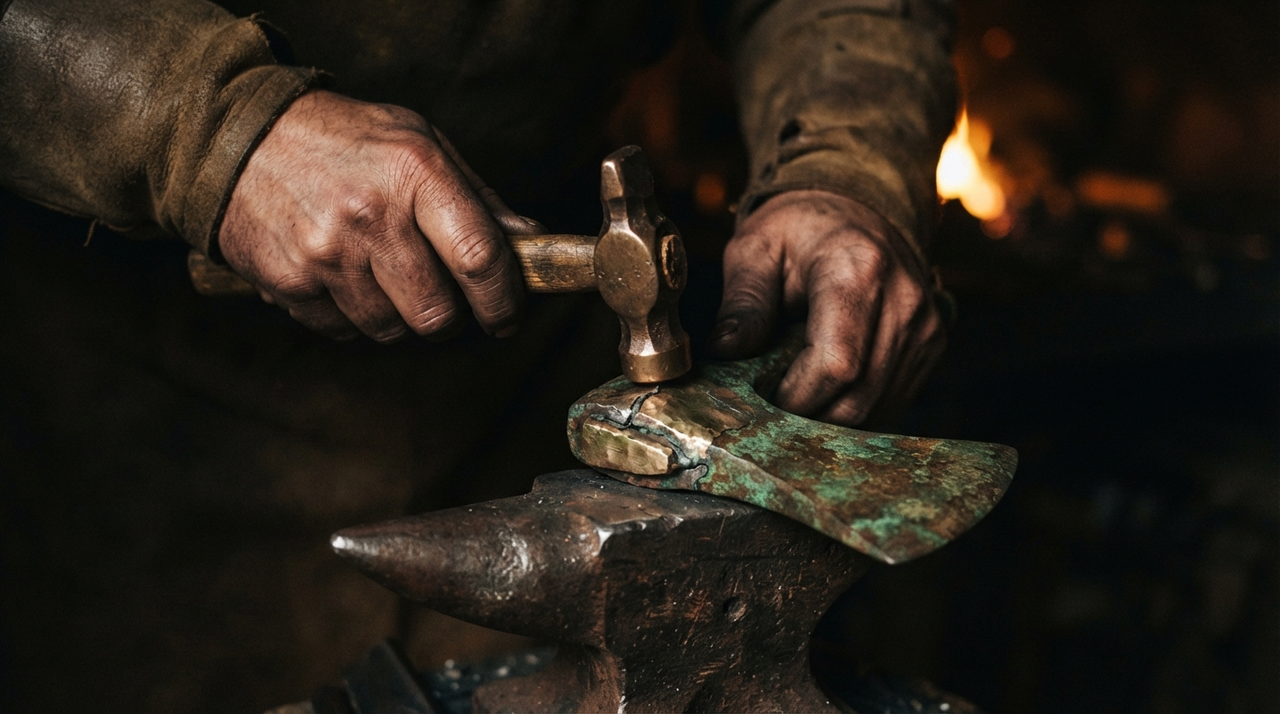
Repair as Technology: The Epic History of Kintsugi, Bronze Age Axes, and Mending Mastery
Imagine a Bronze Age axe head, its edge dulled by seasons of chopping wood and clearing land, not discarded but meticulously resharpened—sometimes dozens of times—until its form warped into something new yet enduring. This isn't failure; it's ingenuity. The history of repair reveals mending not as a stopgap, but as technology itself: a deliberate practice encoding resilience, sustainability, and the deep wisdom of maintenance as knowledge.
From Britain's ancient palstaves to Japan's kintsugi ceramics, repair stitches communities together, honoring material constraints and the hands that labored over them. It's resilience technology in action, challenging our bias toward the pristine new. Join this journey across epochs, where artifacts whisper of lived experience and ethical choices about what we choose to keep.
Bronze Age Tool Repair: Axes Forged in Repetition
In Bronze Age Britain, around 1500–800 BCE, palstave axes weren't one-and-done tools. Archaeological digs unearth blades with multiple resharpening episodes—up to 50 on some specimens—each flake removal reshaping the metal through annealing and hammering. This bronze age tool repair wasn't mere thrift; it was a sophisticated pathway of maintenance, demanding village smithies as institutional hubs where apprentices learned under bellows' roar.
Picture the smith: sweat-streaked, gauging alloy brittleness, heating to red-hot pliability before quenching. Functionally, it extended tool life amid scarce copper-tin ores, but ethically, it bound communities—farmers returning battered axes, sustaining the cycle. Counterevidence lurks in pristine hoards, ritually buried unused, hinting repair was everyday labor, not always immortalized. Material uncertainty reigned: one overheat, and the axe cracks, dooming it.
Kintsugi and Mending: Golden Scars of Muromachi Japan
Fast-forward to 15th-century Muromachi Japan, where kintsugi and mending transformed broken pottery into revered art. Shattered tea bowls, once trash, were rejoined with lacquer mixed with gold or silver powder, veins of repair gleaming like rivers of light. Born from a legend—shogun Ashikaga Yoshimasa sending a cracked Chan ware bowl to China for repair, only to receive crude staples—this practice elevated fracture as beauty.
Practice Over Artifact
Kintsugi distinguishes artifact from technique: urushi lacquer demands precise layering over months, toxic sap handled by masters in ventilated workshops. Unlike riveting, it's invisible labor made manifest, a philosophical pivot from wabi-sabi impermanence. Communities of potters and tea practitioners invested in this, turning breakage into ritual. Yet differences abound—Bronze Age repair prioritized utility; kintsugi, contemplation.
Threads Across Time: Andean Darning and Global Echoes
Today, in Andean villages, textile darning mirrors this lineage. Worn wool ponchos are mended invisibly or with colorful inserts, preserving patterns amid harsh altiplano winds. Here, maintenance as knowledge passes matrilineally, women threading stories into fabric. Unlike kintsugi's gold highlight, darning conceals, extending garments through generations—sustainability born of necessity, not trend.
Chronology reveals evolution: from axe reshaping's brute force to lacquer's finesse, repair adapts to culture and constraint. Museum bias skews our view—pristine objects dominate displays, sidelining scarred survivors, erasing the affected communities' ingenuity.
Repair's Ethical Core: What We Choose to Keep
Repair isn't salvaging failure—it's technology choosing continuity over discard.
This history of repair crosses doors to Art (kintsugi's aesthetic), Environment (resource stewardship), and The Ancestors (embodied techniques). It rejects new-as-better dogma, spotlighting labor's toll—the smith's burns, the darner's strained eyes—and ethical weight: repair honors the vulnerable, from Bronze Age herders to Andean weavers.
- Artifact: The mended object, scarred witness.
- Practice: Annealing, riveting—skills honed over lifetimes.
- Infrastructure: Smithies, lacquer guilds sustaining repair.
- Lived Experience: Hands callused by care.
Guided Journal Prompt: Mend Your Own Path
Pause. Hold an object you've repaired—or one begging for it. Journal: What story does its scars tell? What community does mending connect you to? How might embracing repair as your resilience technology shift what you choose to keep? Let this practice protect your journey through uncertainty.