
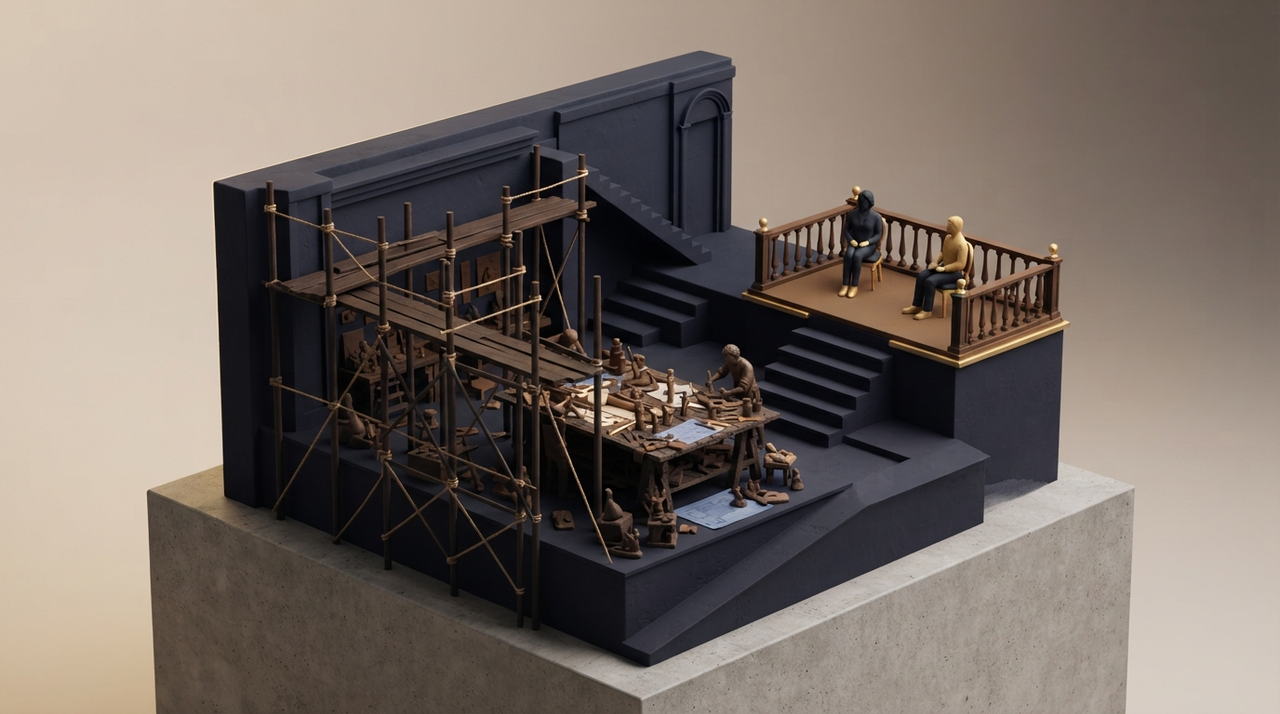
Who Pays, Who Decides, Who Appears: The Power Dynamics of Art Patronage History
Picture this: a colossal stone relief unfurling across a palace wall at Nimrud, circa 883-859 BCE. Winged genies guard the throne, lions crumple under royal chariots. Who dreamed this up? Not just the sculptor's chisel, but the king's coffers and commands. In art patronage history, the patron isn't a mere check-writer. They dictate scale, summon rare lapis lazuli from afar, gatekeep who glimpses the glory. This is power and art intertwined—commissioning art as a verb of control.
From ancient palaces to modern murals, the question echoes: Who pays shapes what endures. Who decides curates the narrative. Who appears—or vanishes—reveals the exclusions. Let's trace these dynamics, honoring the workshop's craft without flattening art into mere propaganda or backdrop.
The Patron as Shaper: Beyond Funding
Patrons don't just fund; they forge. Size? A Medici might demand frescoes swallowing cathedral vaults. Material? Emperors hoard porphyry for immortality's sheen. Access? Walls enclose the elite, scrolls stay sealed. In commissioning art, the patron's brief molds the object's life—from birth in the studio to its viewers' eyes.
Consider the ripple: a patron's whim for gold leaf elevates a panel's prestige, ensuring it outlives timber peers. Yet uncertainty lingers—did they micromanage motifs, or trust the master's flair? Evidence teases, interpretation tempts.
Workshop Dynamics: Masters, Apprentices, and Patron Briefs
Enter the atelier, a hive of hands. The master sketches the patron's vision; apprentices grind pigments, specialists gild. But tensions simmer. The workshop patron relationship pits creative alchemy against contractual steel. A brief specifies "ten scenes of victory," yet the master weaves poetry amid obedience.
Power flows both ways. Patrons fund the furnace; workshops infuse subtlety. Receipts show lapis bought in bulk, but who chose the lion's fierce gaze? This dance defines art patronage history, where collaboration masks hierarchy.
Vivid Examples: Power and Art in Action
Assyrian Palace Reliefs at Nimrud
Ashurnasirpal II's Northwest Palace (883-859 BCE) served banquets and awe. Reliefs—alabaster slabs 7 feet high—proclaimed conquests to courtiers. Inscriptions boast, "I built it," tying patron to permanence. Today, in the British Museum, they draw global crowds, their authority unchallenged by provenance debates.
Mughal Miniature Ateliers
Under Akbar's imperial library, workshops hummed with 100 painters. Patrons—emperors—commissioned dynastic epics on paper thin as breath. Specialists layered colors; the brief ensured harmony with court ideology. Albums stayed intimate, for royal eyes, their delicacy defying mass gaze.
New Deal Murals
The WPA turned the state into patron, blanketing post offices with frescoes of workers and history. Public audience baked in—no exclusions. Yet briefs steered toward uplift, not unrest. Political art here flexed democratic muscle, murals as shared legacy.
Evidence vs. Interpretation in Commissioning Art
Contracts tally ivory tusks; inscriptions proclaim pride. But intent? Assyrian boasts might mask insecurities; Mughal folios hide workshop rivalries. Distinguish hard proof from surmise—receipts confirm patronage, gazes infer power. Naming uncertainty guards against overreach.
Audiences: Intended, Excluded, Later
Who beholds? Nimrud elites feasted under reliefs; commoners barred. Mughals for connoisseurs; New Deal for all. Later viewers—us—project fresh meanings, museums amplifying the patron's echo. The workshop patron relationship thus orbits visibility's orbit.
Bounded Comparisons: Honoring Difference
Chronology anchors: Assyria's stone vs. Mughal paper vs. American plaster. Counterevidence—like a rebellious motif—preserves nuance. No tidy arc; each era's power and art unique.
Cross to politics (kings' legitimation), leadership (commissions as legacy), economics (workshops as industry). Threads bind without binding.
Tracing Forward: Institutions Behind Images
Today, as AI like Aetheria probes images' origins, ask anew: Who pays for pixels? Who decides datasets? Who appears in algorithms? Art patronage history whispers—probe patrons, honor workshops, question gazes. The canvas expands; our scrutiny must match.
In this power play, art endures not as tool, but testament. What hidden hands shape your next view?