
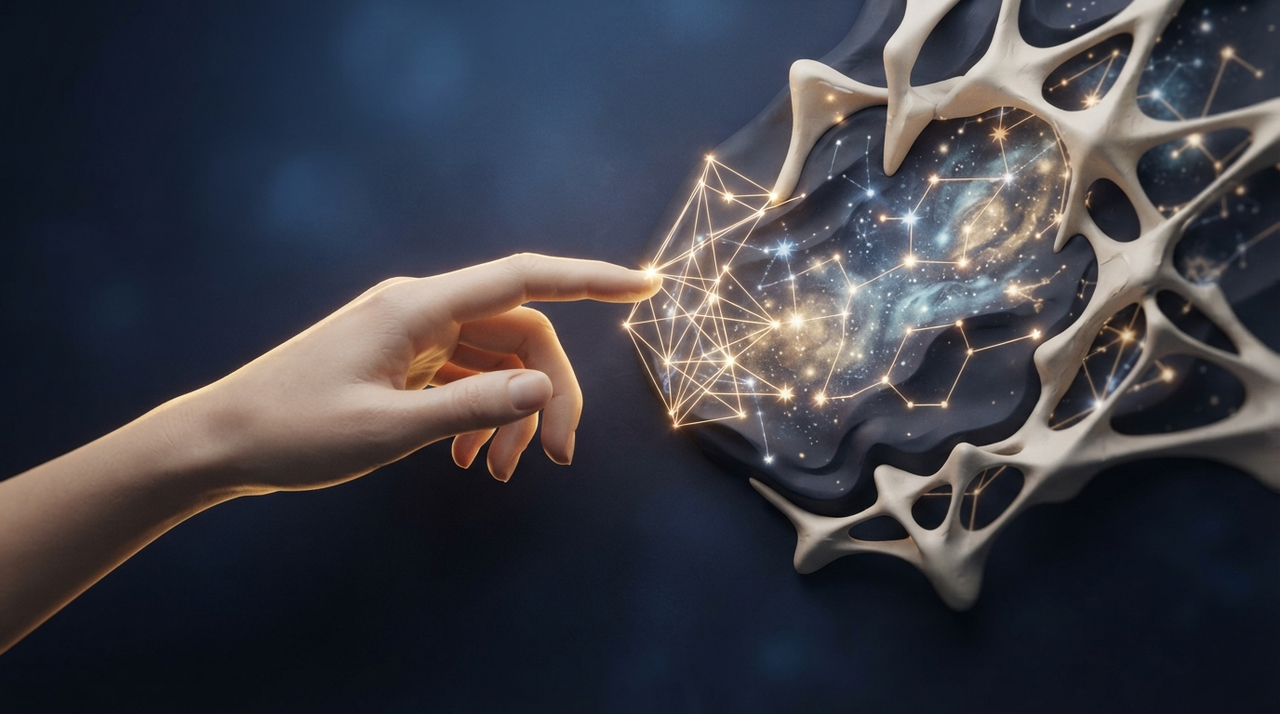
Human-AI Collaboration: Creative Tools, Real Evidence, and the Future of Work
Imagine a writer staring at a blank page, the cursor blinking like a hesitant heartbeat. Now picture that same writer, moments later, guiding an AI companion through prompts that bloom into vivid drafts. This isn't science fiction—it's the quiet revolution of human-AI collaboration, where tools amplify creativity rather than eclipse it. At Aetheria AI, we're diving into how these partnerships are reshaping workflows in writing, image generation, and scientific discovery, backed by tangible evidence, not breathless hype.
But what does the data really say? Who reaps the rewards, and who's left behind? As we explore AI creativity and the future of work, we'll sift promise from practice, pondering AI governance along the way.
Creative AI Tools: From Words to Worlds
AI tools have infiltrated creative domains with startling speed. In writing, platforms like those powered by large language models assist with ideation, editing, and even full prose generation. Users input outlines or themes, and the AI delivers structured content, freeing humans to refine nuance and voice.
Image generation tools, such as diffusion models, turn textual descriptions into photorealistic art or conceptual visuals. A designer sketches a vague idea—"cyberpunk city at dusk"—and iterates collaboratively with the AI's outputs. In science, protein-folding predictors like AlphaFold accelerate drug discovery by modeling structures that once took years.
These aren't standalone miracles; they're collaborators. Humans set the vision, AI handles the heavy lifting, creating a symbiotic loop that boosts AI creativity through human oversight.
Real Evidence: Measuring Human-AI Synergy
Productivity Gains in Practice
Usage studies paint a grounded picture. Developers using code-completion tools report up to 55% faster task completion, as seen in analyses of tools like GitHub Copilot. Writers leveraging AI for drafting see output volumes rise without proportional quality drops, per developer surveys from platforms tracking adoption.
In visuals, artists using generative models iterate 10 times quicker, blending AI speed with human curation. Scientific workflows benefit too: AlphaFold has generated over 200 million protein structures, aiding researchers in hypothesis testing far beyond manual limits.
The Gaps: Promise vs. Reality
Yet context matters. These gains shine brightest for skilled users—programmers fluent in prompting, designers with aesthetic intuition. Novices struggle with "prompt engineering," where poor inputs yield junk outputs. Studies highlight this: productivity dips for low-experience teams without training.
- Benefits skew toward knowledge workers in tech, media, pharma.
- Missing: Routine laborers, small creators without access, underrepresented regions lagging in infrastructure.
The Future of Work: Labor Shifts and Human Edge
Human-AI collaboration heralds augmentation, not replacement. Jobs evolve: copywriters become prompt architects, scientists data interpreters. Labor shifts favor hybrid roles—think "AI wranglers" who blend domain expertise with tool mastery.
Challenges loom, though. Upskilling gaps widen inequality; automation hits repetitive creative tasks hardest. The future of work demands reskilling initiatives, universal access to AI tools.
AI Governance: Steering Collaboration Wisely
AI governance emerges as the guardrail. Questions swirl: Who owns AI-generated art? How to mitigate biases in scientific models? Frameworks like EU AI Act push transparency, while voluntary standards from toolmakers emphasize ethical prompting.
In this dance of minds, governance ensures the music doesn't falter—humans lead, AI follows, together charting uncharted territories.
Balancing innovation with equity means inclusive policies: open-source tools, bias audits, worker protections.
Charting the Path Forward
Human-AI collaboration isn't a zero-sum game; it's exponential potential. Evidence shows tools enhancing, not erasing, human ingenuity. As we navigate labor shifts, the key lies in equitable access and thoughtful governance.
Dive deeper into Creativity Door for AI artistry, Business Door for enterprise impacts, or Future of Humanity Door for big-picture ethics. The collaboration era beckons—what role will you play?