
1 Enoch Explained: Watchers, Nephilim, and Its Enduring Role in the Ethiopian Bible
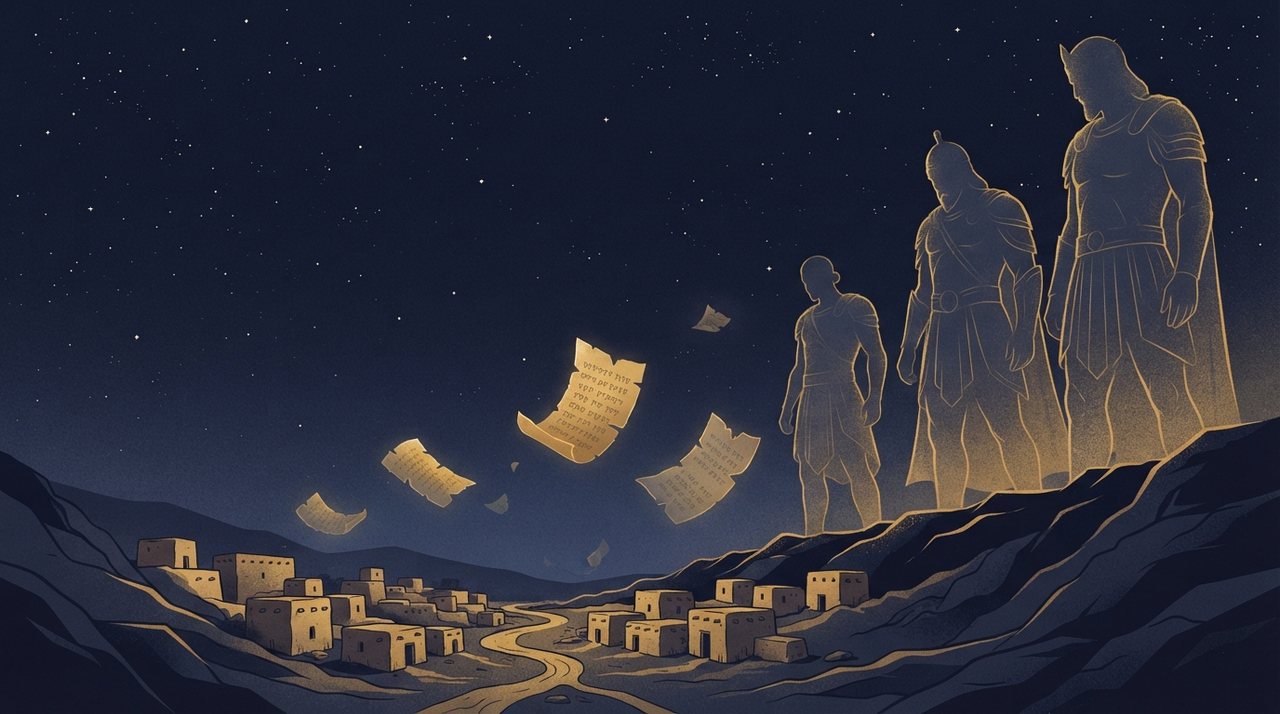
Imagine shepherds in the Judean wilderness stumbling upon scrolls that whisper of angels descending to earth, forbidden unions birthing giants, and visions of cosmic judgment. This is the world of 1 Enoch, a composite work from the Second Temple period—roughly the third century BCE to the first century CE—not penned by a single author but woven from multiple Jewish traditions. At its heart lie the Watchers, rebellious angels who lusted after human women, fathering the Nephilim, monstrous hybrids whose violence corrupted the antediluvian world.
Far from a hidden gospel, the Book of Enoch endures as a cornerstone of ancient Jewish apocalyptic literature, fully preserved only in the Ethiopian Bible.
What 1 Enoch Actually Is
Scholars classify 1 Enoch as pseudepigrapha—texts attributed to biblical figures like Enoch, great-grandfather of Noah, yet composed centuries later. Emerging during a time of Hellenistic pressures and messianic hopes, it blends myth, astronomy, ethics, and eschatology. Unlike the canonical Hebrew Bible, it expands Genesis 6:1-4's cryptic mention of "sons of God" and "daughters of men."
Debates persist on exact dating: the earliest sections may trace to the third century BCE, with later additions into the first century CE. Its influence echoes in the New Testament, notably Jude 1:14-15, which quotes Enoch directly.
The Five Sections of 1 Enoch
1 Enoch unfolds in five distinct books, each with unique voices:
- Book of the Watchers (chs. 1-36): The fall of 200 angels led by Shemihazah and Azazel.
- Book of Parables (chs. 37-71): Messianic "Son of Man" visions, possibly post-dating the others.
- Astronomical Book (chs. 72-82): Celestial calendars and sun, moon, star lore.
- Book of Dreams (chs. 83-90): Allegorical animal histories from creation to eschaton.
- Epistle of Enoch (chs. 91-108): Ethical exhortations and woes on the wicked.
This mosaic structure reveals evolving Second Temple thought, akin to The Book of Jubilees.
Angels and Watchers in Context
The Descent of the Watchers
In the Book of the Watchers, angels called "Watchers" (Hebrew 'îrîn, "those who are awake") abandon heavenly posts. They swear an oath on Mount Hermon, descend, teach humanity forbidden arts—metallurgy, cosmetics, sorcery—and mate with women. Their offspring? The Nephilim.
This narrative interprets Genesis through an angelic rebellion lens, explaining pre-Flood evil without solely blaming humans.
Who Are the Nephilim?
Nephilim, from Hebrew nəpîlîm ("fallen ones" or "giants"), are hybrid giants devouring mankind, sparking chaos that prompts the Flood. Texts describe them as three hundred cubits tall—mythic hyperbole underscoring corruption. Post-Flood, echoes linger as "mighty men of old."
"And they began to sin against birds, beasts, reptiles, fish, to devour one another's flesh, and drink the blood." (1 Enoch 7:5)
Interpretations vary: literal giants for some ancients, symbolic of tyrannical rulers for others. See our piece on Apocrypha vs Pseudepigrapha for genre context.
Manuscript Sources
No complete Hebrew or Aramaic original survives, but fragments abound:
- Aramaic: Eleven Qumran manuscripts (e.g., 4QEna [4Q201], 4QEnb [4Q202], up to 4QEng), confirming pre-Christian origins.
- Ge'ez: Full Ethiopic translation, basis for modern editions, preserved in the Ethiopian Orthodox canon.
- Greek: Fragments like Codex Panopolitanus (Alpha) and Chester Beatty Papyrus.
This multilingual tradition highlights its wide ancient reach. Explore why in Why the Ethiopian Orthodox Church Preserved More Books.
Reception in Ethiopian Orthodoxy and Early Christianity
Canonical in the Ethiopian Bible's broader Old Testament, 1 Enoch shapes liturgy and theology there. Early Christians like Tertullian revered it; Jude and 2 Peter allude to its motifs. Western canons excluded it amid debates chronicled in How Biblical Canon Was Formed.
Common Misreadings vs Scholarship
Pop culture casts 1 Enoch as suppressed secrets or UFO lore—misreadings ignoring its Jewish apocalyptic roots. Scholarship emphasizes composite authorship, manuscript variances, and interpretive diversity. It's no unified prophecy but a window into ancient minds grappling with evil's origins.
Frequently Asked Questions
Is the Book of Enoch in the Bible?
Yes, in the Ethiopian Orthodox Tewahedo Church's canon; no, in Protestant, Catholic, and most Eastern Orthodox Bibles.
Are the Nephilim demons or giants?
The text portrays them as physical giants whose spirits become demons post-Flood (1 Enoch 15).
Why Ge'ez for 1 Enoch?
Ethiopian scribes translated it early, safeguarding the full text amid losses elsewhere.
Dive deeper in the Enoch Room. Got questions? Ask The Guide or join the Journal conversation. Your journey into ancient wisdom awaits.