
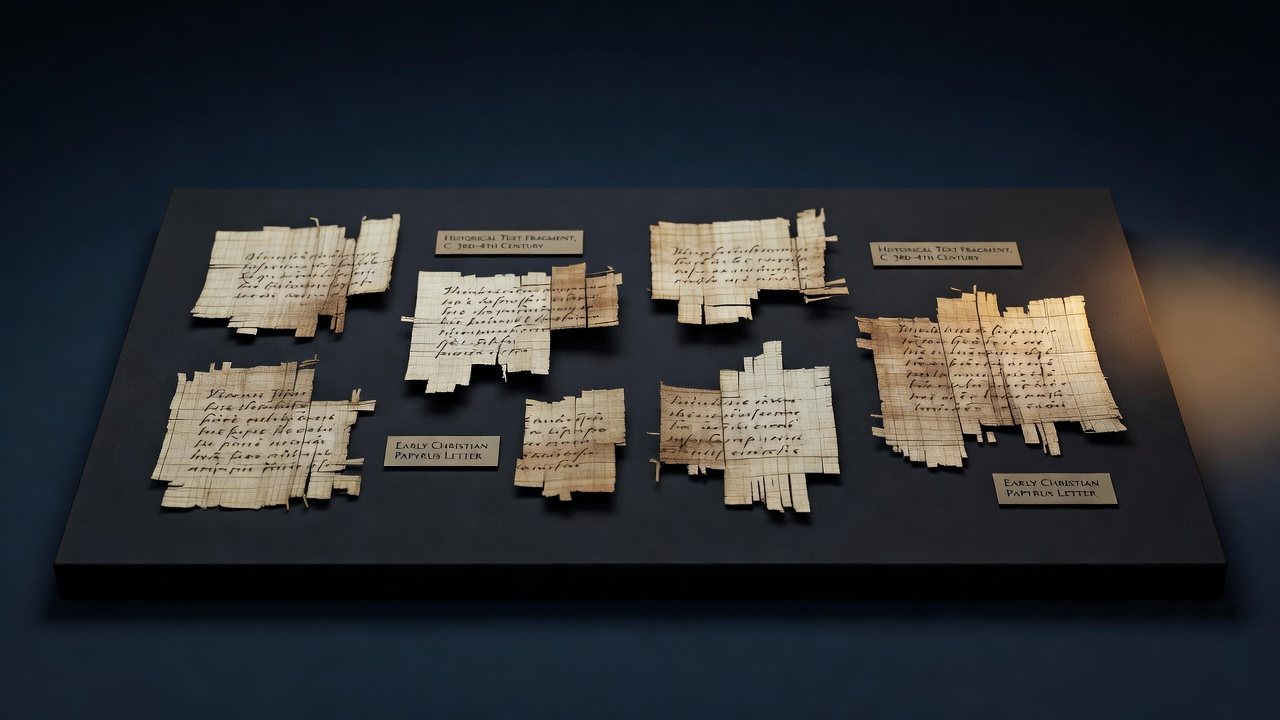
Early Christianity Uncovered: P46, Pauline Letters, and Diverse Ecclesia Leadership Beyond Bishops
Unrolling the Past: A Glimpse into New Testament Papyri
Picture this: in the dusty vaults of an ancient Egyptian library, a bundle of fragile papyrus sheets survives the millennia, whispering secrets of early Christianity. This is Papyrus 46, or P46, one of the oldest surviving collections of the Pauline letters. Dated to around 200 CE, this treasure from the Chester Beatty Library offers a direct window into the textual traditions of the New Testament, fueling endless debates in textual criticism.
Why does P46 matter? It contains ten of Paul’s epistles, including Romans, Hebrews, and the Corinthians correspondence, in a compact codex format that hints at how these texts circulated among the ecclesia—the vibrant house assemblies of believers. Unlike later polished manuscripts, P46 bears the marks of a working copy: corrections, abbreviations, and variations that scholars pore over to reconstruct the original voices of early Christianity.
But P46 isn’t just a relic; it’s a portal. Reading it alongside other primary sources like the Didache reveals a movement far more fluid than the hierarchical church of later centuries.
Pauline Letters: Blueprints of Ecclesia Leadership
Travel back to 50-60 CE. Paul pens letters from prison cells and bustling ports, addressing real crises in Corinth, Ephesus, and beyond. In Philippians 1:1, he greets “all the saints in Christ Jesus who are in Philippi, with the episkopoi and diakonoi”—overseers and servants, plural forms suggesting shared responsibility, not a lone bishop lording over the flock.
Corinth: Chaos and Collective Guidance
Corinth’s church was a powder keg of factions and immorality. Paul’s first letter (ca. 54 CE) doesn’t appoint a bishop but urges the community to exercise discipline collectively. By 96 CE, 1 Clement from Rome references presbyteroi—elders—leading Corinth’s recovery, a nod to plural leadership enduring into the late first century.
Ephesus and Antioch: Overseers Among Equals
In Ephesus, Acts 20 shows Paul warning “the episkopoi of the church” to shepherd the flock—again, plural. The pastoral epistles (1 Timothy, Titus, debated as Pauline but circulating by 100 CE) blend terms: elders appoint overseers, deacons serve tables. Antioch, Paul’s home base, echoes this in Ignatius’ letters (ca. 110 CE), where bishops emerge but amid presbyters and deacons.
These Pauline letters paint ecclesia as dynamic networks, not top-down pyramids.
The Didache and Beyond: Primary Evidence vs. Later Shadows
Enter the Didache, a late first-century manual from Syria, perhaps Antioch. It instructs: “Appoint for yourselves bishops and deacons worthy of the Lord.” No mention of a singular bishop ruling presbyters; instead, itinerant apostles, prophets, and teachers rub shoulders with local overseers. This snapshot of early Christianity from 50-110 CE underscores variety.
Primary evidence—P46, Paul’s letters, Didache—shows episkopos, presbyteros, diakonos as functional roles in fluid assemblies. Later interpretations, like Ignatius’ monarchical bishops or Irenaeus’ lists, reflect evolving structures amid heresies.
Scholars debate fiercely in textual criticism: Were pastoral epistles pseudonymous, accelerating hierarchy? Did Roman influence solidify bishops by 150 CE? Evidence distinguishes raw data from doctrinal overlays—no single “system” collapses the diversity.
Textual Criticism: Peeling Back Interpretations
- New Testament papyri like P46 preserve Pauline texts with fewer harmonizations, revealing early fluidity.
- Corinthian letters in P46 match but vary slightly from later codices, sparking questions on transmission.
- Ecclesia terms shift: plural in Paul, singular in Ignatius—evolution, not invention.
Avoid the trap of retrofitting later episcopal models onto nascent communities. Instead, early Christianity thrived on mutual oversight, echoing Jesus’ servant-leadership.
From Religion Door to Writing Memory: Your Invitation
In Aetheria AI’s Religion Door, we ground seekers in history’s soil. Cross-reference with our Writing Memory Door: lay P46 transcriptions beside Didache, Pauline letters, and 1 Clement. Side-by-side, the ecclesia’s heartbeat pulses—diverse, resilient, human.
What if leadership’s true form was never a crown, but shared hands in the dust? Dive into these sources. Uncover for yourself.