
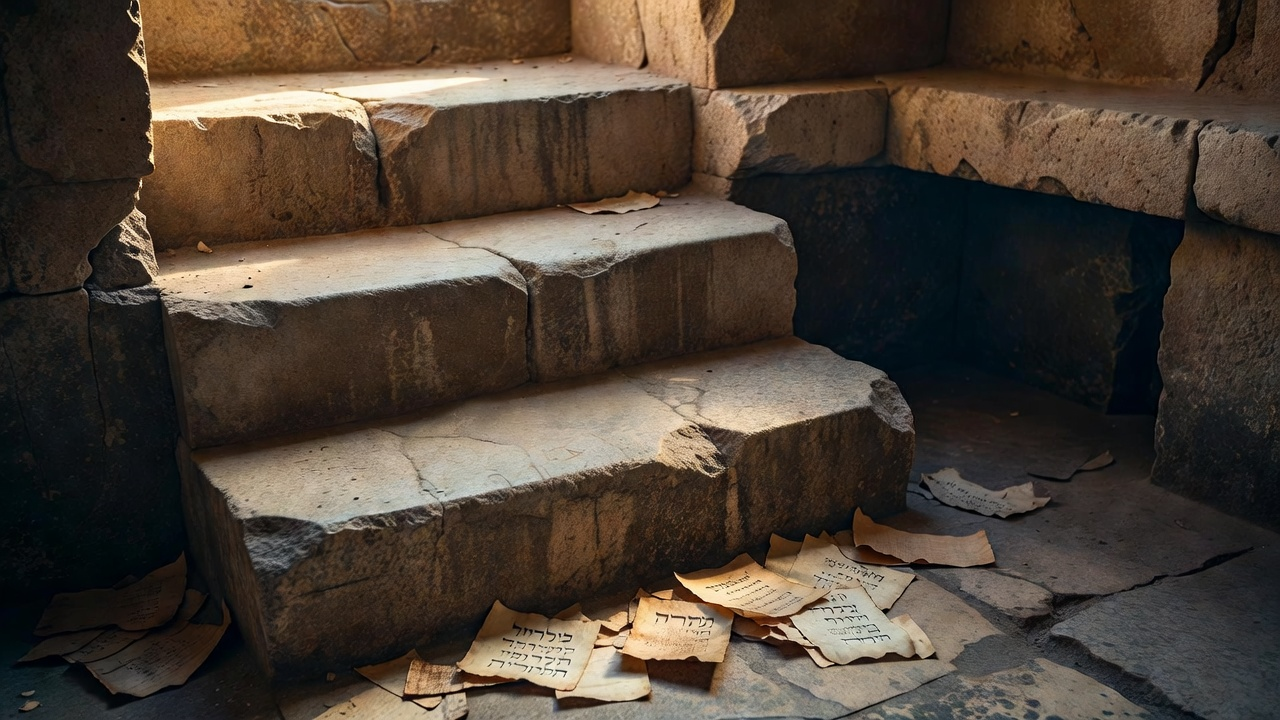
Ritual Purity in Second Temple Judaism: Mikvehs, Dead Sea Scrolls, and Sabbath Observance Revealed
Imagine descending stone steps into a cool, subterranean pool in ancient Jerusalem, the water lapping at your skin as you immerse fully, emerging cleansed not just of dirt, but of an invisible impurity that barred you from the sacred heart of Jewish life. This was no mere bath. It was a mikveh, the ritual immersion vital to Second Temple Judaism, where purity rituals governed every aspect of devotion—from Temple service to Sabbath observance. In the shadow of the grand Herodian Temple, these practices pulsed through daily existence, enforced by priests, debated by sects, and etched into the very landscape of Judea.
Second Temple Judaism, spanning roughly 516 BCE to 70 CE, was a world obsessed with ritual purity. Mikvehs dotted the hillsides, the Dead Sea Scrolls preserved sectarian rules, and historians like Josephus chronicled the fervor. Yet beneath the surface lies complexity: debates over stringency, economic ties to the Temple, and echoes in later rabbinic texts that don't quite match the archaeological record. This exploration draws from primary sources—archaeological mikvaot from the 2nd century BCE to 70 CE, the Dead Sea Scrolls' Community Rule, and Josephus's eyewitness accounts—while acknowledging the limits of what survives. What drove this pursuit of purity? And how did it shape Sabbath observance amid political turmoil?
The Historical Crucible: Hasmonean Era and the Temple Economy
Second Temple Judaism flourished amid upheaval. After Alexander the Great's conquests, Judea fell under Ptolemaic and Seleucid rule, culminating in the Maccabean Revolt (167–160 BCE). The Hasmonean dynasty that followed fused kingship with priesthood, expanding territory and rebuilding the Temple into a bustling economic hub. Ritual purity wasn't peripheral; it was the engine.
The Temple economy thrived on sacrifices, tithes, and pilgrimages—activities demanding purity. Impure individuals—through bodily emissions, corpse contact, or even certain foods—could defile the sacred space. Mikvehs proliferated near Jerusalem and in rural villages, with over 800 identified archaeologically in Judea from the 2nd century BCE onward. These stepped pools, often holding thousands of gallons of rainwater, weren't luxurious spas but functional necessities, their plaster-lined walls scarred from heavy use.
Archaeological Testimony: Mikvehs as Purity Gateways
Excavations reveal mikvehs' ubiquity. At Qumran, near the Dead Sea, multiple pools align with purity obsessions in the scrolls. In Jerusalem's Upper City, elite homes boasted private mikvehs, suggesting even laypeople extended priestly standards. A standout example: the mikveh at Masada, hewn into rock with a dividing wall to separate pure and impure waters, reflects meticulous design.
These structures enforced immersion for women post-menstruation, men after emissions, and proselytes entering the faith. Josephus, in Antiquities of the Jews (15.11.5), describes Herod's Temple mikvehs, underscoring their role in mass pilgrim cleansings. Purity wasn't optional; it sustained the Temple's sanctity and economy, where impure offerings meant financial loss.
Dead Sea Scrolls: Sectarian Visions of Ritual Purity
Discovered in 1947, the Dead Sea Scrolls offer an unparalleled window into Second Temple Judaism's diversity. Composed by the Qumran community—likely Essenes—these texts amplify ritual purity to ascetic heights. The Community Rule (1QS), a foundational document, mandates daily washings, pure food, and separation from the impure.
Purity in Community Life and Sabbath Observance
Column V of the Community Rule details ablutions as atonement, linking purity to eschatological readiness. Members underwent initiatory immersions, then regular ones for minor impurities. Sabbath observance intertwined: Damascus Document (CD 10–11) prohibits carrying items, even for purity rituals, revealing tensions between rest and cleansing.
- Priestly precedence: Levites and priests held superior purity status.
- Food purity: Shared meals required collective immersion first.
- Sabbath stringency: No work, including purity preparations, yet impurity threatened communal holiness.
This rigor contrasts mainstream practice. While Jerusalem's mikvehs served pilgrims pragmatically, Qumran's evoked a fortress mentality, preparing for divine judgment. Scholars debate if Qumranites represented a fringe or influenced broader Judaism—the scrolls' survival in jars hints at deliberate hiding during the 68 CE Roman siege, leaving interpretive gaps.
Josephus and Broader Practices: Purity Beyond the Sects
Flavius Josephus, a priest-turned-Roman apologist, bridges archaeology and texts. In Jewish War (2.8.5), he portrays Essene purity: daily immersions despite midday heat, linen garments only. Pharisees, he notes, extended purity to homes via handwashing (Ant. 18.1.3), blurring lines between Temple and domestic life.
Sabbath observance amplified purity stakes. Mishnah Shabbat (though post-Temple) recalls Second Temple-era disputes: could one immerse on Sabbath eve? Josephus implies yes, as preparation for holy rest. Yet extremes—like Essene avoidance of defecation on Sabbath—highlight sectarian variance.
“They think it an oath-breaking and impiety to conceal anything from their companions... nor do they allow pollution by attending to nature's needs on the Sabbath.” — Josephus, paraphrasing Essene vows.
Such details evoke vivid scenes: robed figures slipping into dawn-lit mikvehs, ensuring Sabbath purity amid Roman patrols.
Scholarly Debates: Stringency, Economy, and Uncertainties
Purity's Spectrum in Second Temple Judaism
Was ritual purity priestly elitism or popular piety? Archaeology suggests widespread adoption—mikvehs in Galilee villages indicate lay enthusiasm. Yet scholars like Eyal Regev argue economic motives: purity sustained priestly income via inspections and offerings.
Debates rage on stringency. Pharisees democratized purity, per Josephus, challenging Sadducean Temple monopoly. Dead Sea Scrolls push further, mandating solar calendar purity over lunar. Sabbath observance varied too: mainstream allowed life-saving purity acts; sectarians forbade even spitting.
Rabbinic Memory vs. Lived Practice
Post-70 CE rabbinic literature—Mishnah, Tosefta—remembers Second Temple practices but diverges. Rabbinic mikveh rules emphasize rainwater collection, matching archaeology, yet downplay sectarian extremes. This 'living reception' filters purity through survival: scrolls escaped destruction by chance, Josephus by collaboration, mikvehs by stone's endurance.
Uncertainty abounds. No complete Essene library survives; women's roles in purity rituals glimmer faintly in scrolls. Modern speculation—purity as psychological coping amid oppression—stays just that: speculative, unbound by sources.
Echoes Across Time: Connecting to Ancient Civilizations
Ritual purity in Second Temple Judaism resonates with broader ancient patterns. Egyptian priests bathed obsessively; Mesopotamians purified for oracles. Yet Judaism's ethical fusion—purity enabling justice, as in Amos—sets it apart. The Temple's fall in 70 CE shattered this system, birthing rabbinic Judaism's internalized holiness.
Link this to the History Door: Hasmonean expansion mirrors Hellenistic statecraft. Venture to the Ancient Civilizations Door: purity rituals parallel Zoroastrian ablutions influencing post-exilic Judaism.
An Invitation to Deeper Inquiry
Ritual purity in Second Temple Judaism—via mikvehs carved in stone, scrolls sealed in caves, and Sabbath boundaries fiercely guarded—reveals a people navigating sanctity amid empire. It wasn't monolithic; it breathed with debate, devotion, and adaptation. What fragments survive whisper of lost voices, urging us to question: How does purity, ancient or modern, define our thresholds of the holy?
Dive deeper into Biblical Studies. Explore Aetheria AI's Religion Door for more on these enduring quests. The mikveh's waters still ripple—what mysteries will you uncover?