
Unlocking Apocrypha & Pseudepigrapha: 1 Enoch, Jubilees, Manuscript Evidence, and Canon Formation
Picture this: a shepherd boy tosses a stone into a Judean cave in 1947, shattering silence with echoes of ancient worlds. The Dead Sea Scrolls emerge, fragments of 1 Enoch and Jubilees among them, challenging tidy narratives of scripture. These texts—apocrypha and pseudepigrapha—hover on the edges of Jewish and Christian canons, rich with visions of angels, cosmic order, and human origins. For students of ancient texts, they offer a portal into fluid scriptural traditions, where manuscript evidence illuminates forgotten receptions and canon formation unfolds like a detective story.
Defining Apocrypha and Pseudepigrapha: Beyond the Canonical Veil
Apocrypha, from the Greek for "hidden," often refers to books in the Septuagint—Greek Old Testament—absent from the Hebrew Bible, like Tobit or Wisdom of Solomon. Catholics deem them deuterocanonical; Protestants sideline them. Pseudepigrapha, "falsely inscribed," are works attributed to biblical figures, such as Enoch or Moses, yet penned centuries later. These categories, scholarly tools, don't capture ancient fluidity: communities cherished them alongside Torah scrolls.
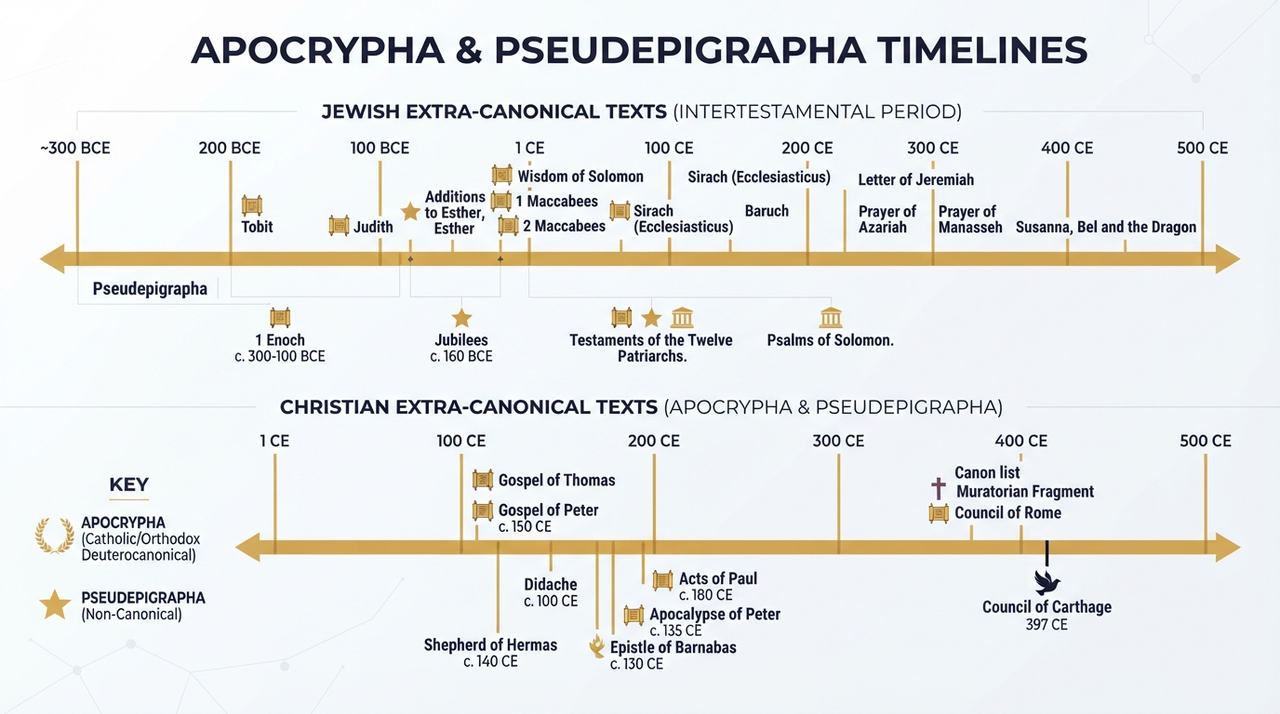
Enter 1 Enoch and Jubilees, jewels of pseudepigrapha. 1 Enoch, a composite from the third century BCE to first CE, weaves Enoch's heavenly journeys, fallen Watchers corrupting earth, and apocalyptic judgment. Jubilees, "Little Genesis," retells Genesis-Exodus through an angelic narrator, imposing a 49-year Jubilee cycle on history.
Manuscript Evidence: Scrolls from the Desert
Qumran's Treasures and Beyond
Manuscript evidence anchors these texts in history. At Qumran, Essene scribes hoarded 11 Aramaic fragments of 1 Enoch—Books of Watchers, Astronomical Book, Dream Visions—dating 200 BCE to 100 CE. Jubilees fares similarly: 15 Hebrew manuscripts, proving Second Temple Jewish circulation. No full Hebrew Enoch survives; Ethiopic Ge'ez versions, from fourth-century translations, preserve the complete 108-chapter tome, revered in Ethiopian Orthodoxy.
Greek snippets from Akhmim (sixth century) and Vatican fragments echo New Testament allusions, like Jude 14-15 quoting Enoch directly. This manuscript evidence reveals widespread use: from Judean deserts to Aksumite highlands.
Canon Formation: Drawing Sacred Lines
Jewish Councils, Christian Debates
Canon formation crystallized post-70 CE Temple destruction. Rabbinic sages at Jamnia (circa 90 CE) prioritized Hebrew Torah and Prophets, excluding Enochian lore amid apocalyptic fervor. Yet Jubilees influenced Qumran's solar calendar, clashing with lunar Pharisaic rites.
- Septuagint included apocrypha, shaping early Christian Bibles.
- Church Fathers like Tertullian hailed 1 Enoch; Origen cited Jubilees.
- Councils—Hippo (393), Carthage (397)—affirmed broader canons for Western churches.
Boundaries weren't ironclad. Ethiopian canons embrace 1 Enoch fully; Syriac traditions nod to Jubilees. Scholarly labels like pseudepigrapha mask vibrant reception: quoted in Dead Sea texts, echoed in Revelation's imagery.
Ancient Communities and Scholarly Shadows
Essenes pored over these at Qumran, weaving Enoch into communal rules. Early Christians, pre-Muratorian Canon (170 CE), invoked them against heresy. Not esoteric curiosities, but interpretive keys to Genesis: Watchers explain Nephilim; Jubilees frames Creation's sabbaths.
Modern scholarship distinguishes apocrypha from pseudepigrapha rigorously, yet ancient readers blurred lines, prioritizing edification over authorship. This tension enriches Biblical Studies, linking Enoch's ascent to Creation's mysteries.
Echoes in Eternity: Why They Matter Today
Unlocking apocrypha and pseudepigrapha unveils scripture's workshop: diverse voices shaping monotheism. From Qumran's dust to digital archives, 1 Enoch, Jubilees, and their manuscript evidence testify to living traditions. As you trace canon formation's contours, ponder: what hidden texts whisper to your understanding of the divine?
In the scrolls' fragile script, worlds unborn stir—inviting seekers to question, discover, and reverently wander ancient paths.