
Beyond 'Slavery': Corvée Labor, Debt Bondage, and Ancient Coerced Workforces
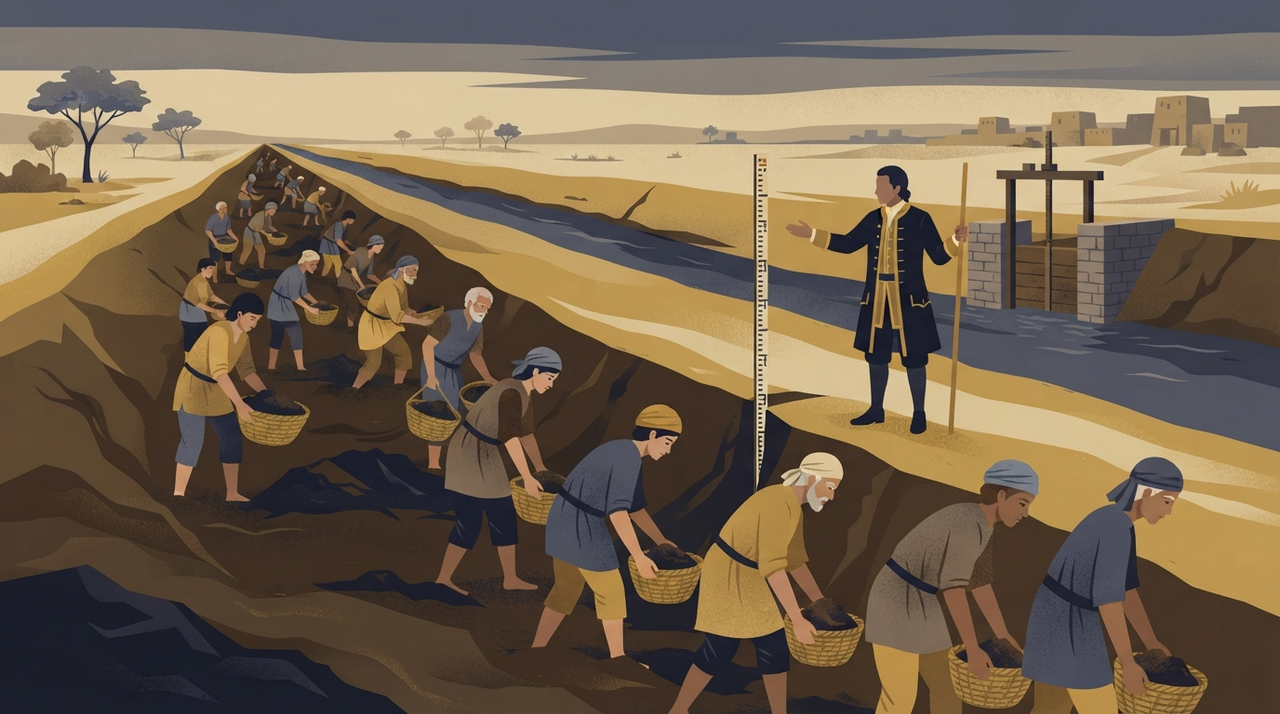
Dawn breaks over the Nile. Teams of villagers shoulder tools and baskets, trudging toward half-dug canals under overseers' watchful eyes. These are not chattel slaves bought at market, but local men summoned by royal decree for the flood season's levy. Refusal means fines or seizure of land. This corvée labor, obligatory service to the state, built Egypt's irrigation networks and monuments. Farther east, in Mesopotamia, similar crews dredged silt from Tigris canals, their efforts recorded in clay tablets as seasonal dues. Such scenes remind us: much of ancient production relied on people who could not easily refuse the work.
Coerced labor took many forms, each tied to specific places, periods, and power structures. Corvée labor differed from debt bondage, just as both stood apart from birth-status slavery or penal servitude. Lumping them under "slavery" obscures their mechanics. Household production by kin or dependents sustained most families through subsistence farming and care work. Redistribution via temples and palaces funneled grain from harvests. Trade moved goods along rivers. Markets existed in cities, but money circulated unevenly. Taxation extracted labor or produce. Debt arose from loans or shortfalls. Property meant control over fields or herds, often precarious amid ecological limits like floods or droughts. Coerced labor wove through these, enforcing unequal access.
Corvée Labor in Mesopotamia and Egypt
In third-millennium BCE Mesopotamia, city-states like Uruk levied corvée on able-bodied men for canal maintenance and temple construction. Texts from Girsu detail ilku service: adult males owed days or months yearly, organized by village quotas. Women and children joined for harvests. Workers received barley rations, but the levy strained households during planting. Egypt's Old Kingdom pharaohs mobilized corvée for pyramids and basins. Inscriptions boast millions of blocks moved, yet papyri show rotations: farmers served thirty days, then returned home. Overseers tracked shifts to prevent abuse.
This seasonal corvée contrasted with permanent bondage. Participants retained land rights and family ties, unlike chattel slaves. Yet coercion loomed: evasion invited corporal punishment or property loss. Archaeology reveals tools and camps, but skeletal stress marks hint at burdens.
Temple and Palace Dependent Workforces
Ration Lists as Windows and Walls
Mesopotamian temples housed thousands: dependants born into service, debtors, captives. Ur III ration lists from 2100 BCE name brewers, weavers, smiths receiving barley, oil, wool by status. Children got less; elites more. These temple workforces spun textiles, baked bread, herded sheep, sustaining redistribution. Palaces in Mari or Babylon mirrored this, with scribal records concealing flight or resistance. Egyptian temples similarly bound artisans and laborers to gods' estates, their output feeding priests and corvée crews alike.
Lists reveal hierarchies but hide informal exchanges or care work by unbound kin. Dependants could not quit without penalty, yet manumission occurred, as sparse deeds attest.
Classical Mediterranean Slavery's Varieties
By the fifth century BCE, Greek poleis defined slavery as legal non-personhood. Athens held 20-30% slaves: household cooks and tutors lived with families; Laurion mines chained men in toxic depths; potters' workshops chained skilled foreigners. Roman law echoed this, with slaves as property yet capable of manumission. War captives swelled numbers; debt sales fed them pre-Solon reforms. These differed from corvée: slaves lacked kin protections, worked year-round.
Resistance marked all: Greek mine revolts, Roman runaways to bandit groups. Laws limited overseer cruelty, hinting at communal norms.
Debt Bondage and War Captivity
Debt bondage snared freeholders via loans at high interest. Neo-Babylonian tablets show families pledging children as pledges, redeemable by repayment. Solon's Athens banned it, shifting to judicial slavery. War captivity created instant unfreedom: Assyrian raids stocked palaces; Hellenistic conquests filled workshops. These paths blurred with birth slavery but allowed ransom or purchase out.
Evidence, Debates, and Broader Ties
Law codes like Hammurabi's distinguish slave purchase from corvée fines. Archaeology yields camps, tools, but few voices. Interpretation varies: some see temple dependants as near-free tenants; others stress coercion. Uncertainty persists where lists end.
These institutions link to politics of extraction, histories of state formation, ethics of obligation, first laws on persons, business via temple enterprises. Atlantic plantations later scaled chattel slavery for sugar, but ancient forms stayed local, embedded.
Who could leave the work? Who ate its fruits? Who inscribed the tallies? Descendant communities and scholars weigh these today. What coerced labors shape our records?