
Land Tenure Unraveled: Overlapping Claims from Mesopotamian Fields to Andean Ayllus
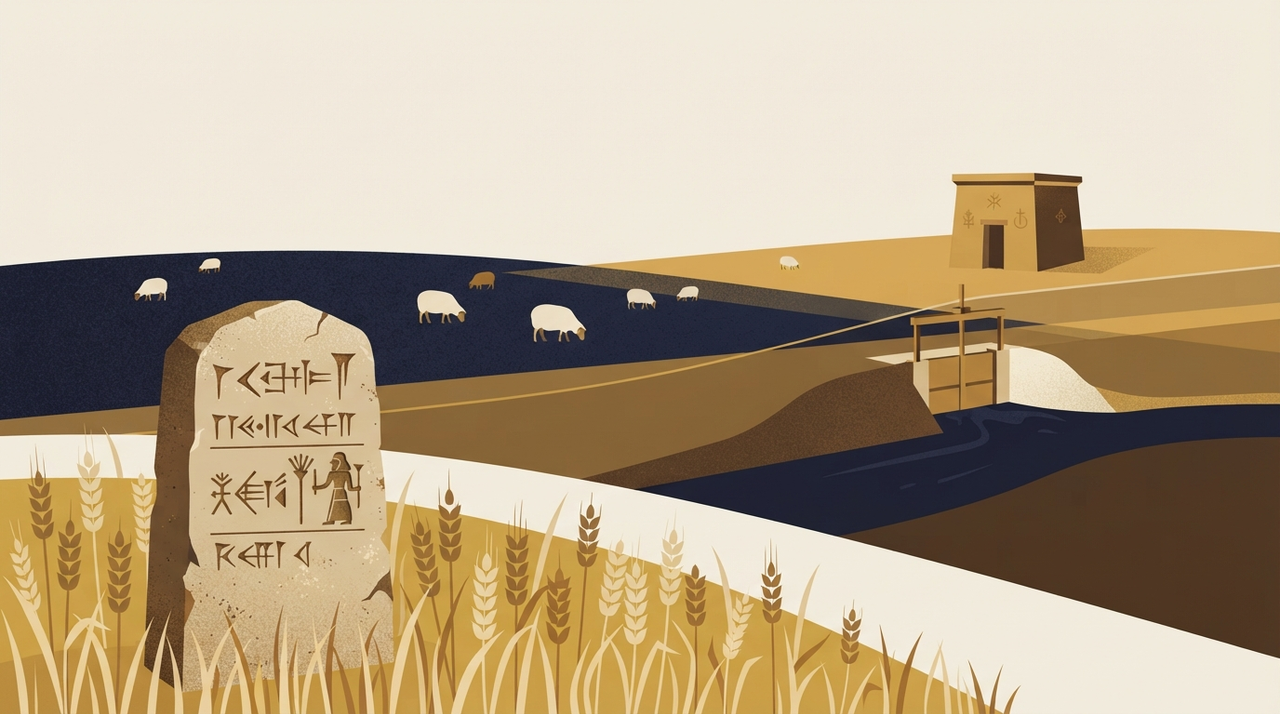
Picture a sun-baked field near the Euphrates in third-millennium BCE Mesopotamia. A farmer named Lu guides his oxen through furrows on a plot assigned to his household by the temple of Inanna. Nearby, temple overseers watch, ready to collect barley as rent. After harvest, herders from the fringes drive sheep across the stubble to graze. A canal cuts the edge, its water drawn by all who dig. Who owns this ground? No single hand claims it all. Such layered access defined land tenure long before fences or deeds.
Land Tenure as a Bundle of Claims
Land tenure names the overlapping rights people hold over soil: to plow and sow household fields, to pasture flocks on communal ground, to gather wood or water, to pass plots to kin, or to pledge them for loans. These property claims rarely meant absolute exclusion. Ancient land rights emerged from kinship, temples, rulers, and neighbors, shaping work and obligation without modern private property's sharp edges. The commons appeared as one thread in this weave, not a prelude to ownership.
Mesopotamian Fields: Temple Allotments and Household Plots
In Sumerian cities like Ur around 2100 BCE, cuneiform tablets detail temple estates worked by dependent laborers who threshed grain under overseers. Households received iku-plots—about an acre each—to cultivate for their sustenance, repaying the temple in kind. Palace lands followed suit, allotting fields to soldiers or officials. Sales occurred, yet tablets record pledges more than free alienations; a plot might pass via marriage or debt, but temples reclaimed lapsed holdings. Power rested with scribal bureaucracies tracking yields, not individual titles. Uncertainty lingers: do these records capture peasant gleaning or pastoral after-rights?
Kemet's Temple Estates and Royal Grants
Across the Nile in Kemet, known today as ancient Egypt, temple estates of gods like Amun sprawled near Thebes by 1500 BCE. Priests managed domains where peasants sowed emmer wheat and flax under seasonal obligations, including corvée for canals. Pharaohs granted fields to favored nobles, yet these reverted or paid dues. Papyri like the Wilbour Papyrus survey holdings, noting cultivators' use-rights beside institutional claims. No blanket state ownership prevailed; overlaps sustained flood-based farming amid pharaonic power.
Medieval England's Open Fields and Shifting Pastures
Fast-forward to twelfth-century England, where villagers tilled open fields in scattered strips. A yeoman might hold arable for rye, owing labor to the lord's demesne. Communal pasture on the waste—fallow meadows and woods—hosted sheep after harvest, regulated by village by-laws. Manorial courts enforced gleaning turns and stray limits. Enclosure from the sixteenth century consolidated strips into hedged farms, sparking disputes over lost commons. This clash hinged on use-rights, not pristine tragedy; scholars like Jeanette Neeson note thriving communal pasture before fences.
Andean Ayllus: Kin Lands under Inka Demands
In the Andes, ayllus—kin-based communities—allocated terraced fields for potatoes and quinoa among members, with communal pasture for llamas above. When Inka rulers expanded from Cusco around 1400 CE, they imposed mita labor: ayllu folk worked state plots or roads, yielding tribute in kind. Spanish chronicles and quipu knots suggest overlapping claims persisted; ayllu topsoil stayed local, while subsoil served the Sapa Inka. Coercion mingled with reciprocity, veiling subsistence care amid empire.
What Sources Reveal and Conceal
Tablets, papyri, Domesday surveys, and ethnohistories illuminate allotments and rents yet mute gleaners, herders, and women sustaining kin via informal paths. Scribal voices dominate, sidelining ecological limits or unequal access. Later archives, like enclosure petitions, frame winners' tales. Critics of Garrett Hardin's 1968 "tragedy of the commons" essay, including Elinor Ostrom, highlight self-governed rules thriving in these records.
These cases link to Aetheria's History Door for archival depths, Business for obligation webs, Politics for power in claims, Environment for pasture limits, and First Laws for custom codes. Economic history unfolds through such grounded views.
Toward Sharper Questions
Land tenure invites us to parse visible claims in a tablet or quipu: who cultivates, who taxes, who grazes? Whose voices fade from the clay? Power decided what endured. Probe a source today. What obligations bind its fields? Listen across eras for shared human arrangements, fostering inquiry into our own contested grounds.