
Money as Trust: From Ancient Seals and Coins to Suftaja and Bills of Exchange
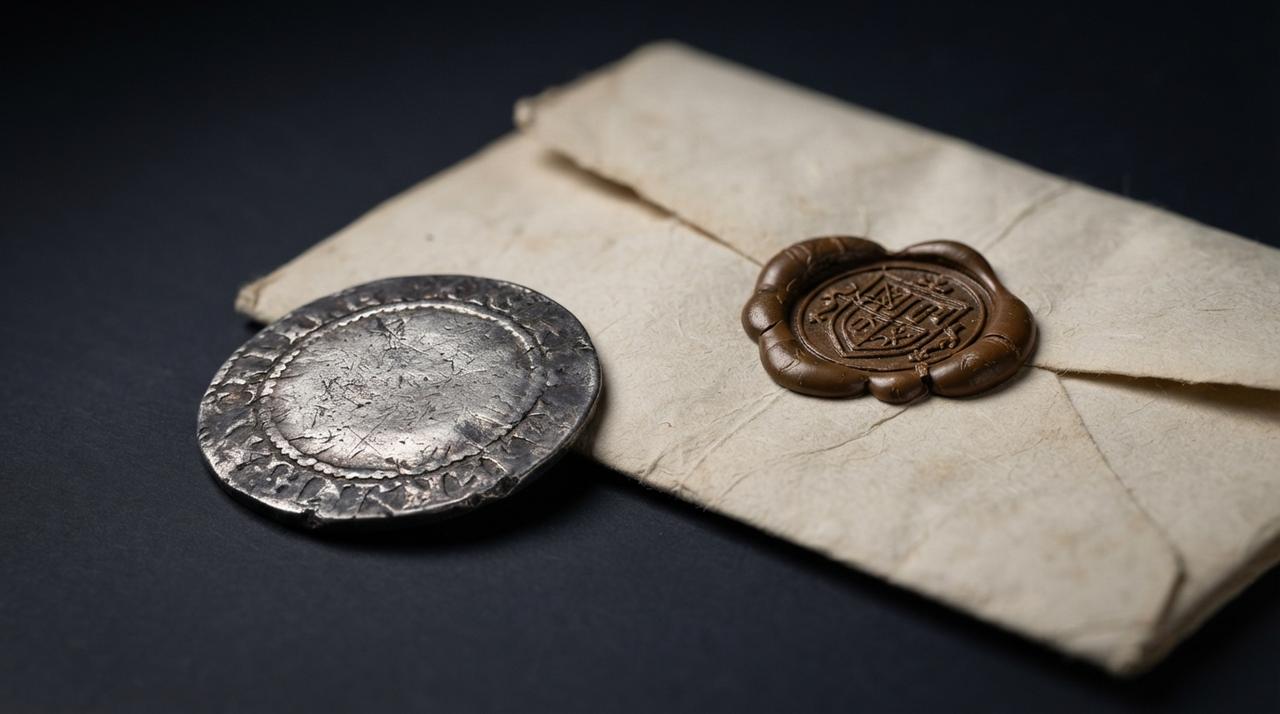
Imagine holding a small, worn coin in your palm, its surface etched with faint traces of a long-forgotten king or goddess. Nearby lies a sealed clay bulla, its impressions from a cylinder seal speaking of oaths sworn millennia ago. Tucked beside them is a folded letter, wax seal intact, promising payment across distant lands. These artifacts are not mere curiosities. They are the tangible threads of trust that wove human economies together long before modern banks or digital ledgers. Money, at its core, has always been a technology of trust, a way to make strangers reliable enough for exchange. This essay explores that history, from ancient seals to sophisticated bills of exchange, revealing how local institutions anchored faith in value across time and space.
Scholars caution against tidy origin stories. The old tale of barter as money's predecessor, a universal stage of awkward swaps resolved by coins, crumbles under evidence. Direct exchanges happened, yes, but often within communities bound by kinship or custom. Real leaps came when people needed to trust beyond the village fire. Seals, bullae, coins, and credit instruments emerged not as moral triumphs or market inevitabilities, but as practical tools calibrated to specific societies' needs for verifiable promises.
Seals and Bullae: The First Tokens of Trust
In the cradle of civilization, around 3500 BCE in Mesopotamia, trust began with clay. Merchants pressed commodities like barley or wool into envelopes of clay, then sealed them with personal cylinder seals. These bullae served as tamper-evident wrappers, their unique impressions guaranteeing contents until the buyer broke them open. No coins yet, just the weight of clay and the prestige of the seal's owner.
By 3000 BCE, temples in Sumer evolved this into proto-accounting. Priests tallied debts on cuneiform tablets, using seals to authenticate entries. A farmer might deposit grain at the temple granary, receiving a sealed token in return. That token embodied trust in the temple's permanence and divine oversight. Local institutions like these temples were the bedrock, their authority rooted in religion and community consensus rather than distant decrees.
Across the Fertile Crescent, similar systems proliferated. In Egypt, granaries issued receipts marked with pharaoh's cartouches. These were not abstract money but claims on real goods, redeemable at trusted storehouses. The genius lay in standardization: a seal from a known family or temple carried weight far beyond sightlines, turning personal reputation into portable assurance.
The Dawn of Coined Money: History of Coinage in the Ancient World
Electrum and the Lydian-Greek Enigma
Fast forward to the seventh century BCE. In Anatolia, now Turkey, electrum lumps appeared: natural alloys of gold and silver stamped with lions or official motifs. Were these the first coins, minted by Lydian kings like Gyges or Croesus? Or did Greek city-states on the Ionian coast pioneer them? Evidence tilts toward Lydia for the earliest stamped ingots around 640 BCE, but Greek temple records hint at similar use slightly earlier. Uncertainty persists, a reminder that innovation often blooms in borderlands where cultures collide.
What mattered more than primacy was purpose. These electrum pieces solved the problem of weighing and assaying precious metals each time. A state's stamp pledged consistent purity and weight, shifting trust from the metal itself to the minting authority. Commodity money evolved into coined money, where the ruler's image or symbol vouched for value.
Greek Civic Coinage: Politics in Every Punch
By the sixth century BCE, Greek poleis minted their own silver coins. Athens' owls, Corinth's Pegasus: each city's silver drachma embodied civic pride. The history of coinage here reveals money as deeply political. Poleis controlled mints to fund wars, temples, and fleets, but also to foster internal trust. Citizens accepted Athenian coins because they trusted the Assembly and the Areopagus to maintain standards.
Local institutions shone. Temples often housed mints or served as banks, accepting deposits and issuing loans. In Delphi, the oracle's sanctuary doubled as a vault for allies' treasures, its coins circulating as sacred trust. Coinage knit disparate traders into networks, but always tethered to the polis's reputation. A worn owl coin in a Sicilian market evoked Athens' naval might and democratic vigor.
Distinctions in Trust Technologies: From Commodities to Credit
Not all money clinked. Commodity money persisted: cowrie shells in Africa, cacao beans in Mesoamerica, salt slabs in Ethiopia. These relied on universal desirability and local verification. Temple deposits formalized this: surrender gold or grain, receive a chit redeemable later. In Babylon under Hammurabi, temples managed such ledgers, blending religious sanctity with economic function.
Book credit took it further. In Assyria's kārums, trading colonies kept running tallies on clay tablets. A merchant bought on account, settling at vintage with weighed silver. Trust hinged on the kārum's impartial records and enforcers. This was money and trust without metal: entries in ledgers backed by institutional memory.
Bills of exchange and letters of credit would perfect this abstraction, but first, intermediaries arose. In classical Greece, trapezitai bankers accepted deposits, paying interest and facilitating transfers via written orders. A lender in Piraeus could instruct payment to a client in Corinth, the bank vouching for the debt.
Eastern Horizons: Chinese Cash and Institutional Paper
China offers a parallel saga. From the fifth century BCE, bronze cash coins with square holes circulated: durable, low-value, government-issued. The Qin dynasty standardized them, linking trust to imperial decree. Yet coins were cumbersome for bulk trade. By the Tang era, merchants used 'flying cash' certificates, redeemable at capital offices.
The Song dynasty's jiaozi, around 1024 CE, marked true paper money's birth. Issued by state-supervised merchant guilds in Sichuan, these notes promised redemption in cash coins. Local institutions mattered: guilds pooled bullion, and officials stamped notes for authenticity. Hyperinflation later struck when overissued, underscoring trust's fragility without backing. Still, jiaozi enabled vast internal trade, trust scaled by bureaucracy and regional networks.
Islamic Suftaja: Pioneers of the Bill of Exchange
Letters of Credit History in the Dar al-Islam
From the eighth century, the Abbasid Caliphate buzzed with commerce. Gold dinars and silver dirhams, pure and stamped, dominated, but distance demanded ingenuity. Enter suftaja: drafts drawn by a debtor on a distant agent, payable to a third party. A Baghdad merchant sold goods to a buyer in Damascus, issuing a suftaja instead of coin. The buyer presented it to the merchant's partner, who paid from local credits.
Suftaja embodied money and trust through networks of sarrafs, moneychangers embedded in bazaars and caravanserais. Islamic law bolstered this: prohibition on riba (usury) spurred profit-sharing partnerships like mudarabah, where risks aligned interests. Trust flowed from reputation, family ties, and qadi courts enforcing contracts. By the 12th century, suftaja circulated widely, precursors to modern bills of exchange.
In Cairo's markets or Cordoba's suqs, a suftaja's validity rested on the issuer's honor and the carrier's endorsement. Local institutions, from guild overseers to notaries, verified and registered them, minimizing fraud. This system greased trade from India to al-Andalus, proving credit instruments could outpace even the swiftest camel trains.
Medieval Europe: Bills of Exchange and Champion Fairs
Letters of Credit History Evolves
Europe rediscovered these tools via Crusader contacts and Italian city-states. By the 12th century, Champagne fairs hosted bills of exchange. A Flemish wool merchant sold to an Italian buyer at the Troyes fair, receiving a bill payable in Genoa three months hence. Cambium tables set exchange rates, camouflaging interest as currency fluctuation.
Italian bankers like the Bardi and Peruzzi dominated. From Lucca or Florence, they issued bills drawn on London or Bruges branches. Trust pivoted on family firms' reputations and notarial authentication. The history of bills of exchange shows evolution: simple promises grew into multicopy sets, with cambiali carrying acceptances like modern checks.
Local institutions anchored it all. Fairs had juries enforcing payments; guilds regulated bankers. Royal charters lent weight, but private networks prevailed. When Edward III defaulted on Bardi loans in 1345, ripples exposed trust's limits, yet the system endured, fueling Renaissance commerce.
The Perils of Trust: Counterfeiting, Debasement, and State Power
Trust invited betrayal. Counterfeiting plagued every era. In ancient Athens, clippers shaved silver owls; Roman forgers cast base metal cores. Penalties were draconian: death or exile. Debasement was subtler, kings alloying coins to fund wars, eroding faith. Philip IV of France's 1295 debasement sparked riots, while Chinese emperors faced peasant revolts over clipped cash.
States asserted monopoly. Solon's Athenian reforms fixed standards; Diocletian's edict enforced purity. In Islam, caliphs controlled mints; Europe saw monarchs like Henry II reclaim coinage rights. Politics intertwined: coins propagandized rule, their integrity signaling leadership's strength. Local mints persisted, but central oversight grew, balancing trust with control.
Lives Beyond the Coin: Rations and Household Economies
Coins and credits served elites and traders, but most lived coin-poor. In Mesopotamia, temple rations distributed barley by the sila. Egypt's corvée laborers received bread and beer allotments. Rome's annona fed plebs with grain dole, trust in the state granary paramount.
Households produced internally: women spun wool, men tilled plots, bartering surplus locally. In feudal Europe, manorial demesnes doled obligations in kind. Even in monetized zones, wages often stayed virtual, settled at harvest. Money and trust extended unevenly, strongest where institutions bridged strangers.
What Coins Cannot Buy
Reflect on a bustling agora or medieval fair. Coins bought amphorae of wine, bolts of silk, but not the loyalty of a phalanx mate or the whisper of a family secret. Trust beyond money persisted in oaths, marriages, guilds. Today, as algorithms promise frictionless exchange, ancient lessons endure: value rests on verifiable promises, local anchors amid global flows.
Ponder this for your city: what cannot its coins buy? Bring that question to the Business Door, where inquiry into existence meets the forge of human enterprise.