
What Counts as Knowledge? Unraveling Curriculum History, Canon Formation, and Education Policy
Picture a Sumerian scribe, fingers stained with clay, etching multiplication tables onto a tablet under the Mesopotamian sun. This wasn't mere busywork—it was the dawn of formalized curriculum history, a deliberate selection of what counted as knowledge. Who decided? Scribes training future elites. What was excluded? The oral wisdom of farmers and herders. Fast-forward through millennia, and the question persists: In the grand editorial act of education, what counts as knowledge?
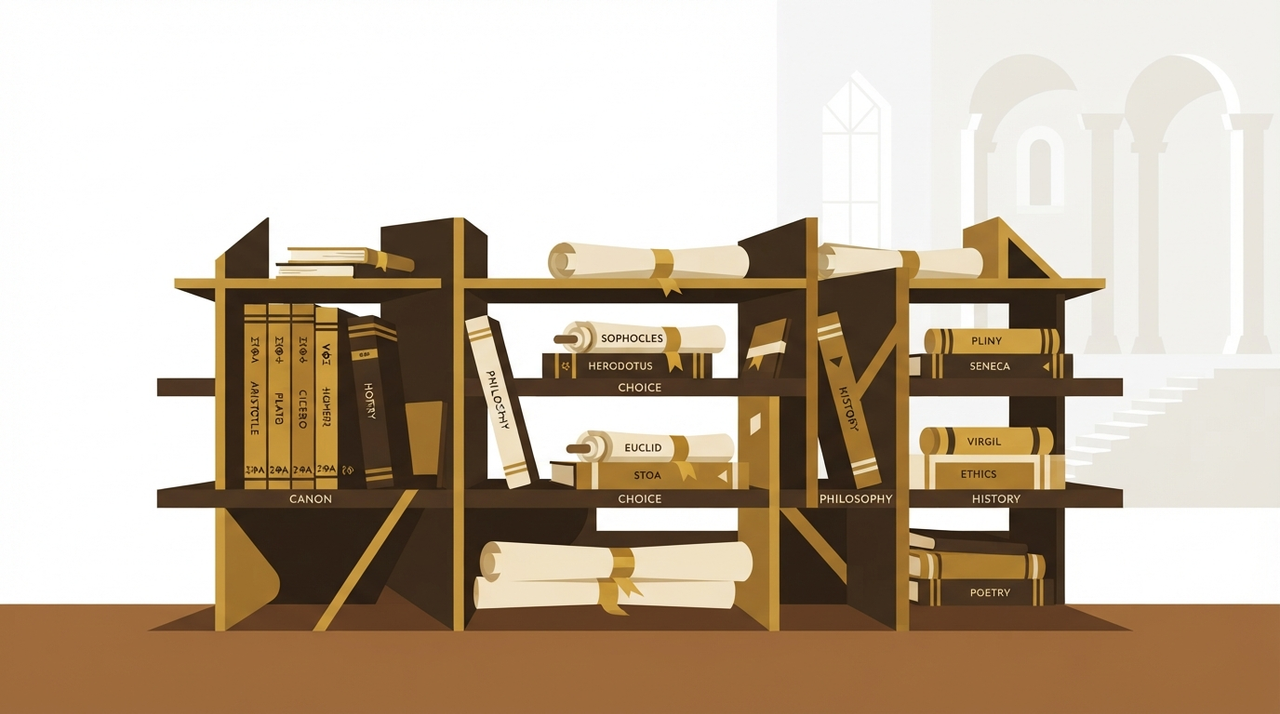
Curriculum isn't neutral. It's a canon formation process—curating, sequencing, and gatekeeping ideas. Distinct from pedagogy (how we teach), it's the what and in what order. Institutions wield power here, from ancient academies to modern ministries. Lived learning in communities often challenges these top-down structures, fueling policy debates. For students of existence mapping knowledge's pathways, understanding this history illuminates today's education policy battles.
Ancient Foundations: Sumerian Tablets and the Alexandrian Mouseion
Around 3500 BCE in Sumer (modern Iraq), cuneiform tablets served as the first curricula. Language: Sumerian and early Akkadian. Institution: scribal schools (edubba). Access: Boys from elite families, training for bureaucracy. Pathway: From basic signs to math, law, and literature like the Epic of Gilgamesh. Function: Practical—tax records, contracts. Exclusions: Women's knowledge, nomadic traditions. Counterevidence: Surviving women's letters hint at informal literacies.
Centuries later, in 3rd-century BCE Alexandria, Egypt, the Mouseion—a research institution tied to the Library—housed scholars like Euclid and Eratosthenes. Language: Greek. Access: Male scholars, funded by Ptolemaic rulers. Chronology shifted to inquiry-driven: math, astronomy, poetry. Differences from Sumer: Less rote, more debate. Yet exclusions loomed—non-Greeks, slaves. The Mouseion's canon prioritized Hellenistic synthesis over local Egyptian lore.
Medieval Synthesis: Trivium and Quadrivium in Europe's Cloisters
The Seven Liberal Arts as Canon Formation
By the 12th century CE, in monastic and cathedral schools across Europe (e.g., Chartres, France), the trivium (grammar, rhetoric, logic) and quadrivium (arithmetic, geometry, music, astronomy) formed the core curriculum. Language: Latin. Institution: Church-controlled universities emerging from Bologna to Paris. Access: Clergy and nobility's sons. Pathway: Trivium for language mastery, quadrivium for cosmic order—preparing souls and minds. Function: Theological harmony with Plato and Aristotle.
Exclusions cut deep: Vernacular tongues, Islamic or Jewish scholarship (despite influences like Averroes), folk healing. Comparisons reveal evolution—from Sumer's utility to Alexandria's scholarship to medieval piety. Yet threads persist: Elites curating for stability.
Print and Nationalism: Early Modern to 19th-Century Schooling Canons
The printing press revolutionized curriculum history in 16th-century Europe. Textbooks like Luther's catechisms or Comenius's Orbis Pictus standardized sequences. Language: Vernaculars alongside Latin. Institutions: State-emerging schools. Access: Expanding to burghers, though girls lagged.
By the 19th century, nation-states codified canons—Prussia's seminar model influencing U.S. common schools. Place: Berlin to Boston. Function: Citizens for industry and empire. Exclusions: Indigenous knowledges, working-class trades. Differences: Mass scale versus elite tutelage, yet canon formation echoed—classics for moral fiber, sciences for progress.
Echoes in Today's Education Policy: Who Chooses the Canon?
- Institutional history: Ministries vs. local boards debate standards.
- Curriculum sequences prioritize STEM or humanities?
- Pedagogy adapts, but lived learning—from apprenticeships to online forums—asserts community authority.
Policy arguments rage: Core knowledge versus skills? Cross-Door explorations await in our Wisdom shelves, Books Door, or Politics: Public Debate.
As students of existence, unraveling canon formation reveals power's quiet hand. Protect the journey by questioning: Whose knowledge shapes your path?
Open inquiry beckons. Dive deeper—what canon will you curate?