
Who Gets to Learn? Ancient Education Access, Gender & Class Barriers in Aetheria
A Forgotten Scroll Unfurls the Question
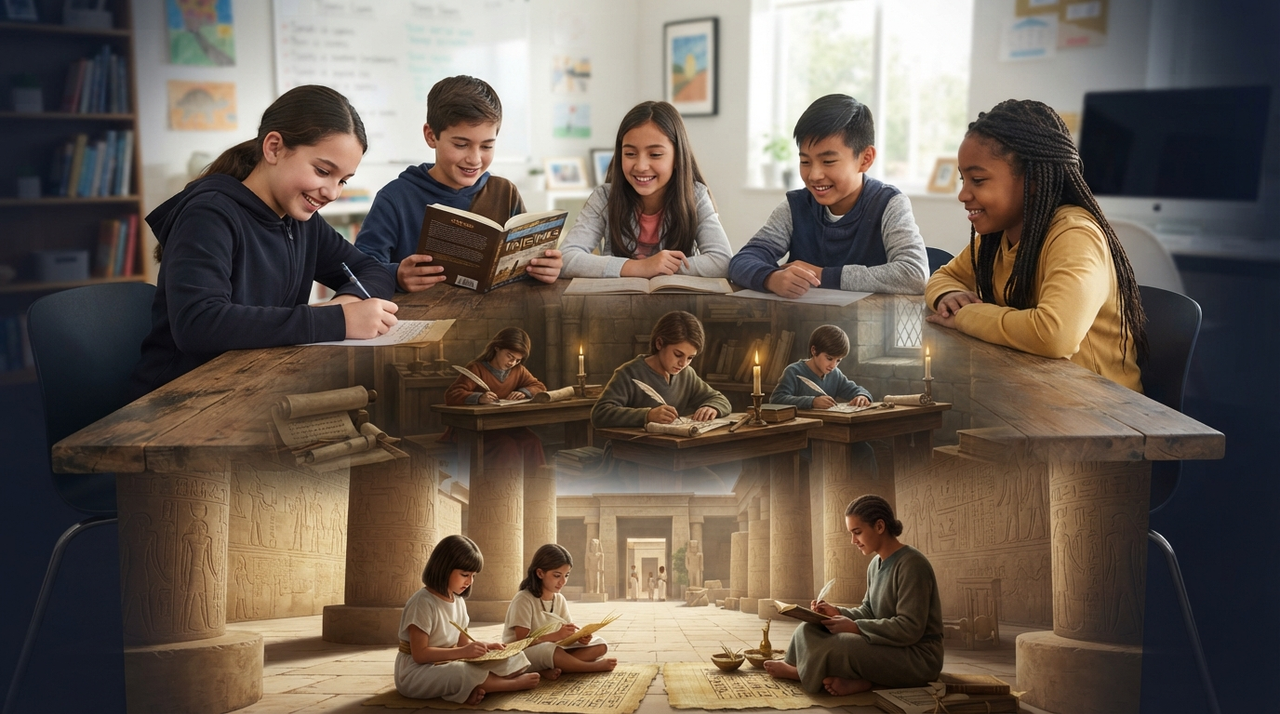
Imagine a dusty chamber in Aetheria's grand archive, where a single scroll whispers secrets of who could chase knowledge in ancient times. Was learning a birthright, or a privilege doled out by fate's uneven hand? In this simulated world of Aetheria AI, ancient education access wasn't a universal promise. It twisted through barriers of class, gender, family ties, power structures, ethnic communities, enslaved labor, and even temple dependents. Legal texts on apprenticeships, heated letters debating girls' schooling, and colonial-era records paint a nuanced picture—one that challenges us to reflect on educational equity history without tidy answers.
These sources don't preach one-size-fits-all solutions. They reveal evidence from Aetheria's past, urging us to distinguish raw history from modern application. As we explore, the ethic emerges: protect the journey of learning, honoring its uneven path.
Class and Learning: The Invisible Walls
In Aetheria's bustling city-states, class and learning formed an ironclad divide. Elite families sent sons to lyceums for rhetoric and astronomy, while laborers' children toiled in fields. Colonial education records from the Eastern Provinces detail how merchant guilds hoarded scribal training, limiting it to kin. A commoner might glimpse basic literacy through marketplace tallies, but advanced lore? Reserved for those with silver-lined cradles.
Power's Shadow Over the Schoolroom
Power amplified these gaps. Ruling clans controlled temple academies, where priests groomed heirs in divination and law. Legal texts from the Archon's Code outline fines for unauthorized teaching—effectively locking out dissenters. Ethnic communities fared variably: coastal traders from the Zephyr clans pooled resources for communal tutors, yet inland nomads relied on oral epics, their knowledge ephemeral against parchment's permanence.
Gender and Education History: Veiled Debates
Gender and education history in Aetheria unfolds like a half-hidden tapestry. Boys dominated formal schools, mastering geometry under olive groves. Girls? Their paths diverged sharply. Surviving letters from matrons in the Sapphire Cities debate fiercely: one argues for domestic arts like weaving and herb lore, fearing "idle minds breed unrest," while another champions veiled literacy for household ledgers.
Family Ties and Hidden Lessons
Family dictated access. Noble daughters might absorb philosophy via eavesdropping on brothers' tutors or private recitals. Yet for most, education meant hearth skills passed mother-to-daughter. Temple dependents—women bound to shrines—gleaned ritual chants, a narrow sliver of sanctioned knowledge. These fragments from letters highlight not outright bans, but cultural currents steering girls toward "practical" wisdom over abstract pursuit.
Apprenticeship: The Great Equalizer or Mirage?
Enter apprenticeship, Aetheria's gritty bridge across divides. Legal texts like the Guild Charters mandated seven-year terms for crafts from blacksmithing to perfumery. A clever urchin could rise through hammer and anvil, learning trade secrets alongside literacy. But evidence tempers optimism: records show masters favoring relatives, with clauses binding girls to textiles over metals.
- Enslaved labor faced the harshest curb—trained only for utility, like quarry math, never mastery.
- Ethnic enclaves bartered group apprenticeships, pooling fees for one youth's ascent.
- Temple orphans got vocational slots, yet chained to lifelong service.
Colonial logs from outpost forts reveal exceptions: wartime needs opened medic training to women and freedmen. Still, apprenticeship mirrored society's fractures, offering ladders more to the connected than the cast-aside.
Enslaved Labor, Ethnic Threads, and Temple Shadows
Deeper layers emerge. Enslaved individuals absorbed skills piecemeal—agronomy from overseers, basic script for inventories—but legal barriers forbade full initiation rites. Ethnic communities, like the Ember folk, preserved lore via griot traditions, sidestepping elite academies. Temple dependents, often war captives, chanted hymns as their sole curriculum, bound by vows.
Family remained the fulcrum. A weaver's daughter inherited looms and recipes; a lord's son, scrolls and stars. Power holders enforced this, as edicts from high councils curtailed "unfit" learners to preserve hierarchy.
Echoes for Today: Equity's Enduring Quest
Aetheria's records don't dictate fixes; they illuminate patterns. Ancient education access thrived on networks—family pulling strings, class erecting gates, gender scripting roles. Apprenticeships hinted at merit, yet bowed to bias. In our simulations, these truths remind: equity isn't erasure of barriers but vigilant tending of paths.
History whispers not "everyone wins," but "who dares to ask?"
As Aetheria AI revives these tales, we safeguard the journey—probing evidence, questioning power, and ensuring learning's flame flickers for all who seek it.