
Goats, Locusts, and Shifting Rivers: Nonhuman Actors in Multispecies History
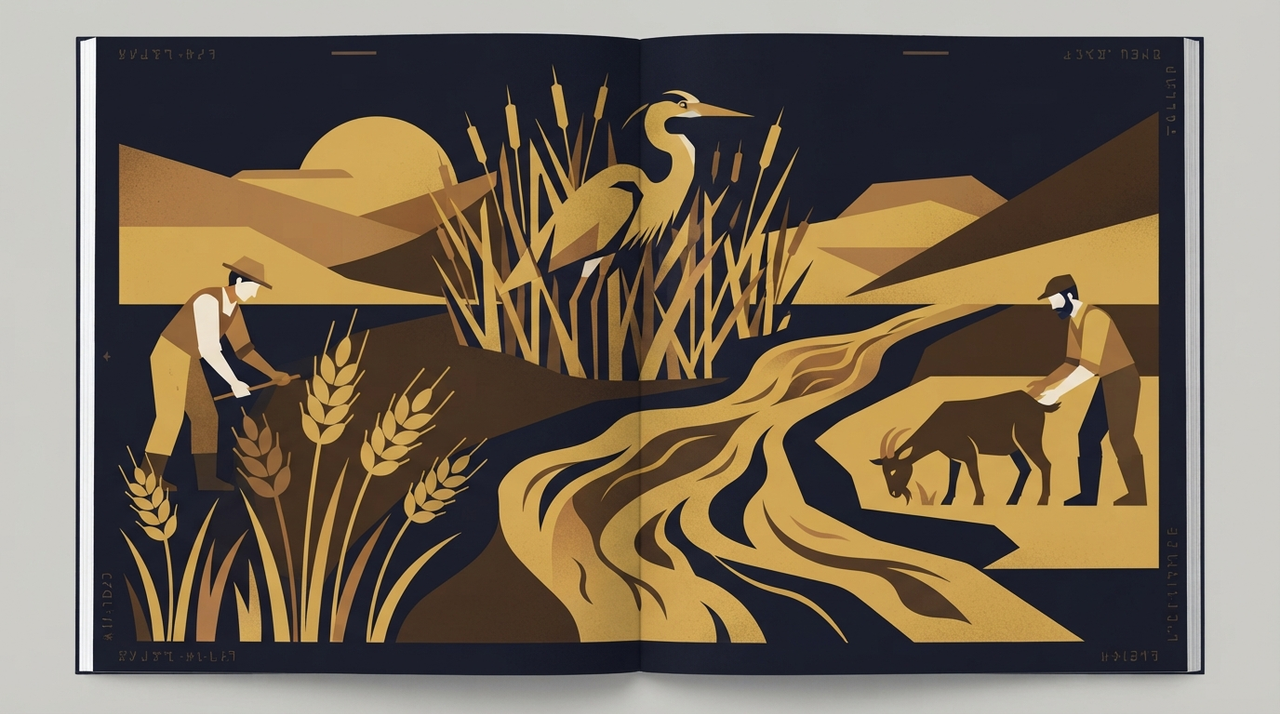
Picture a herder on a sun-baked hillside in medieval Iceland, goats scattering across thin turf. Each bite strips roots, loosens soil. Winds howl, rain falls harder some years. The slope erodes. Pasture shrinks. What starts as forage choice ripples into farm abandonment by the fourteenth century. Goats did not decide to ruin the land. Yet their appetites reshaped settlement patterns. This is multispecies history: nonhuman lives like goats, locusts, wheat rust fungi, malaria mosquitoes, and wandering river channels exerting tangible effects on what humans plant, tax, and recall.
Calling these forces "actors" spotlights their agency without granting boardroom intentions. Agency here means causal power, observable in uneven landscapes, crop failures, disease gradients. Environmental archaeology traces such nonhuman agency through bones, pollen cores, sediment layers. These reveal animals as historical actors alongside people, plants, rivers, and environment. No pristine wilds or moral collapses. Just bounded cases, full of chronology, scale, labor, and human choices amid uncertainty.
Unruly Herds and the Overgrazing Debate
Herd animals test agrarian ecology limits. Norse settlers in Greenland from the tenth century brought sheep and goats to fjords. Pollen records show woody shrubs yielding to grasses by 1200. Bones pile with sheep remains. Did overgrazing doom farms as climate cooled? Debate rages. Some archaeologists point to Viking meat preferences and manure mismanagement on steep slopes. Others note selective herding favored steep, ungrazed uplands persisting today. Uncertainty lingers: soil cores hint at wind erosion amplifying hoof damage, but human fuel-cutting scarred turf equally.
Scale matters. Small Icelandic steads folded under goat pressure plus volcanic ash. Larger Near Eastern flocks in Bronze Age Syria compacted soils, spurring terrace builds. Herders adapted, yet unequal exposure hit pastoralists hardest. Nonhuman agency emerges not as sole driver, but constraint on expansion.
Swarming Insects and Crop Invaders
Locust swarms blot skies over ancient Mesopotamia. Cuneiform tablets from 1700 BCE lament fields stripped bare. Biblical plagues echo real irruptions: desert locusts breed in Sahel rains, migrate on winds, devouring wheat. Agrarian ecology buckles. Taxes falter; granaries empty. Wheat rust fungi ride winds too, blackening stems in Ethiopian highlands around 1200 CE, just as terraced farming peaked.
Mosquito Limits on Settlement
Malaria mosquitoes shaped tropical edges. In Roman Italy, anopheles thrived in stagnant marshes. Villas clustered on hills; lowlands stayed malarial traps. Sediment pollen marks olive and wheat retreat from Pontine Marshes by 200 CE. Infrastructure like drainage canals pushed back, but mosquitoes rebounded in wet cycles. Settlement paused, taxes rerouted. Disease organisms acted through vectors, biology, hydrology. Human labor built walls; insects pierced them.
Rivers That Refuse to Hold Still
Rivers carve multispecies history. The Yellow River in China shifted course seven times between 200 BCE and 1900 CE, dumping silt, salinizing fields. Levees burst; canals clogged. Farmers replanted millet on higher banks, but floods dictated crop choices. In Indus valleys, monsoon-fed channels wandered post-1900 BCE, stranding Harappan cities. Satellite cores confirm avulsions: rivers braided new paths, leaving salts behind. Infrastructure strained; tribute flows rerouted. Rivers constrained empires, their sediment loads outpacing shovels.
Bones and Pollen Versus Textual Omens
Texts recast nonhuman actors. Egyptian scribes logged locusts as divine ire, goats as temple tribute. Assyrian annals tally sheep taxes. Yet zooarchaeology tells fuller tales: Anatolian bone assemblages mix wild gazelle with domestic herds, signaling opportunistic herding amid overgrazing risks. Pollen from Andean lakes records quinoa weeds overtaking terraces by 1000 CE, matching Inca oral histories of pest surges.
Cultigens traveled too: maize weeds hitched to Maya clearings, amaranth shadowing Aztec milpas. Archaeology distinguishes resource use from cultural reads. Bones quantify diets; texts encode politics.
Echoes in Archaeology, Myth, and Economy
Multispecies history bridges doors. Environmental archaeology parses nonhuman agency from human labor. Sacred places hold pollinator traces in cave pollens. Myths encode locust memories; economics tracks river-tied trade. Living communities, from Navajo herders to Mekong fishers, voice kin-relations with goats or channels. Their authority grounds reconstructions, naming uncertainties overlooked in old texts.
Next time a chronicle mentions famine or flood, ask: which lives does it notice? Goats munching edges? Mosquitoes in the mist? Rivers redrawing maps? Multispecies history invites such questions, revealing nonhuman agency woven through human striving.