
Stewardship as Shared Commons: Conservation Histories, Ethics, Justice, and Community Care
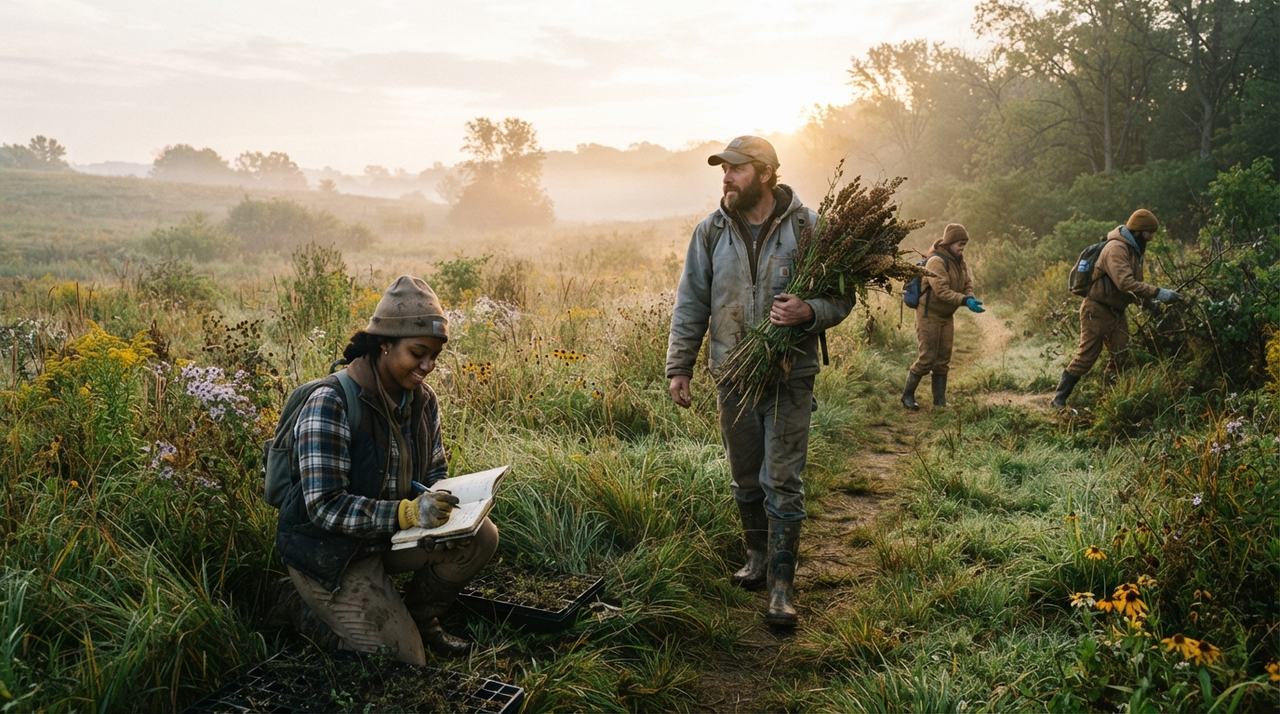
Imagine a Nepali hillside where villagers gather at dawn, axes slung over shoulders, to thin overcrowded pine stands. No distant bureaucrats dictate the cuts; decisions rise from the group, balancing fuelwood needs with hillside stability. This scene, etched in the rhythms of community land management, contrasts sharply with the iron gates of 19th-century enclosures, where common pastures fell to private hands. Stewardship as shared commons threads through conservation history—not as a pristine ideal, but as contested ground where care meets power.
What does it mean to tend the earth together? Across epochs, answers diverge, shaped by ecology, culture, and authority. From U.S. national parks to Japanese satoyama landscapes, these stories reveal stewardship ethics not as universal doctrine, but as adaptive practice amid enclosure's shadows and communal resurgence.
Tracing Conservation History: Enclosures and Enduring Commons
Conservation history often pivots on the commons—the shared resources villagers once grazed, foraged, and farmed. In medieval Europe, enclosure acts privatized these lands, prioritizing wool over communal bread. Echoes resound in colonial eras: British India fenced forests for timber, displacing shifting cultivators.
Yet commons endured. In Japan, satoyama—mosaic farmlands edged by coppiced woods—emerged over centuries, peaking in the Edo period (1603–1868). Here, stewardship ethics wove households into cycles of rice paddies fed by leaf litter mulch, sustaining biodiversity through deliberate use. Fire regimes stayed gentle, fostering oak-rich understories rather than monoculture.
U.S. National Parks: The Fortress Model Takes Root
Contrast this with 1872's Yellowstone, America's first national park. Born amid Romantic awe for "untouched" wilderness, it barred Indigenous hunters whose controlled burns had shaped meadows for millennia. Army rangers enforced exclusion, prioritizing scenery over people. Biodiversity thrived in spots—grizzlies rebounded—but fire suppression sparked megafires, challenging the no-touch ethos.
Community Land Management in Nepal: Devolution and Resilience
Nepal's community forestry, formalized in 1978, marks a pivot. Amid deforestation from 1960s fuel demands, the government handed degraded hillsides to Forest User Groups (FUGs). By the 1990s, thousands managed 1.5 million hectares, blending smallholder needs with regeneration. Regeneration rates outpaced state forests; biodiversity metrics, like bird counts, rose where rules curbed overharvest.
Ecological constraints differ: Himalayan slopes demand erosion control, unlike Yellowstone's vast basins. Functions vary too—Nepal prioritizes livelihoods, satoyama nutrient cycling, parks preservation. Counterevidence lurks: elite capture in some FUGs echoes enclosure inequities. Present-day authority rests with locals, monitored by rangers, proving devolution's fragility and promise.
- Chronology: Parks (1870s onward), satoyama (pre-modern), Nepal (1978+).
- Pathways: Top-down exclusion vs. bottom-up handover.
- Differences: Zero-access vs. regulated use, amid material limits like soil fragility.
Stewardship Ethics, Environmental Justice, and Power's Shadow
Stewardship ethics frame land as relational, not owned outright. Yet environmental justice probes: Who fences the commons? Extraction—timber barons in 19th-century U.S., agribusiness today—delivers wealth upward while downstream communities bear floods or pollution. Indigenous fire practitioners in Australia, managing savannas since time immemorial, reclaim authority against settler fire bans that fueled 2019–20 blazes.
Institutions matter. Park rangers patrol boundaries; smallholders vote in assemblies. Access hinges on power—who speaks in co-management boards? No model reigns supreme; hybrids emerge, like U.S. tribes co-stewarding Bears Ears since 2021.
Stewardship thrives where care counters control, weaving ethics into everyday acts.
This intersects Aetheria's Relationships Door, probing human-earth bonds, and Ethics Door, questioning just futures.
Toward Lived Commons: A Reflective Step
Communities—from satoyama elders to Nepali FUGs—embody stewardship as muscle memory: thinning, burning, sharing. No doom, but curiosity: How might your patch of earth invite shared tending?
Start small. Notice a weedy verge or backyard thicket. What regime—fire, graze, prune—once shaped it? Gather a neighbor; test a rule. In this micro-commons, conservation history lives, ethics breathe, justice roots. What tender do you owe the world?