
Terrace Walls and Hidden Labor: Rewriting Environmental History Through Fields, Forests, and Human Hands
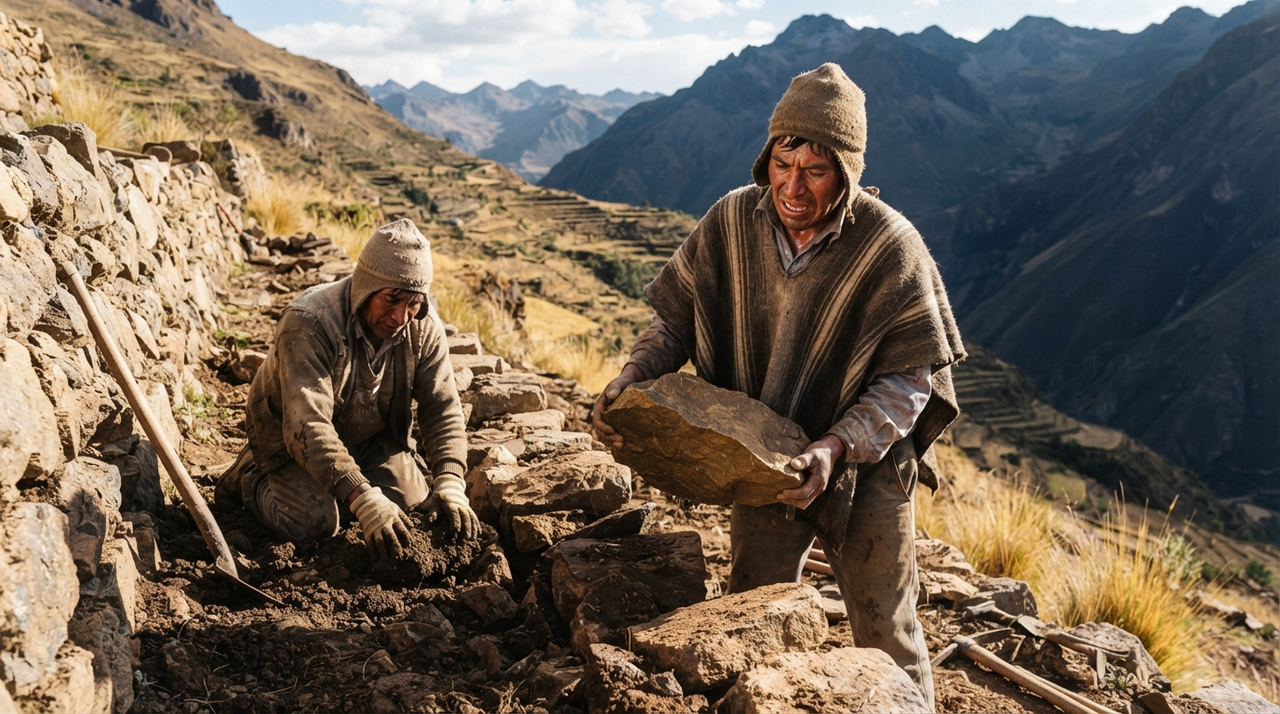
A stonemason kneels on a steep Andean slope, fitting a fresh block into a crumbling terrace wall. Rain has washed soil downslope, exposing roots and gaps. He pauses, wipes sweat from his brow, and hauls another stone from a pile gathered earlier. This wall, built centuries ago, holds back earth that feeds a village below. Terrace agriculture demands such labor: hands shaping stone and soil against gravity's pull.
Landscapes appear eternal, but they bear traces of human hands. Environmental history often traces weather patterns or species shifts, yet overlooks the agrarian work that carved fields from hillsides. Field systems, forest clearance, and infrastructure maintenance reveal stories of landscape labor. These are not tales of pristine nature disrupted, but chronicles of maintenance by levied workers, inheriting families, and weary villagers.
Terrace Agriculture: Stone, Soil, and Levied Hands
In the Andes, terraces cascade down valleys like steps for giants. Pre-Inca builders stacked stones to retain soil, channeling scarce water across slopes too steep for plows. Archaeology uncovers these walls: precisely cut blocks in some regions, rougher fieldstones in others. Pollen from ancient soils speaks of maize and potatoes thriving there, while erosion scars show where maintenance lagged.
Who toiled? Communities under Inca rule faced mit'a, a labor tax rotating families to repair terraces after storms. Earlier cultures likely managed similar duties through kin groups or chiefs. In Mediterranean lands, from Sicily to Provence, Roman-era terraces supported olives and vines. Villas owned by elites relied on tenant farmers for annual wall mending. Inheritance passed the burden: a son learns to reset stones his father hauled. Scale matters here; these systems spanned thousands of hectares, sustained over millennia with constant agrarian work.
Field Systems: Ridges, Lynchets, and Labor Calendars
Turn to Europe's uplands. Lynchets rise as earthen banks on prehistoric field systems, built by plowing uphill and piling soil. In southern England, Iron Age fields stretch in lazy chevrons, their boundaries fossilized in turf. Fallow rotations kept soils fertile, but only through deliberate rests amid sowing, reaping, and stubble burning. This was no automatic balance; villagers timed burns to kill weeds, risking fire spread. Drained meadows in lowlands required ditches recut yearly, lest floods reclaim the grass.
Forest Clearance and Coppice: Axes, Charcoal, and Contested Wood
Forests yielded to axes for fields and fuel. In medieval France, clearance opened plains for rye, leaving charcoal pits dotting hillsides. Villagers cut coppice stools, regrowing poles for fences and hurdles. Landlords claimed rights to timber, while peasants gathered deadwood or faced fines. Crown forests in England reserved oaks for ships, forcing locals to poach or buy scanty allotments. Hunt reserves fenced off groves, blending utility with elite sport.
Archaeology maps this: pollen records forest clearance spikes around 1000 BCE in parts of Europe, charcoal layers from iron smelting sites. Tools litter middens; adze marks scar stumps. Yet evidence whispers, not shouts. A pit shows burn temperatures, but not the charcoal burner's fatigue or the widow denied her share.
Archaeological Evidence: Walls Tell Scale, Not Stories of Sweat
Excavations quantify landscape labor. Lynchet cross-sections reveal buildup over generations, dated by ceramics within. Terrace fills hold tools and seeds, reconstructing crop rotations. Charcoal pits cluster near smelters, tracing fuel chains from coppice to forge. Chronology emerges: Andean terraces peaked pre-1500 CE, Mediterranean ones endured Roman fall through feudal mends.
Limits abound. Artifacts prove human agency and nonhuman responses, like tree regrowth or soil exhaustion. They scale infrastructure maintenance across regions, yet blur unequal exposure: elites ate from tended slopes, while laborers bore frostbite and slips. Cultural interpretations vary; a wall might honor ancestors or merely hold rent-paying soil. Living communities today guide readings, their oral histories filling gaps archaeology cannot touch.
Threads to Broader Histories
These labors link to archaeology's digs, economics of yields versus toil, sacred places where groves met shrines, technologies of plow and adze, and history's timelines. Environmental history gains depth viewing fields, forests, and walls as worked spaces, not passive stages.
Consider the terrace mason again. Who levied his hours? Who inherited the wall, and who harvested its yield? These questions rewrite the narrative, centering hands over headlines. What hidden labors shape your horizon?