
The Body as Cultural Artifact: A Historical Journey Through Classifications of Normalcy and Pathology
Imagine a clay bowl unearthed from the sands of ancient Mesopotamia, its interior etched with incantations that meticulously describe a body wracked by demons—swollen limbs, feverish skin, a tongue twisted in agony. This is not a clinical chart but a magical artifact, where the body emerges not as a universal machine of flesh and bone, but as a canvas inscribed by cultural categories. In the history of the body, we confront a profound shift: the flesh we inhabit is never neutral. It is shaped, labeled, and hierarchized through language, ritual, and power structures that define what counts as normal and pathological.
Treating the body as a cultural artifact invites us into medical anthropology's core inquiry: how societies classify health not through timeless biology, but through contingent languages of normalcy. This is no beginner's primer—it's a companion for those tracing health through philosophy and history, distinguishing historical reconstructions from lived cultural practices or modern clinical evidence. Here, bodies are described in language before they are measured by science, revealing the cultural scaffolding beneath our assumptions of the 'natural' self.
The Premise: Bodies Inscribed in Language
From incantations to censuses, the history of the body unfolds in words that categorize, contain, and sometimes cure. These linguistic acts—lists, diagnoses, decrees—do more than describe; they constitute reality. A 'normal' complexion in one era becomes pathological in another, not because biology shifts, but because cultural categories evolve. This journey through ancient medicine and disability history illuminates how such classifications served social functions: protection, prognosis, governance.
Consider the act of naming: to call a tremor 'demonic possession' or 'nervous disorder' redraws the body's boundaries. In medical anthropology, this is the crux of normal and pathological—Georges Canguilhem's insight that health is a sliding scale of adaptability, culturally calibrated. Our exploration spans millennia, from incantation bowls to imperial tallies, always mindful that these are historical lenses, not endorsements of practice or substitutes for evidence-based care.
Three Historical Vignettes: Labeling the Body Across Eras
Mesopotamian Incantation Bowls: Demons and Diseased Forms (6th-8th Century CE, Aramaic)
In the sun-baked cities of Sasanian Mesopotamia, Jewish and Babylonian communities buried clay bowls beneath thresholds, their interiors swirling with Aramaic script. These incantation bowls targeted ailments by naming them vividly: a man's body 'bound' by Lilitu demons, his genitals afflicted, his limbs paralyzed; a woman's skin 'green as grass,' eyes bulging like a frog's. Functionally, they trapped evil spirits, restoring normalcy through sympathetic magic. Here, in the history of the body, pathology was supernatural—bodies classified as invaded vessels, their restoration a ritual battle over cultural categories of wholeness.
Hippocratic Texts on Complexions: Humors and Visible Signs (5th-4th Century BCE, Ancient Greece)
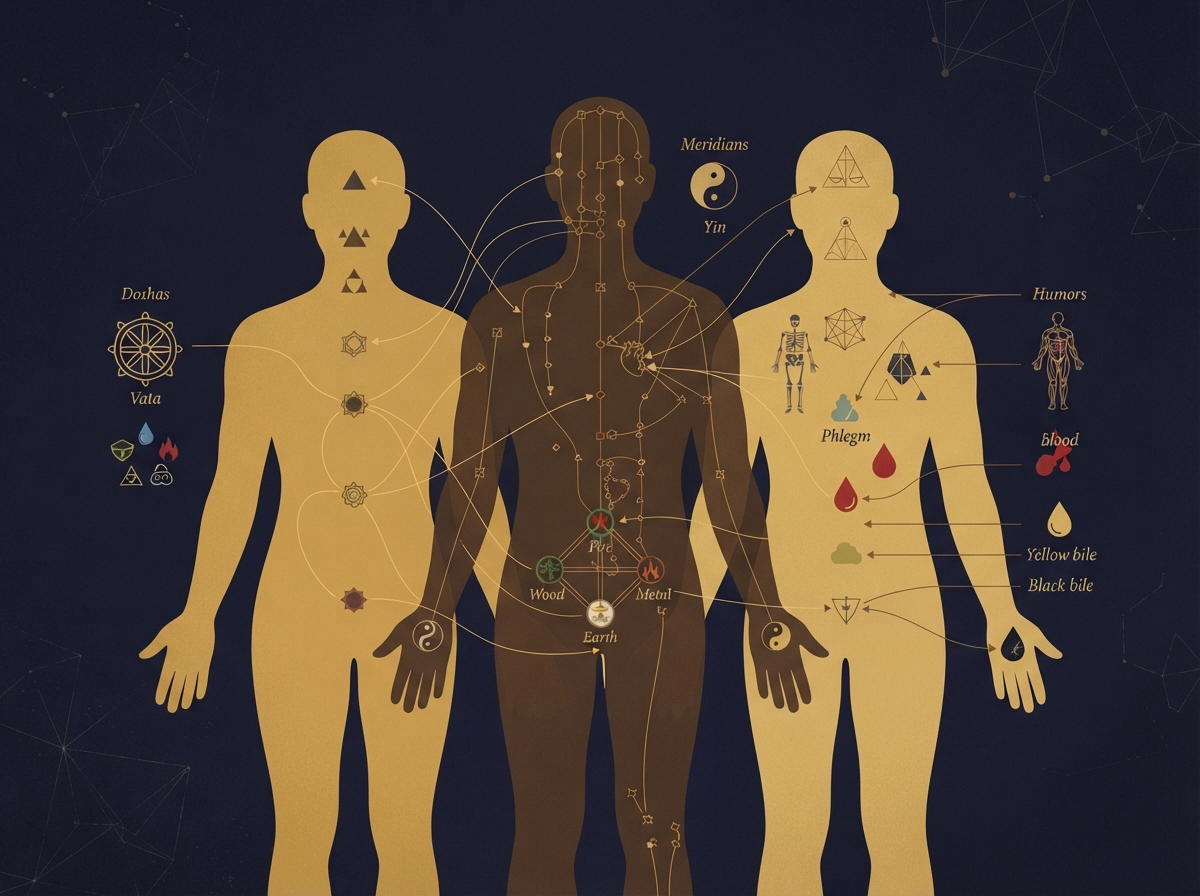
Across the Aegean, Hippocratic physicians in Kos and Cnidus wielded observation like a scalpel. Texts like On the Nature of Man classified complexions—pale and flabby signaling phlegmatic excess, ruddy and sinewy marking sanguine vigor. A 'normal' body gleamed with balanced humors; pathology lurked in deviations: jaundiced eyes for bile, trembling limbs for black humor's chill. These Greek categories functioned prognostically, guiding diet and purge. Ancient medicine thus framed the body as a legible text, where skin and stance betrayed inner states, embedding disability history in humoral flux rather than fixed defect.
British Census Categories: Imperial Counts of Impairment (1841 Onward, Victorian England)
Fast-forward to foggy London, where the 1841 census first tallied 'blind, deaf-and-dumb, imbecile, or lunatic' amid industrial sprawl. By 1891, categories proliferated: 'deaf,' 'dumb,' 'insane,' 'feeble-minded,' each with subcounts by age and labor status. Functioning as tools of colonial administration, these fed Poor Law reforms and eugenic debates, classifying bodies for welfare rationing and social control. In this slice of disability history, normalcy meant productive labor; pathology, a burden quantified in ink—cultural categories masking economic imperatives.
Institutions That Count and Classify
Behind these labels stood institutions wielding authority. Mesopotamian temples, as scribal hubs, authenticated incantations, embedding the body in sacred space—echoing Aetheria's Sacred Places Door, where ritual vessels sanctified flesh. Greek city physicians, appointed by poleis, patrolled public health, their texts training apprentices in collective vigilance. Victorian censuses, orchestrated by colonial administrations, spanned empire, homogenizing diverse bodies under metropolitan grids.
These bodies politic—temples, guilds, bureaucracies—didn't just observe; they produced knowledge. Medical anthropology reveals their dual role: healers and classifiers, where counting the pathological reinforced hierarchies of the normal.
Access, Consent, Power: Who Gets to Name the Body?
Power pulsed through these acts. In Mesopotamia, elites commissioned bowls for households, marginalizing the illiterate afflicted. Hippocratic gaze demanded patient exposure—often without consent, as slaves and women bared complexions for prognosis. British censuses enumerated without recourse, enumerators knocking on tenement doors, inscribing working-class bodies into state ledgers.
Classification was never passive; it was an exercise in who could speak the body into being.
This asymmetry endures in cultural categories of normal and pathological, where the named rarely name back—a theme resonant in Personal Growth's narrative identity, reclaiming one's story from imposed scripts.
Measurement and Uncertainty: What Classifications Conceal
Precision promised control, yet uncertainty shadowed every tally. Mesopotamian bowls invoked vague demons; Hippocratic complexions blurred into seasons; censuses lumped 'idiocy' with genius-masked eccentricity. Metrics hid flux—the body's resistance to fixed bins. In the history of the body, this tension underscores medical anthropology's caution: categories stabilize chaos, but elide lived ambiguity, from humoral drift to neurodiverse realities untallied.
Historical reconstruction reminds us these are cultural snapshots, not clinical universals—distinguishing ritual efficacy from empirical outcomes.
Lived Experience Today: Echoes in Affected Communities
Contemporary disabled communities navigate these legacies, repurposing categories into advocacy—from neurodiversity rejecting 'disorder' to chronic illness narratives challenging 'normal' productivity. Disability history informs this reclamation, linking past lists (as in Writing & Memory Door) to present resistance. Yet power lingers: who defines 'function' in AI-era diagnostics?
- Cultural categories persist in diagnostic manuals, echoing census rigidity.
- Affected voices amplify uncertainty, demanding nuance over pathology.
- Humane inquiry honors this multiplicity, without stigmatizing variance.
Reflective Horizons: Journaling Your Body's Narrative
As we close this journey through the history of the body, pause: how have cultural categories shaped your sense of normalcy? Journal this week: List three labels you've encountered—for your skin, stride, or mind. Trace their origins. Rewrite one in your voice. In this act, you bridge ancient bowls to modern selfhood, fostering the curious, humane inquiry that defines health's philosophical depths.