
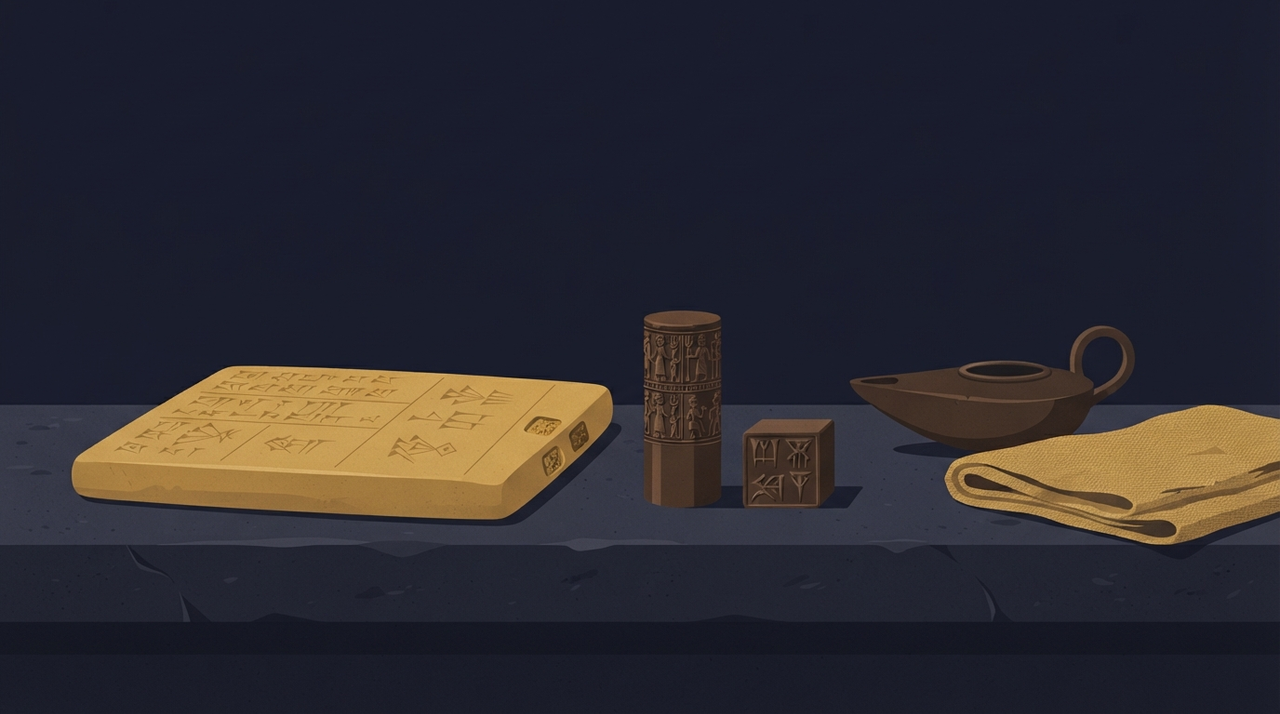
Clay Tablets and Bridewealth: The Ancient History of Marriage Contracts and Household Alliances
In the dusty archives of Nippur, around 1700 BCE, a scribe presses a reed stylus into soft clay. The tablet records a precise transaction. Ahu-waqar, son of Silli-Ishtar, pledges one shekel of silver as bridewealth to the family of Ištar-ummi, the bride. Witnesses, seven in number, affix their cylinder seals beside the text. Clauses outline duties: the groom maintains the household, the bride manages textiles and brewing. Adultery invites drowning for her, fines for him. This is no love letter. It forges an alliance between households in Old Babylonian Mesopotamia, binding property, labor, and lineage.
Such documents reveal the history of marriage not as timeless romance, but as a multifaceted institution. Layers intertwine: legal terminology etched in cuneiform, ritual exchanges of goods, transfers of household membership, daily practices of cooperation, and our modern urge to overlay sentiment. Marriage contracts from the ancient Near East seldom mention affection. They secure survival amid fragile city-states, irrigation networks, and kin rivalries. To grasp this, we peel back assumptions. What if unions served estates before hearts?
Marriage Contracts in the Ancient Near East: Clay as Contract
The ancient Near East offers the earliest surviving marriage contracts, thousands of clay tablets from Sumer, Akkad, Assyria, and Babylonia. Dating from 2500 BCE onward, these texts prioritize household alliance over individual choice. In Sumerian Ur III period records, marriages appear in administrative lists, linking families for labor drafts. By the Old Babylonian era, around 2000-1600 BCE, full contracts emerge from sites like Sippar and Larsa.
A typical contract names bride and groom, their fathers, bridewealth (bītu or terḫatum, payments to the bride's family), and the bride's settlement (nudunnū, goods she brings). For example, a tablet from Sippar (published as CT 45 37) details Warad-Sîn marrying Amat-Šamaš. He pays two shekels of silver bridewealth. She receives a settlement of one-third mina silver, clothing, and oil. The document specifies: if he divorces her without cause, he forfeits the bridewealth doubled. Witnesses and a notary validate it before deities like Šamaš.
Ritual acts accompany these. Brides might veil in Assyrian texts, symbolizing transfer from paternal to marital authority. Household membership shifts: the wife joins the husband's ummum (extended family unit), contributing to its fields and flocks. Lived practice followed suit. Wives brewed beer, wove cloth, bore children to extend the lineage. Divorce dissolved the alliance, with penalties recalibrating property.
Scholars like Martha Roth and Sophie Démare-Lafont parse these as economic pacts. Primary evidence shows variability: elite contracts lavish more goods, commoners less. No uniform "marriage" exists; local customs adapt to ecology and kingship.
The Laws of Hammurabi: Regulating Desertion and Neglect
King Hammurabi's stele, circa 1750 BCE, codifies marital norms in paragraphs 128-195. Not a modern legal code, but royal ideals displayed in temples. These laws assume marriage as household alliance, enforced by fines, labor, or death.
§128 sets the model: a man veils his wife before elders, declaring her his spouse. No clay needed; ritual suffices. Bridewealth follows. §137 allows divorce if the wife neglects housework or denies sex, but he returns her settlement. §141 mandates doubled bridewealth repayment for baseless divorce. Adultery (§129) drowns both parties. Neglectful husbands (§142) lose claims if unable to impregnate.
Limits abound. These apply to free citizens, not slaves or elites exempt via influence. Contracts often cite Hammurabi, blending royal rhetoric with local practice. Desertion clauses protect alliances: a wandering husband forfeits property. Such rules stabilized agrarian households amid floods and wars.
If a man wishes to divorce his first-ranking wife, who has borne him children, he shall give her the usufruct of field, garden, and goods; she and her children shall not be evicted from the household. (§138)
This safeguards maternal lines, echoing Ethics Door reflections on obligation.
Egyptian Unions: Household Property Over Love Poetry
In Kemet, marriage lacks formal contracts like Mesopotamian clay. New Kingdom papyri (c. 1550-1070 BCE) list household goods upon divorce or death, implying unions via cohabitation and property merger. The Willeke of Naunakhte (Deir el-Medina, Ramesside) disinherits negligent children, assuming marital households divide assets equally.
No bridewealth dominates; women retain property control. A Deir el-Medina ostracon records a man compensating his wife for desertion with silver and grain. Danger lies in romanticizing: love poems from the same era praise sweethearts, but scholars like John Baines caution against equating verse with legal status. Poetry idealizes; documents transact.
Household membership transfers subtly. Wives manage estates, as in tomb scenes of women overseeing granaries. Divorce simple: separate beds, divide goods. This pragmatism suits Nile flood cycles, where alliances pooled labor for inundation.
Greek Engyē and Oikos Transfers
From Betrothal to Household Alliance
Classical Greece shifts focus to the oikos, the basic household unit. Marriage begins with engýē: a father's pledge of his daughter to a groom, often before witnesses, with bride-price (hedna) or dowry (phernē). Herodotus notes Spartan simplicity; Athens demands dowries for citizen status.
Engýē binds households, not lovers. Plutarch describes rituals: bath in river water, transfer to groom's hearth. The bride joins the oikos, producing legitimate heirs (génos). Divorce returns dowry; neglect invites arbitration.
Aristotle's Politics frames marriage as oikos foundation: master, wife, children, slaves. Alliances counter factionalism in poleis. Later, Christian sacrament overlays this, but classical roots emphasize property and patriline.
Living Traditions: Nikāḥ, Kiddūšin, Vivāha
Respecting community authority, note briefly: Islamic nikāḥ contracts mahr (bridegift), consent central, per Qur'an 4:4. Jewish kiddūšin involves ring and ketubah stipulating support. Hindu vivāha rituals encircle fire, saptapadi vows alliance. These evolve from ancient roots yet hold present force within traditions. Scholarly history informs; living practice belongs to practitioners. See Anthropology Door for kin studies.
Coercion and Unequal Power in Ancient Marriages
Romantic lenses shatter here. Child betrothals common: Babylonian girls pledged at 10, married by 15. Contracts bind minors without voice. Concubinage sidelines slave women; Hammurabi §146 elevates a barren wife by adopting her slave's child. Enslaved persons lack agency; Egyptian records show forced pairings for temple labor.
Forced unions followed conquests. Assyrian annals boast deporting brides to cement rule. Gender asymmetry pervasive: men initiate divorce, women rarely. Elite polygyny hoards alliances; commoners monogamous from necessity. Primary texts expose raw power. Modern speculation softens; evidence does not.
- Bridewealth commodifies women, per feminist readings like Gerda Lerner.
- Yet some clauses protect: Egyptian women sue for maintenance.
- Power varies by class, region, era.
This history demands caution in The First Laws Room.
Companionate Marriage and Love Matches: Late and Elite
The companionate marriage history reveals affection as recent. In Europe, 18th-century novels romanticize love matches, but Stephanie Coontz traces them to bourgeois shifts post-Enlightenment. Earlier, alliances trumped sentiment: medieval betrothals sealed lands, Renaissance dowries bought status.
Elsewhere, similar. Qing China saw arranged unions yielding companionate bonds over decades. Not the "secret truth" of ancients, but adaptation to individualism, wage labor, delayed inheritance. Ancient contracts prioritize endurance over spark.
Comparing Household Alliances: Functions Over Origins
Resemblances abound: bridewealth in Nuer Africa mirrors Mesopotamian, dowries in India echo Greece. Yet compare functions first. Near Eastern payments secure paternal claims; African cattle build maternal herds. Pathways differ: ritual veiling versus Greek engýē handclasp. Differences highlight adaptation.
Household headship, critiqued in Leadership Door, varies: Egyptian wives co-head, Babylonian patriarchs rule. Anthropology urges caution: shared forms need not share essence. See Lévi-Strauss on alliance theory, grounded in evidence.
Open Questions for Seekers
Clay tablets whisper of marriages as bridges between households, forged in silver and stylus. They challenge companionate ideals, reveal coercion's shadow, invite comparison without collapse into universals. Carry one clause forward: the doubled bridewealth penalty, or Egyptian property split. Bring it to Community. What alliance might it inspire today?
Keep one question open: In your lineage's corner of the world, what ritual bound households? Seek primary traces. This cosmic library awaits your inquiry. Honor the journey.