
Code of Hammurabi to Maat: Decoding Ancient Authority, Kingship, and Social Hierarchies
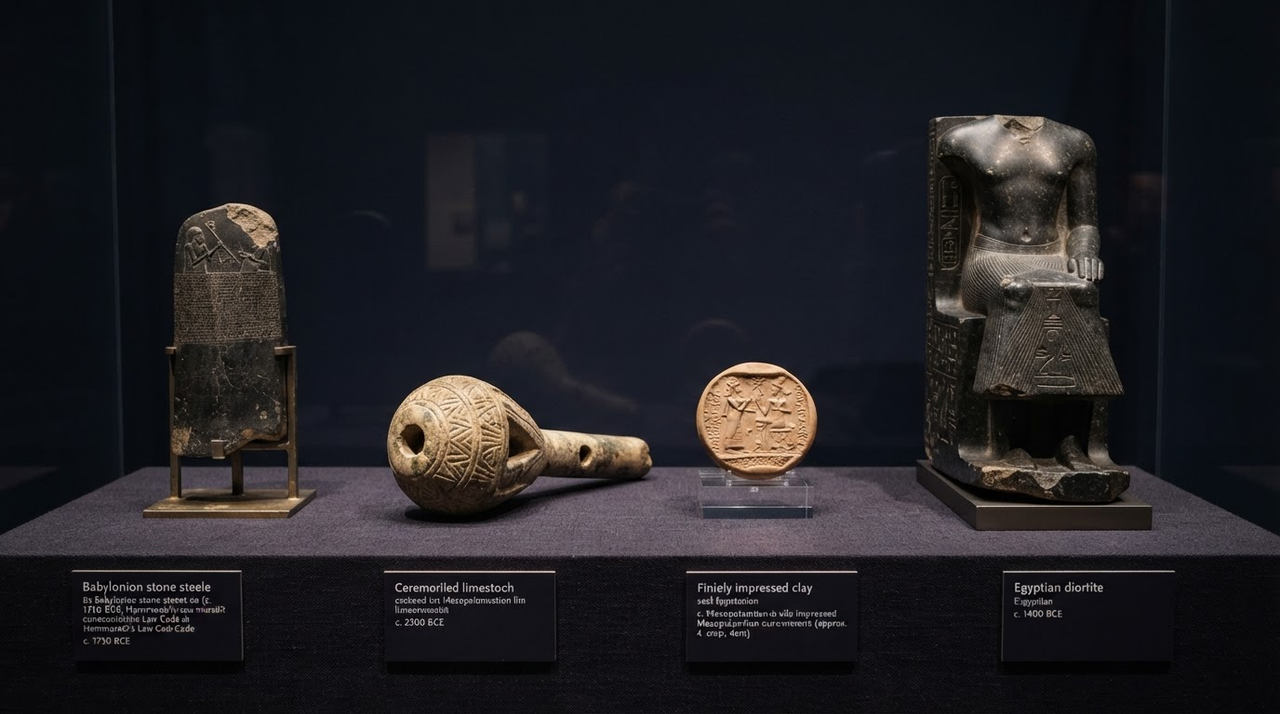
Picture a towering black diorite stele, etched with 282 laws, erected in Babylon's sun-baked temples around 1750 BCE. Hammurabi, self-proclaimed king of justice, declares his code not as whim, but divine mandate. Across the sands, in Egypt's Nile Valley, pharaohs embodied Maat—cosmic order incarnate—balancing chaos with measured floods and pyramid precision. Further east, the Indus Valley's silent cities whisper of a different script: no palaces, no kings' boasts, just grids of equal homes. These are not relics of tyranny or utopia, but windows into how ancient law, authority, kingship, and social hierarchy intertwined to claim order from anarchy.
In Mesopotamian city-states, Egyptian theocracies, and Indus heterarchies (ca. 2600–1900 BCE), governance emerged not as monolithic power, but contested blueprints. Through archaeology, texts like the Code of Hammurabi and Ur-Nammu, and scholarly lenses, we decode these systems—chronologically layered, functionally diverse, with glaring absences in the record.
Mesopotamian Councils and the Rise of the Lugal
Sumer's city-states, from Uruk to Lagash around 3000 BCE, balanced assemblies with warrior-kings called lugal—'big man.' Early texts, like the Sumerian King List, portray kingship descending from heaven, yet contested by councils of elders and popular assemblies. Archaeological digs reveal temple storerooms bulging with grain, not palatial hoards, suggesting priestly sway over economic authority.
By the Third Dynasty of Ur (ca. 2112 BCE), King Ur-Nammu's stele codifies laws predating Hammurabi's—punishments scaled by social hierarchy: eye-for-eye for equals, fines for elites. Hammurabi's code, 400 years later, amplifies this: "If a man put out the eye of another man, his eye shall be put out." Palace seals hierarchize officials, but counterevidence abounds—revolts etched in cylinder seals show lugals toppled by coalitions. Absent: women's voices beyond marriage laws, slaves' testimonies.
Egypt's Maat: Pharaoh as Living Order
Old Kingdom Stability (ca. 2686–2181 BCE)
In the Old Kingdom, pharaohs like Khufu weren't mere rulers but netjeru—gods upholding Maat, the feather of truth against chaos. Pyramid Texts and autobiographies of viziers like Ptahhotep extol the king's role in governance: flood regulation, Nile bounty. Temples stored wealth, palaces coordinated; no law codes survive, but nomarch tombs boast provincial hierarchies under royal gaze. Social order visualized in mastabas: nobles above, artisans below.
New Kingdom Flux (ca. 1550–1070 BCE)
Ramses II's temples proclaim Maat restored post-Hyksos, yet Amarna letters reveal contested authority—vassals bargaining, Hittite wars. Hieroglyphs lack punitive codes; instead, royal decrees and wisdom texts like Amenemope guide ethics. Archaeology shows palace expansions, but worker strikes at Deir el-Medina hint at limits. Absent: records of commoners' disputes, pharaohs' falls beyond propaganda.
Indus Valley Heterarchy: Order Without Crowns?
Mohenjo-Daro and Harappa (2600–1900 BCE) defy kingship tropes. No palaces, just uniform brick homes and vast granaries under public baths. Seal stamps—over 3,000—show no royal iconography, only 'proto-Shiva' figures and script undeciphered. Scholarly models posit heterarchy: decentralized trade networks, priestly or merchant elites via standardized weights. Absent entirely: texts, weapons caches, elite tombs—challenging palace-temple binaries. Decline around 1900 BCE leaves climate shifts as counterevidence to collapse-by-hierarchy.
Comparing Threads: Chronology, Function, Fractures
Chronologically, Sumer precedes Egypt's pyramids, Indus overlaps Old Kingdom. Functionally, Mesopotamian ancient law codifies retribution by class; Egyptian Maat idealizes harmony sans codes; Indus implies ritual governance. Differences: lugals elected in crisis, pharaohs divine birthright, Indus elites invisible. Counterevidence—Mesopotamian revolts, Egyptian strikes, Indus uniformity—shows authority contested. Modern reception romanticizes Hammurabi as 'first constitution,' Maat as proto-justice, Indus as egalitarian dream, ignoring silences: subaltern perspectives, ecological drivers.
Cross-reference our doors on Sacred Kingship and The First Laws for deeper dives into divine rule and legal origins.
Visible Order Today
These systems remind us: authority endures not by force alone, but visible symbols—stelae, pyramids, seals. What fractures emerge when hierarchies falter?
Journaling Prompt: How is order made visible in your world? Sketch a modern 'code' or symbol of authority—what's claimed, contested, absent?