
Decolonizing Ancient Empires: Administration Beyond Conquest in Assyria, Persia, and Egypt
Imagine a dusty clay tablet unearthed from the ruins of Nineveh, not boasting of blood-soaked battles, but detailing the meticulous tally of grain shipments from distant barley fields in the Zagros Mountains. This is empire not as a thunderous clash of armies, but as the quiet grind of ledgers and overseers—a vast administrative machine holding disparate peoples in uneasy orbit around a distant center. In the shadow of conquest's glory, ancient empires like Assyria, Achaemenid Persia, and New Kingdom Egypt reveal their true sinews: imperial administration as the art of extraction, integration, and illusion of unity. Decolonizing these narratives demands we peel back the victors' rhetoric to expose colonial power in its raw forms—forced labor, tribute hauls, mass resettlements, and linguistic impositions—while honoring the silences of the subjugated.
Empire and decolonization collide here not as modern moralizing, but as a quest to understand how power persists through institutions, laws, and daily lived experiences. Far from static maps of dominion, these systems wrestled with rebellion, negotiation, and cultural persistence. This article charts a bounded comparison across three exemplars: Neo-Assyrian provincial integration (9th–7th centuries BCE), Achaemenid satrapies (6th–4th centuries BCE), and Egyptian oversight of the 'Nine Bows' in Nubia and the Levant. Through their chronologies, functions, and fractures, we glimpse the political legacy of administration beyond the sword.
The Neo-Assyrian Empire: Forging Provinces from Deported Peoples
In the 9th century BCE, Ashurnasirpal II's scribes etched annals of terror: cities razed, populations uprooted. Yet Assyria's endurance hinged on what followed—the transformation of conquered lands into pīḫātu, tightly administered provinces under royal governors. This imperial administration was no afterthought; it was the empire's beating heart, spanning from the Levant to the Iranian plateau.
Mechanisms of Control: Tribute, Labor, and Resettlement
Provincial governors, or bēl pīḫāti, collected annual tribute—silver, livestock, timber—funneled to Nineveh's arsenals. Forced labor corvées built grand palaces and canals, while mass deportations shuffled over 4 million people across the empire, per cuneiform tallies. Elamites toiled in Samaria; Arameans repopulated empty heartlands. Assyrian became the lingua franca of bureaucracy, overwriting local tongues in contracts and seals.
This colonial power pulsed visibly: a stele from Sam'al depicts King Barrakab kneeling before Tiglath-pileser III, pledging loyalty amid Assyrian overseers. Yet counterexamples abound—local elites co-opted as intermediaries, Aramean dialects infiltrating Akkadian texts, and revolts like Shamshi-Adad V's suppression of Hamath in 838 BCE, where tribute resumed but autonomy flickered.
Limits and Silences: Revolt and Archival Gaps
Assyrian archives brim with success stories, but reading against the grain reveals fractures. The Babylonian Chronicle notes chronic unrest; unrecorded villages likely negotiated exemptions. By 612 BCE, provincial overstretch fueled collapse, a testament to administration's fragility.
Achaemenid Persia: Satrapies and the Illusion of Tolerance
Cyrus the Great's 539 BCE conquest of Babylon ushered a different model: the satrapy, or xšaθrapāvan, dividing the realm into 20–30 provinces under semi-autonomous governors. From Egypt to India, this ancient empire projected universal rule via the Behistun Inscription, where Darius I proclaimed dominion over rebel lands in multiple languages—a multilingual rhetoric masking colonial power.
Administrative Pathways: Roads, Coins, and Tribute
- Royal Roads: Spanning 2,500 kilometers, relay stations enabled swift couriers, herodotus noted, binding satraps to Persepolis.
- Daric Gold: Standardized coinage eased tribute flows—46,000 talents annually, per Xerxes' ledgers.
- Local Integration: Satraps respected temples, from Yahweh in Yehud to Amun in Egypt, yet imposed Aramaic chancellery script and corvée for Susa's gates.
Lived experience varied: Egyptian demotic papyri show Persian overseers taxing nomes, while Ionian revolts (499–493 BCE) exposed resentments over garrison drafts.
Negotiation and Persistence
Unlike Assyrian rigidity, Persian flexibility allowed local dynasts like Sidon’s kings to thrive, though revolts—e.g., in Egypt under Inaros—met brutal reprisals. Archival silences hide tributary communities' quiet resistances, from tax evasions to syncretic cults blending Ahura Mazda with local gods.
New Kingdom Egypt: Taming the Nine Bows
Ramses II's Kadesh campaign (1274 BCE) epitomized New Kingdom reach, but administration sustained it. The 'Nine Bows'—symbolic foes of Nubia (Kush) and Levant (Canaan, Hatti)—fell under viceroys and garrison commanders, integrating via tribute and elite hostages.
Functions in Nubia and Levant
In Nubia, the Viceroy of Kush oversaw gold mines with Nubian overseers, extracting 20-ton annual hauls. Levantine city-states like Ugarit sent lapis, horses; Egyptian script dominated treaties. Resettlements moved Hyksos remnants southward; forced labor built Abu Simbel.
"The vile Kushites bow to Pharaoh's might," boast temple reliefs—yet Amarna Letters reveal Canaanite kings pleading for chariots, negotiating alliances amid Hittite threats.
Counterevidence: Hybridity and Revolt
Local persistence shone: Nubian queens wed pharaohs; Levantine pottery mingled with Nile wares. The Sea Peoples' invasions (c. 1177 BCE) shattered garrisons, exposing overreliance on proxies.
Bounded Comparison: Chronologies, Differences, and Decolonizing Insights
Neo-Assyrian centralization (9th–7th BCE) contrasted Persian decentralization (6th–4th BCE), with Egypt's theocratic model bridging both (15th–11th BCE). Assyria deported en masse; Persia taxed via locals; Egypt hybridized elites. All imposed tribute and labor, yet accommodated revolts differently—Assyria crushed, Persia negotiated, Egypt assimilated.
Empire and decolonization demand scrutiny of sources: Assyrian palaces glorify; Persian inscriptions multilingual yet top-down; Egyptian tombs silent on defeats. Modern museums, housing looted artifacts, perpetuate authority—British Museum's Nineveh lions, Louvre's Persian reliefs. Counterevidence lurks in periphery texts: Elephantine papyri's Jewish temple under satraps, Nubian Meroitic script's resurgence.
Link this to Aetheria's Sacred Places, Civilization Rooms, and First Laws: administration wove power into holy sites, communal spaces, and legal codes.
The Enduring Political Legacy of Imperial Administration
These ancient empires bequeath a template: colonial power as bureaucracy's long shadow, from Ottoman vilayets to colonial districts. Their political legacy warns of overextension's perils, yet highlights resilience—local agencies enduring beneath arches of rule.
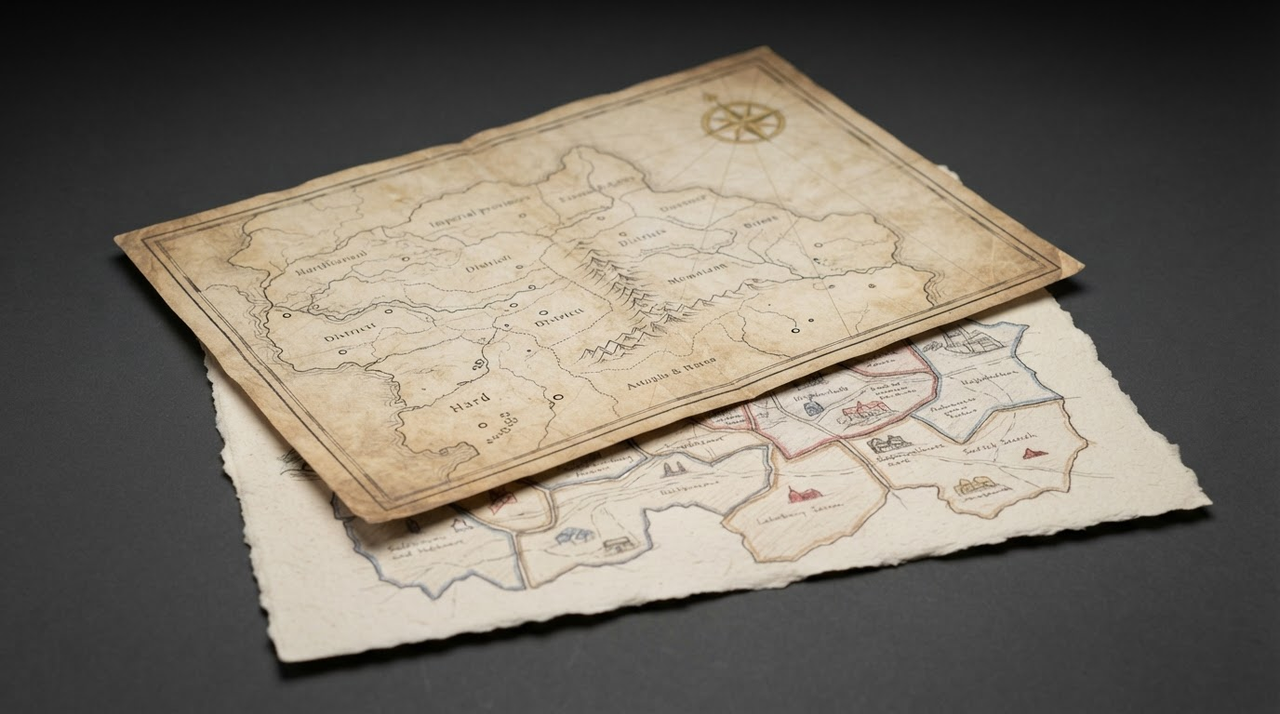
Pause: How do the maps on your wall or screen carry imperial afterlives? Trace their lines—do they echo Assyrian provinces, Persian satrapies, or Egyptian bows? Decolonizing history starts with questioning the frame, inviting us to redraw power's hidden contours.