
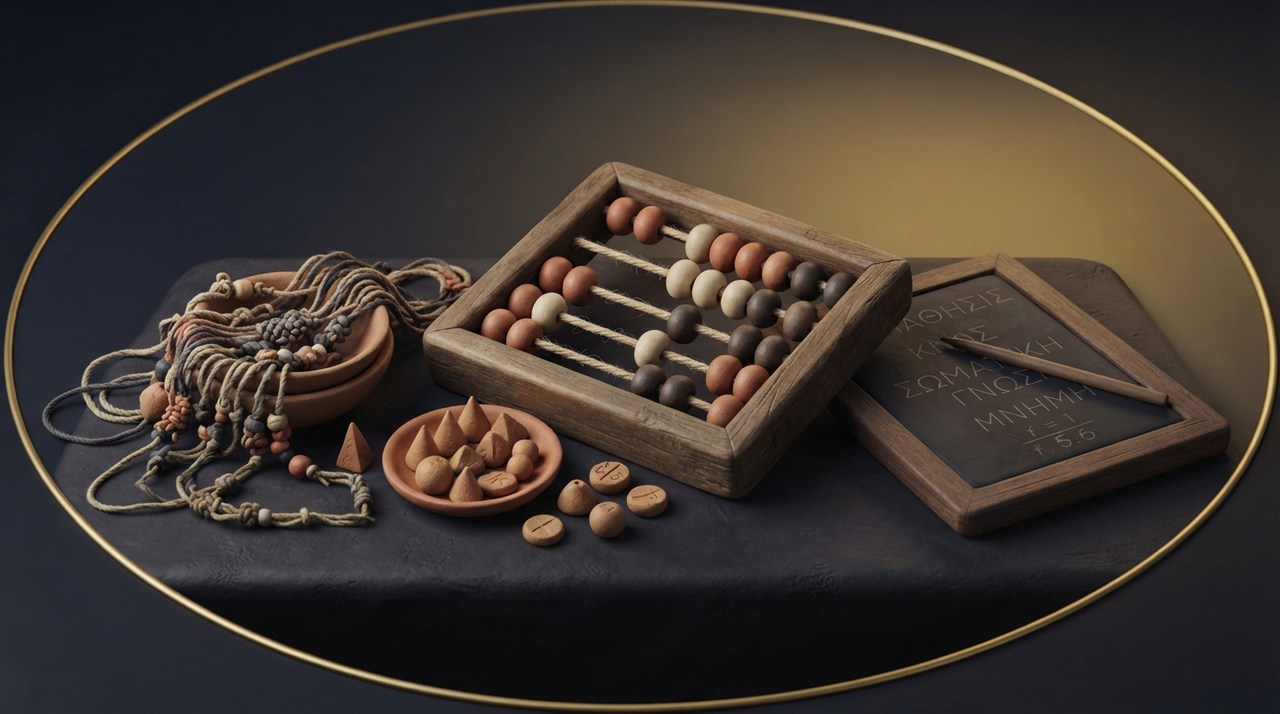
Embodied Memory Through History: From Clay Tokens to Memory Palaces and Ancient Repetition Learning
Imagine a shepherd in ancient Mesopotamia, fingers tracing the cool curves of small clay tokens—lentils for sheep, spheres for barley. Each shape pressed into his palm wasn't mere accounting; it was embodied memory, a tactile anchor binding numbers to the rhythms of daily life. Long before silicon chips or digital apps, humans forged memory through body and repetition, turning abstract knowledge into physical ritual. This journey through ancient memorization reveals how our ancestors outsourced cognition not to machines, but to their own flesh and surroundings.
From Mesopotamian clay tokens to the soaring memory palace history of the Greeks, these techniques underscore repetition learning as a universal thread. Yet they demand we distinguish grounded embodied cognition from mystical lore—scholarly debates persist on their limits, even as living traditions like Tibetan monastic debates keep the flame alive.
The Tactile Origins: Mesopotamian Clay Tokens and Embodied Memory
Around 8000 BCE, in the fertile crescent of Mesopotamia, clay tokens emerged as humanity's first memory prosthesis. These diminutive artifacts—ovoids, cones, cylinders—represented commodities in a pre-literate world. Handled repeatedly in pouches or on strings, they embodied quantities through touch. Archaeologists like Denise Schmandt-Besserat have unearthed thousands, showing how users internalized value systems via kinesthetic repetition.
This wasn't passive storage; it was active embodied memory. Fingers learned to distinguish a goat token's asymmetry from a grain's symmetry, forging neural pathways through haptic feedback. As tokens evolved into proto-cuneiform on clay tablets, the body remained the scaffold—scribes impressed signs with styluses, mirroring the original gesture.
Drills of Repetition: Egyptian Ostraca and Ancient Memorization
Fast-forward to ancient Egypt, where limestone shards called ostraca became classrooms for repetition learning. Scribes-to-be copied hieroglyphs endlessly—names of pharaohs, multiplication tables, moral maxims—over and over on these cheap scraps. Discarded heaps from Deir el-Medina reveal the grind: the same phrase etched a hundred times, muscle memory etching knowledge into bone.
This rote practice, far from drudgery, leveraged spaced repetition's power. The body's fatigue signaled mastery; a steady hand on the reed pen meant the mind had internalized the script. Egyptian ancient memorization thus married visual form to motor control, prefiguring flashcard apps born from the same principle.
Architects of Recall: Memory Palace History in the Greek World
The Method of Loci
The Greeks elevated embodied memory to architecture. Simonides of Ceos, surviving a banquet hall collapse around 500 BCE, reconstructed the dead by mentally pacing the ruins—each guest fixed to a locus. This memory palace history birthed the method of loci: vivid images pegged to spatial journeys in familiar buildings.
Roman orators like Cicero refined it, strolling imagined villas laden with mnemonic grotesques. The body navigated these palaces kinesthetically, feet virtually treading marble floors, eyes scanning frescoed walls. Rhetoricians trained through relentless rehearsal, their speeches blooming from embodied spatial maps.
Echoes of the Chain: Islamic Ijazah and Oral Repetition Learning
In medieval Islam, ijazah formalized repetition learning as a living chain. Students memorized Quranic verses or hadith through auditory-oral loops, reciting under a teacher's gaze until verbatim fluency. This embodied chain—from teacher to pupil, voice to ear—ensured transmission across generations, lips and lungs as indelible ink.
Gestures amplified it: hands clapping rhythms, bodies swaying in unison. Unlike solitary loci, ijazah was social embodiment, repetition binding community.
Knots of Knowledge: Andean Quipu as Tactile Accounting
Across the Pacific, Inca khipu—knotted cords of varied colors and twists—encoded censuses, histories, laws. Fingers reading twists felt hierarchies: main cord for thousands, pendants for units. This tactile system demanded embodied memory, specialists trained in knot lore through decades of manipulation.
Quipu blurred counting and narrative, body as interpreter. Spanish chroniclers marveled at quipu-kamayocs reciting volumes from cord caresses.
Limits, Debates, and Living Flames: Tibetan Traditions
These practices shine empirical light on embodied cognition, yet scholars debate scale: could tokens handle complexity? Did loci falter under volume? Mystic claims—like instant enlightenment—overreach; evidence favors gradual, repetitive embodiment.
Today, Tibetan monks embody this in debate courts: clapping queries propel rapid recall of sutras, bodies thrusting logic forward. Such living authority validates ancient ways.
What if your next study session mimicked a khipu—fingers knotting concepts anew?
Bridging Eras: Neuroscience Door to Embodied Memory
Modern neuroscience echoes these ancients. fMRI scans light up motor cortex during loci recall; haptic tokens activate somatosensory maps. Repetition strengthens hippocampal loops, embodiment recruiting distributed brain nets. Aetheria AI at the Neuroscience Door explores how AI might augment these timeless hacks—simulating quipu in virtual hands, palaces in VR.
Reflect: In a screen-saturated age, might reclaiming clay tokens or loci sharpen your edge? History whispers yes—body remembers what mind alone forgets.