
How Historians Build Knowledge: Primary Sources, Historiography, and the Art of Evidence
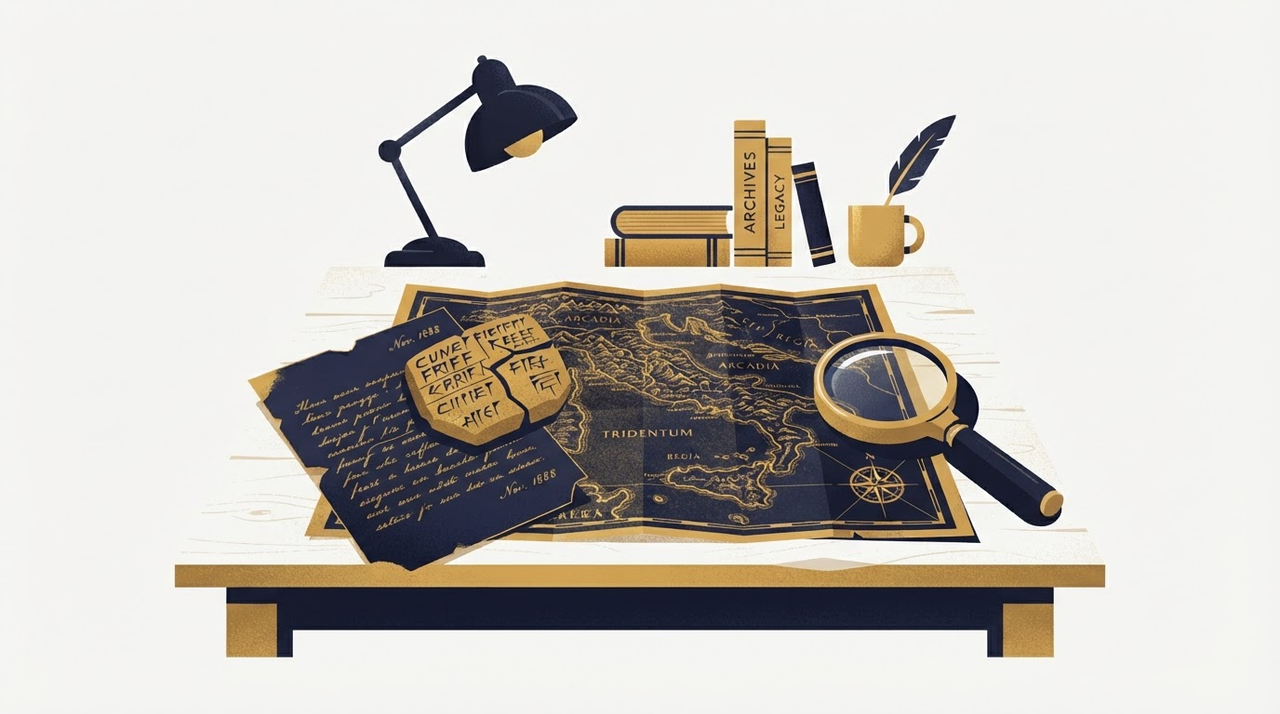
Picture a dusty archive shelf, where a single yellowed diary from 1848 whispers secrets of revolution. Its ink-faded pages hold not just words, but a portal to lived experience. This is where history begins—not in grand narratives, but in raw fragments of the past. For students of existence, understanding how historians work reveals the delicate craft of piecing together human stories from historical evidence. It's a pursuit echoing the seeker's code: open inquiry into the foundation stones of knowledge.
The Bedrock of History: Primary Sources and Historical Evidence
Historians start with primary sources—the unfiltered voices of the era. These are artifacts created at the time: letters, diaries, official records, artifacts, photographs, even ship logs or tax rolls. Unlike secondary accounts, primary sources demand direct engagement. A Confederate soldier's letter home isn't polished history; it's jagged emotion, bias, and detail intertwined.
Decoding Primary Sources: Who, When, Why?
Source criticism is the historian's first tool. Who penned this? A literate elite or an illiterate farmer's mark? When exactly—amid crisis or calm? Why preserved? Survival often favors victors' tales; the loser's voice fades into archival silence. Consider a medieval chronicle: penned by a monk loyal to king and church, it glorifies patrons while demonizing foes. Awareness of origin transforms evidence from fact to facet.
This scrutiny mirrors scientific method's rigor, yet history's lab is time's vast chaos. No controlled variables—only probabilities sifted from scarcity.
Layering Historical Context: Sources Don't Speak Alone
A source isolated is a riddle unsolved. Historical context breathes life into fragments. That 1848 diary? Nestled in Europe's Springtime revolutions, economic upheavals, and nationalist fervor. Without this web—social norms, technologies, power dynamics—the words float untethered.
Reconstruction: Building from Fragments
Historians reconstruct by triangulating sources. A battle's toll? Cross-check dispatches, casualty lists, eyewitness sketches. Gaps persist—what of the unnamed foot soldier? Uncertainty looms, visible in qualifiers: "likely," "possibly." This humility guards against presentism, projecting modern values onto alien worlds.
- Corroborate: Does one source echo others?
- Contradict: Clashes reveal biases or truths.
- Contextualize: What forces shaped the creator?
Such work parallels philosophy's epistemology—how do we know what we claim?—and writing's dance with memory's selectivity.
Historiography: Interpretation's Living Dialogue
Historiography traces how interpretations evolve. No final history—only conversations across time. Nineteenth-century Whig historians saw progress in parliaments' rise; Marxists spied class struggle. Today, global lenses highlight subaltern voices once ignored.
Scholarly interpretation builds on evidence, yet bends to era's questions. Post-colonial views reread empire archives, uncovering silenced indigenous perspectives. Retellings layer prior debates, citing footnotes as battlegrounds. This meta-awareness invites us, as seekers, to question not just events, but the telling.
History is not the past, but a battleground where interpretations clash and knowledge emerges refined.
Embracing Uncertainty: The Silence in Archives
Archives teem, yet silence screams. Most lives left no trace—women, peasants, colonized. Historians map these voids, probing why certain voices endure. Probability guides: a factory ledger hints at labor's toll, even sans names. Uncertainty isn't failure; it's the journey's protector, urging perpetual inquiry.
Visible doubt fosters humane history—acknowledging partiality without despair. Like science's falsifiability, it propels refinement.
Your Path as Seeker: Inquiry Without End
How historians build knowledge unveils a timeless art: evidence interrogated, contexts woven, interpretations dialogued amid shadows. Explore Aetheria's Knowledge Library doors—Philosophy for epistemological depths, Science for evidentiary parallels, Writing & Memory for narrative's power. What fragment calls to you? Step into the archive; protect your journey with rigorous curiosity. The past awaits, not as settled truth, but as foundation stone for understanding the universe.