
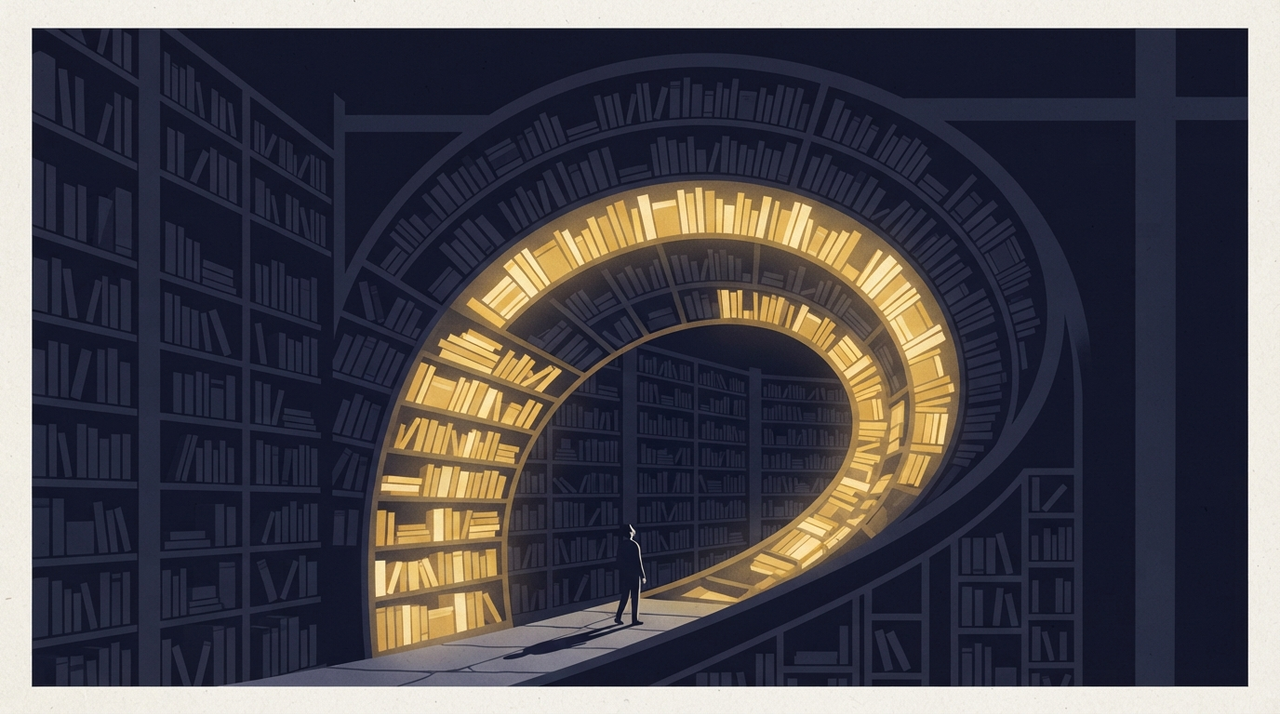
Libraries Aren't Neutral: Unmasking Canon Formation from Ashurbanipal's Collection to the Alexandria Myth
Imagine a king in ancient Assyria, hunched over clay tablets under torchlight, commanding scribes to etch the sum of human knowledge—not for posterity's sake, but to forge an empire's unbreakable legacy. This wasn't a selfless act of preservation. It was canon formation in action, a deliberate curation of what deserved to endure. Libraries, far from neutral repositories, are arguments etched in dust and stone. They whisper who held power, what stories mattered, and why others vanished into oblivion. In the history of libraries, this truth pulses through every collection, from the sun-baked vaults of Nineveh to the shadowed myths of Alexandria.
To grasp canon formation—the process by which certain texts ascend to sacred status while others crumble—we must first dismantle the myth of the library as a passive container. A hoard is raw accumulation: gold, scrolls, artifacts piled without intent. An archive serves memory or governance, selecting for utility or ritual. But a library? It's an institution with a building, a collection, and a curatorial voice. It doesn't hold a culture's full knowledge. It curates an argument about value, shaped by rulers, priests, scholars, and circumstance. Archival selection isn't accidental; it's a power play.
The Library of Ashurbanipal: Royal Power in Clay
Fast-forward to 7th-century BCE Assyria, where King Ashurbanipal transformed Nineveh's royal palace into a monumental knowledge project. The so-called Library of Ashurbanipal wasn't a public reading room but a curated collection of over 30,000 cuneiform tablets and fragments, unearthed in the 19th century amid the ruins. Ashurbanipal boasted in inscriptions of his voracious reading, devouring texts like a lion devours prey. Yet this was no neutral scholarship.
His scribes scoured conquered lands—Babylonia, Elam, beyond—confiscating tablets or copying masterpieces of literature, omens, medicine, and law. Epic of Gilgamesh? Here. Astronomical observations? Cataloged. Ritual incantations? Essential for divine favor. This history of libraries begins with politics: the collection legitimized Ashurbanipal's rule as the wisest king, a living god-king versed in all wisdom. Missing? Texts glorifying rivals or subversive hymns. Gaps abound—war, decay, selective looting—but colophons (scribal notes) reveal intent: "Copied for the king's library."
Tablets as Political Weapons
Archaeologists like those from the British Museum, which houses most surviving tablets, note how Ashurbanipal's project mirrored imperial expansion. Tablets arrived as booty, then were standardized in Neo-Assyrian script. This wasn't the whole Mesopotamian corpus; it was Assyria's canon, prioritizing statecraft over folk tales. Evidence gaps persist—no complete inventory survives, and many tablets remain untranslated. Counterevidence? Smaller private collections existed elsewhere, hinting at diverse knowledge streams lost to time.
Alexandria's Mouseion: From Research Hub to Burning Myth
Shift to Ptolemaic Egypt, third century BCE. The Great Library of Alexandria myth conjures a colossal edifice housing all world's knowledge, torched in a single cataclysmic blaze—Julius Caesar in 48 BCE, or Caliph Omar centuries later. Reality? More nuanced, less cinematic. The Library was part of the Mouseion, a temple to the Muses funding scholars like Euclid and Eratosthenes. Estimates of 400,000–700,000 scrolls reflect elite curation, not universality.
Ptolemies built it as a Hellenistic power flex: ship captains forced to surrender books for copying, Jewish scriptures translated into Septuagint. What survived? Greek classics, yes—but selectively. No comprehensive manuscript survival from non-Greek worlds. The building? Likely multiple sites, daughter libraries included. Destruction? Gradual: funding cuts under Rome, fires incidental, Christian edicts purging "pagan" texts. Ancient sources like Strabo describe vibrancy, but no floor plans or catalogs endure. The myth, amplified by 18th-century romantics, obscures canon formation: Alexandria amplified Greek superiority, sidelining others.
Demythologizing the Flames
- Caesar's fire damaged a warehouse, not the core collection (per Plutarch).
- Later "destructions" lack contemporary evidence; attrition via neglect is likelier.
- Surviving papyri show archival selection favored royalty-sponsored works.
Mechanisms of Survival and Loss: Why Some Texts Endure
Neither Nineveh nor Alexandria holds all answers. Manuscript survival hinges on brutal mechanics. Clay endures fires (Ashurbanipal's tablets baked in Nineveh's fall, 612 BCE), but papyrus rots in humidity. Parchment? Reused as palimpsests—scraped clean for Christian Bibles atop pagan poetry. Institutional priorities cull: medieval monasteries prioritized theology, discarding "heretical" science.
Language shifts doom the obsolete—Coptic fades, Sumerian whispers only in transliteration. Colonial extraction accelerates loss: 19th-century Europeans looted Iraqi sites, shipping Ashurbanipal's legacy to London. Floods, wars, iconoclasm fill gaps. Counterevidence? Serendipitous finds like Nag Hammadi gnostic texts challenge orthodox canons, proving survival's lottery.
Libraries don't preserve culture; they sculpt it, one selective shelf at a time.
Today's Frontlines: Ownership, Access, and Repatriation
Who curates today's canons? Iraqi museums clamor for Ashurbanipal's tablets from the British Museum, citing UNESCO repatriation norms. Egypt's Bibliotheca Alexandrina, a modern echo, digitizes fragments while demanding colonial-era returns. Living communities—Assyrian descendants, Coptic scholars—assert rights over ancestral memory. Access battles rage: paywalls versus open archives, algorithms biasing digital canons.
Institutions wield power. The Library of Congress shapes American narratives; national libraries in Baghdad and Cairo guard regional ones. Yet gaps persist: untranslated cuneiform, lost Alexandrian works. This links to broader politics—institutions as power brokers—and ancestors, where memory is contested ground.
Reframing the Shelves: A Call to Question
Libraries aren't neutral vaults but living arguments about worth. From Ashurbanipal's imperial clay to Alexandria's mythic scrolls, history of libraries reveals canon formation as selective survival. Next time you browse a stack, ask: Whose voice echoes? Whose silences scream? In our AI-augmented age at Aetheria, we rebuild archives—mindful of biases, hungry for the lost. The universe's knowledge awaits, but only if we unmask the curators.