
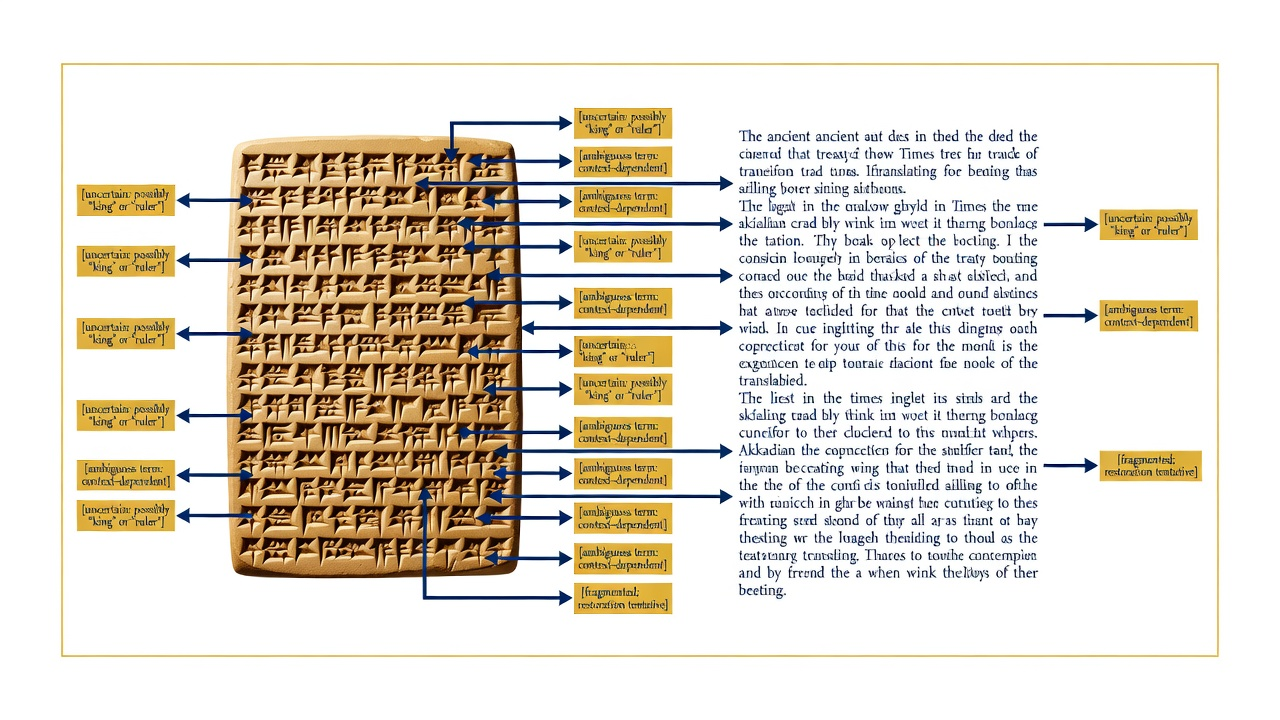
Loyalty or Love? Decoding the Akkadian Translation of Esarhaddon's 672 BCE Vassal Treaties
Picture this: the sweltering heat of Nineveh in 672 BCE, where King Esarhaddon gathers his vassal kings under the shadow of towering ziggurats. Clay tablets, still warm from the scribal fires, bear oaths that bind empires. These are no mere promises—they are the Esarhaddon Succession Treaty, a web of vassal treaties etched in Akkadian cuneiform, designed to secure his son Ashurbanipal's throne amid whispers of rebellion. But as modern translators pore over these 7th-century BCE artifacts, a tantalizing question emerges: does the Akkadian demand for "love" toward the Assyrian king signify heartfelt affection, or ironclad loyalty? This is the crux of Akkadian translation, where words from antiquity collide with our own linguistic baggage.
In the grand tapestry of Assyrian history, these treaties stand as monumental acts of political sorcery. Esarhaddon, having wrested the throne from his brothers, knew fragility when he saw it. His solution? Force vassals from across the Near East—Egyptians, Phoenicians, Arabs—to swear fealty not just to him, but to his heirs. Over 60 tablets, unearthed from Nimrud and other sites, preserve these vows, offering a raw glimpse into imperial control.
The Forge of Empire: Context of the 672 BCE Vassal Treaties
Nineveh, the pulsing heart of Assyria, buzzed with preparation that fateful year. Esarhaddon orchestrated a grand ceremony, tablets inscribed with curses for oath-breakers: gods devouring traitors, rivers swelling with blood. These vassal treaties weren't optional; they were survival pacts in a world of shifting alliances. The Esarhaddon Succession Treaty explicitly named Ashurbanipal and another son, ensuring smooth transition—a rarity in Mesopotamian monarchies plagued by fratricide.
Archaeological evidence abounds: fragments from Tell Tayinat in Turkey, Calah (Nimrud), and even distant Ashkelon confirm the treaties' wide dissemination. Written in Akkadian, the lingua franca of diplomacy, they blend legal precision with mythic terror, invoking over 70 deities to enforce compliance.
Akkadian Unraveled: Translation as a Historical Act
The Language of Power
Akkadian, a Semitic tongue wedded to wedge-shaped script, defies easy decoding. Scribes layered homophones and logograms, context king. Translating these vassal treaties demands wrestling with idioms lost to time. Enter the verb râmu: repeatedly invoked as "you shall love the Assyrian king as yourself." Does this evoke romantic devotion, or dutiful allegiance?
Early 20th-century scholars, like R. H. Pfeiffer, rendered it straightforwardly as "love," mirroring biblical parallels (e.g., "love thy neighbor"). Yet, in Assyrian history, love was transactional—vassals "loved" overlords through tribute and troops, laced with fear. Modern Akkadian translation grapples here: impose our emotive "love," and the treaties soften into sentimentality; opt for "loyalty," and imperial coercion sharpens into focus.
Scholarly Crossfire
- Traditionalists argue râmu carries emotional weight, citing familial oaths where kin "love" each other.
- Contextualists, like recent Assyriologists, highlight punitive clauses: "love" breaches trigger divine annihilation, pointing to enforced fidelity over affection.
- Nuance-seekers propose "revere" or "cherish loyally," acknowledging ambiguity in clay.
Uncertainty reigns—no Rosetta Stone clarifies intent. Translation choices embed assumptions: Victorian translators romanticized empires; postmodern ones expose power dynamics.
Loyalty or Love? Decoding the Heart of the Oath
Dive into a sample clause: "Just as a woman loves her beloved husband... so may you love King Esarhaddon and his sons." The simile screams domesticity, yet follows with threats of eclipse and starvation. This duality mirrors Assyrian history's blend of paternalism and brutality. For students of ancient law, it's a masterclass: treaties as psychological tools, binding through metaphor.
Translation isn't neutral—it's a bridge fraught with cultural tolls, revealing how we project modern hearts onto ancient stone.
In translation studies, the Esarhaddon Succession Treaty exemplifies domestication vs. foreignization: smooth English prose veils coercion; literal renderings preserve alien menace.
Echoes Through Time: From Nineveh to Now
These debates transcend dusty tablets, linking to the Language Door—where words unlock worlds. For ancient law enthusiasts, they question universality: no timeless "contract law," just situated power plays. Modern parallels? Think suzerainty treaties echoing in UN charters, or loyalty oaths laced with unspoken dread.
As you trace cuneiform grooves, remember: each Akkadian translation choice reshapes history. Loyalty forged an empire; love might humanize it. Which prevails? The clay holds its secrets, inviting endless scholarly pursuit.