
Oral Tradition: Living History's Voice – From Griots to Songlines and Collective Memory
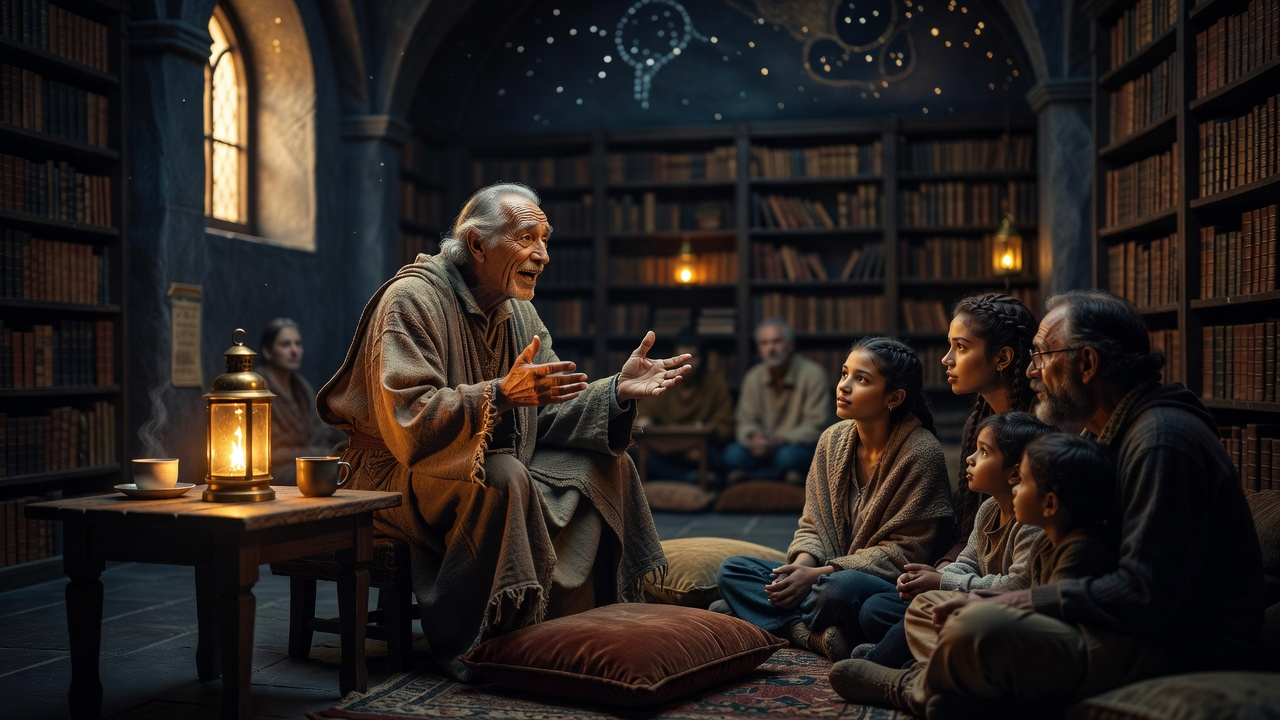
Picture a circle of elders beneath a sprawling baobab tree, their voices rising like smoke from a communal fire. No scrolls or stone tablets in sight—just the cadence of spoken words carrying genealogies, laws, and migrations across generations. This is oral tradition, the living history that pulsed through human societies long before writing etched permanence into clay or papyrus. In a world now dominated by digital archives, oral history reminds us that memory is not inert; it breathes, adapts, and endures through oral transmission.
For thoughtful seekers of indigenous knowledge and memory studies, oral tradition offers a portal to history before writing. It preserves not just events, but the moral fabric of communities—lineages tracing royal bloodlines, legal codes enforced through proverb and parable, ethical lessons embedded in epic tales, and even navigational maps sung as songlines across vast landscapes.
The Mechanics of Memory: How Oral Traditions Transmit Knowledge
Oral transmission thrives on repetition, rhythm, and communal performance. Trained custodians—griots in West Africa, known as jeliw—memorize vast repertoires through apprenticeships spanning years. A jeli might recount the Sundiata epic, blending praise songs with battle chronicles, each telling calibrated to the audience's needs: celebration at a naming ceremony, counsel in dispute.
What endures? Genealogy anchors identity, as in Aboriginal Australian songlines that encode migration routes via landmarks and melodies—waterholes become verses, Dreamtime creators map the land's deep time. Moral teachings warn against hubris; laws dictate restitution through metaphor. Yet this collective memory flexes: performances vary by teller, context, and era, introducing controlled evolution rather than rigid stasis.
From Homer to Mesopotamia: Echoes in Familiar Terrains
Even in literate cultures, oral tradition preceded and infused writing. Homeric epics, performed by rhapsodes, relied on formulaic phrases for improvisation within fixed narratives—scholars detect this in the Iliad's repetitive epithets. In ancient Mesopotamia, oral prefaces framed the earliest cuneiform texts, bridging spoken lore to scripted record. These examples reveal living history as a universal human impulse, not confined to the "pre-literate."
Historians' Lens: Evaluating Oral Tradition Without Dismissal or Romance
How do historians weigh oral history against written records? First, distinguish types: primary spoken testimony from eyewitnesses or recent elders; reconstructions by later performers; scholarly interpretations piecing fragments; retellings shaped by modern agendas. Each layer demands scrutiny.
Unlike written texts' fixed chronology, oral tradition compresses or expands time—centuries fold into mythic spans, functions prioritize moral utility over precise dating. Contact pathways matter: European colonizers documented griot tales, but through biased filters; Aboriginal songlines persist via community protocols, where outsiders seek permission from authorized custodians.
- Variability: One telling differs from the next, enriched by performance flair yet anchored by core motifs.
- Authorization: Elders gatekeep sacred knowledge, withholding from the unprepared.
- Counterevidence: Archaeology corroborates songlines' ancient routes; linguistics traces jeliw vocabularies to medieval Mali empires.
Historians cross-verify with artifacts, genetics, and multiple sources, embracing uncertainty rather than rejecting the form outright. This mirrors tensions in Writing & Memory doors, where script supplanted but never erased spoken roots.
Living Protocols and Cross-Cultural Threads
Today, elders uphold protocols: Navajo storytellers time tales to seasons; Maori whakapapa reciters invoke ancestors before speaking. These practices link to The Ancestors, Anthropology, and The Great Journey doors, tracing humanity's odyssey through voice alone.
Oral tradition is not frozen artifact, but a conversation across time—dynamic, authorized, profoundly human.
Listening Anew: An Invitation to Collective Memory
In our scroll-saturated age, oral tradition challenges us to honor living history's voice. What forgotten songline or griot verse might reshape your understanding of the past? Seek out an elder, a recording, a performance—and listen. In that act, collective memory revives, whispering truths no archive can fully capture.