
Reading Against the Grain: Source Criticism for Royal Inscriptions, Civic Decrees, and Ancient Political Texts
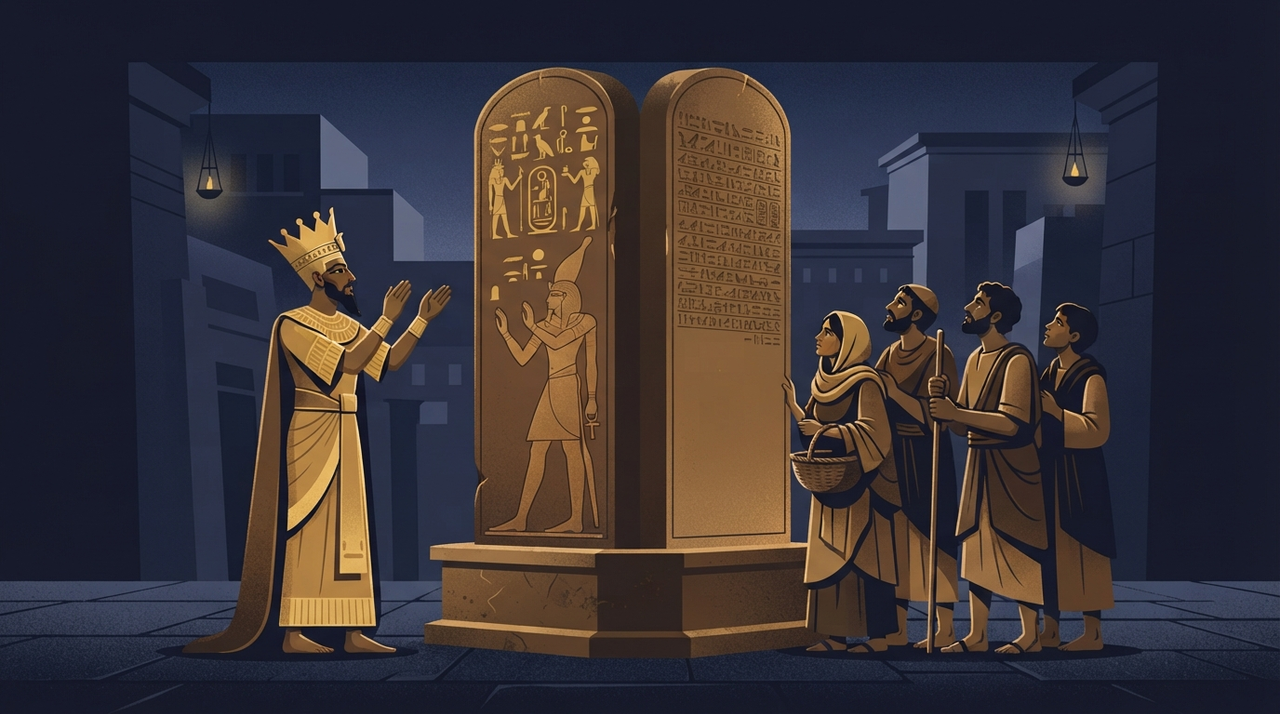
Imagine standing in the shadow of a towering temple wall in ancient Mesopotamia. The carved letters gleam under the sun, proclaiming a king's triumphs: cities conquered, gods appeased, rivers redirected. The text speaks with unyielding confidence. Yet as a thoughtful reader, you pause. Who carved these words? Who could not respond? This moment captures the essence of reading royal inscriptions, civic decrees, and ancient political texts against the grain. It is source criticism in action, a method to pierce political propaganda and uncover public memory's hidden layers.
These artifacts are speech acts. A victory stele does not merely report events; it commissions loyalty, names allies, erases foes. Kingship, local offices, assemblies, empire, citizenship, law, administration, coercion, resistance, diplomacy all intersect here. Reading against the grain asks what the text conceals: absent voices, silenced resistances, unmentioned costs.
A Clear Method for Source Criticism
Source criticism treats ancient political texts as deliberate performances. Follow these steps to read them rigorously.
- Identify the commissioner and genre. Was it a king for a building inscription? An assembly for a civic decree? Genres like victory accounts, law prologues, oaths, or petitions shape expectations.
- Locate the text. Where did it stand? Temple entrances targeted priests and elites; marketplaces reached broader crowds. Who could read or hear it? Literacy varied; many heard recitations.
- Examine the language. Note verbs of winning (conquer, smite) and giving (bestow, grant). They frame the commissioner as benefactor. Whose names appear? Allies, gods, kin. Whose are absent? Victims, rivals, laborers.
- Seek cross-checks. Compare with archaeology (ruins, tools), administrative lists, later copies, hostile accounts from neighbors, or telling silences in the record.
- Distinguish evidence from interpretation. The text claims victory; archaeology shows a razed city. Speculation fills gaps, but context bounds it.
This method avoids flipping the text's claims wholesale. Reading against the grain does not mean the opposite is true. It reveals biases, not inventions.
Applying the Method: Bounded Examples
Mesopotamian Royal Inscription
Consider a stele of Naram-Sin of Akkad, around 2250 BCE. It depicts the king as god-like, trampling enemies, with stars above. Commissioned by the ruler himself, erected in a temple. Verbs dominate: he "subdues" rebels, "extends" borders. Absent: details of coalitions against him, economic strains. Cross-check Babylonian king lists, noting his dynasty's short fall. Archaeology reveals abandoned villages. The inscription builds empire's public memory, hiding fragility.
Egyptian Temple Relief of Victory
On Ramses II's temple at Abu Simbel, 13th century BCE, scenes show tribute from Nubians and Hittites. Commissioned by the pharaoh, visible to pilgrims. "Gifts" flow to Egypt; no mention of the Battle of Kadesh's near-disaster, confirmed by Hittite treaties. Absent names: local resistors, coerced porters. Administrative papyri list tribute quotas. The relief performs divine kingship, masking diplomacy and coercion.
Greek Civic Decree
An Athenian decree from 433 BCE honors a proxenos, inscribed on the Acropolis. Assembly-commissioned, read aloud in the agora. It praises "services" to citizens. Absent: Spartan alliances he navigated, class tensions. Thucydides' history provides hostile context; ostraka show popular resistance. The decree shapes citizenship's memory, eliding factionalism.
Limits of Suspicion and Broader Connections
Suspicion has bounds. Texts often align with archaeology; over-doubt risks cynicism. Distinguish living authority (kings enforced reading) from modern categories (no ancient "parties"). Connect to History's timelines, Archaeology's digs, Writing and Memory's traditions, Ethics' power questions, Leadership's claims.
This method equips you for any monument. Visit a museum, photograph a text. Who speaks? Who stays silent? Practice reveals how political propaganda endures, yet cracks under scrutiny.
What inscription will you read next?