
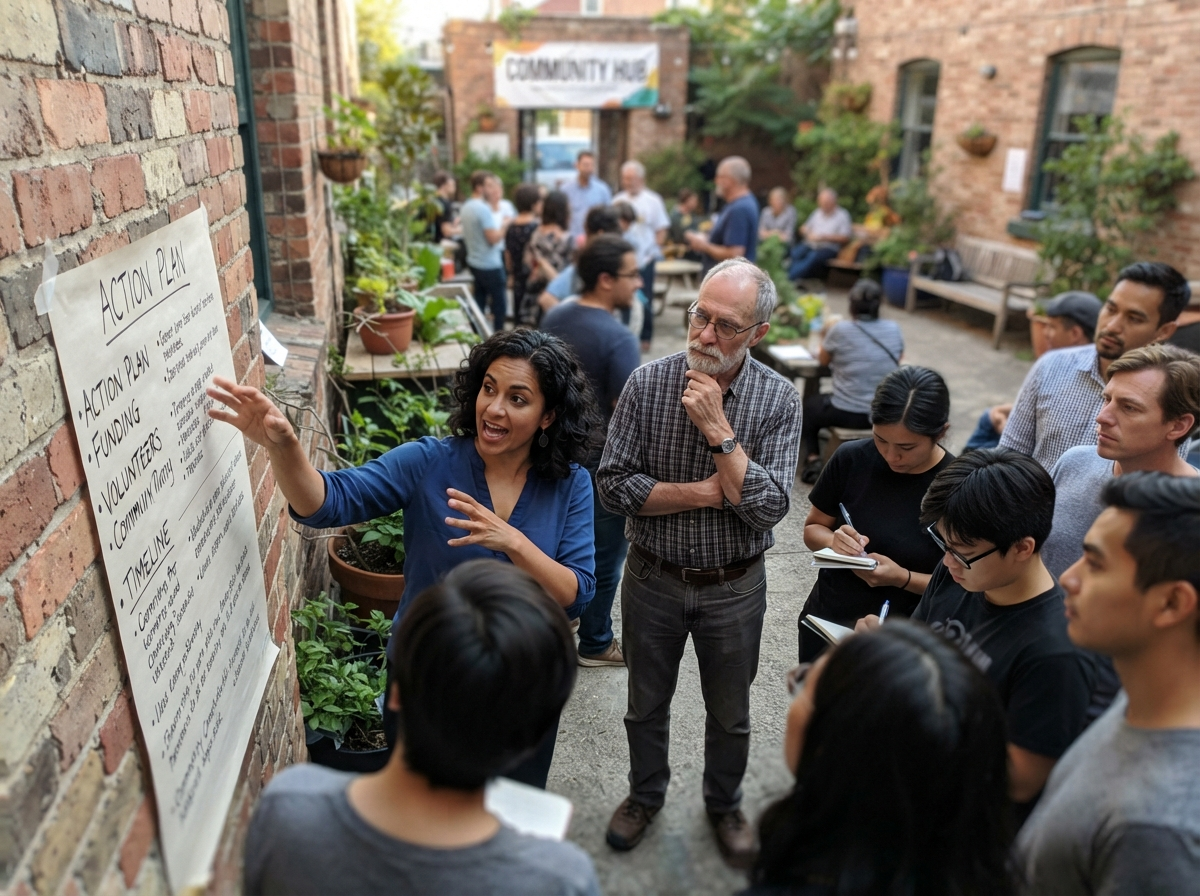
Distributed Leadership: Shared Power from Medieval Guilds to Modern Communities
Imagine a workshop in 13th-century Aleppo, where silk weavers gather not under a single master's decree, but through rotating roles and collective votes on designs and disputes. Power, fluid and shared, pulses through the group. This is distributed leadership—not a crown worn by one, but a web spun by many. In today's cooperatives and communities, the echo persists: authority rotates, decisions emerge from consent, and leadership belongs to all who contribute. As we conclude Aetheria's five-part exploration of leadership, we turn to these models of shared leadership, revealing how they reshape organizational culture leadership and foster inclusive leadership history.
Defining Distributed Leadership in Practice
Distributed leadership thrives where hierarchy flattens into a lattice. Roles rotate—today's decision-maker yields tomorrow to another. Authority spreads across participants, negotiated through consent rather than command. In community leadership models, this means no fixed throne; instead, influence arises from expertise, context, and agreement.
Picture a modern worker cooperative: members vote on strategy, delegate tasks fluidly, and hold each other accountable via transparent processes. This contrasts rigid top-down structures, where bottlenecks stifle innovation. Here, leadership is a verb, enacted collectively, embedding resilience into the group's DNA.
Historical Threads: Levantine Guilds and Modern Cooperatives
Medieval Levantine Craft Guilds (12th–15th Century)
In the late medieval Levant—Damascus, Aleppo, Jerusalem—craft guilds organized weavers, dyers, and metalworkers. Pathways began with apprenticeship under a master, progressing to journeyman status, then election to leadership by peers. Functions centered on quality control, price setting, and dispute resolution, often via assemblies where masters and skilled workers voted.
Echoes in Modern Cooperatives
Fast-forward to 19th-century Rochdale, England, birthplace of the cooperative movement, formalized through charters emphasizing democratic control. Today, entities like Mondragon in Spain scale this: thousands of worker-owners elect councils, rotate managerial roles, and prioritize member needs.
Similarities abound—both rely on skill-based ascent and collective oversight. Differences emerge in scale and legality: guilds operated semi-autonomously amid empires, while cooperatives navigate state regulations. Counterevidence? Guilds sometimes deferred to sultanic overseers, hinting at external hierarchies. Yet present-day cooperatives claim authority through bylaws, proving shared leadership's endurance.
Lived Experiences: Access, Exclusion, and Human Limits
Who steps into the circle? In Levantine guilds, apprentices—often young men from craft families—gained entry, but women and slaves faced barriers, relegated to informal roles or exclusion. Status mattered: free Muslims or Christians rose faster than others, though conversions blurred lines.
Modern cooperatives fare better yet imperfectly. Access hinges on investment or labor buy-in, excluding the impoverished unless bridged by community funds. Gender gaps narrow—women lead in sectors like childcare co-ops—but intersectional hurdles persist for marginalized voices. Participants describe fulfillment in shared agency, tempered by the fatigue of constant negotiation.
- Empowerment through rotation builds skills across the group.
- Exclusion risks echo in quieter voices sidelined by dominant personalities.
- Status limits evolve, yet vigilance is key.
Cultivating Organizational Culture for Shared Leadership
Organizational culture leadership hinges on rituals that weave trust. Guilds used oaths, feast-day assemblies, and origin tales of collective triumphs to sustain unity. Modern groups adapt: weekly check-ins, storytelling circles, consensus protocols like sociocracy.
What makes it possible? Transparent communication rituals dissolve silos. Difficulties arise when stories glorify individuals or meetings devolve into debates. Culture, then, is the soil: nurture it with inclusive forms, and distributed leadership flourishes; neglect it, and fractures form.
Descriptive Insights and Normative Horizons
Descriptively, distributed leadership reveals humanity's capacity for collaboration across eras, resilient yet vulnerable to exclusion. Normatively—here we tread carefully—consider its fit for your context. In politics, it counters polarization via citizen assemblies; in business, boosts innovation through holacracy; in writing, sparks collective narratives; in memory practices, honors diverse recollections.
Power shared invites wisdom multiplied, yet demands courage to yield.
Cross these doors thoughtfully: how might community leadership models transform your world?
What hidden guild lingers in your community? Venture deeper into Aetheria's Cosmic Library—query inclusive leadership history or emerging models. The universe unfolds through shared inquiry.