
Aetheria Ethics Door: Descriptive vs. Normative Ethics – A Seeker's Guide to Moral Philosophy
Imagine standing at the threshold of an ancient Mesopotamian courtroom, where a judge weighs theft against communal harmony under the shadow of ziggurats. What drove those decisions—not ideals etched in eternity, but the raw habits of a river-valley society? Welcome to the Aetheria Ethics Door, a portal in Aetheria's Knowledge Library inviting you to probe moral philosophy not as abstract decree, but as lived human tapestry. Here, we ask: How do communities actually navigate right and wrong? And how do we, as seekers, reason what ought to be?
This guide unravels descriptive ethics from normative ethics, two lenses sharpening our grasp on moral philosophy. Descriptive ethics observes: What morals do people practice? Normative ethics argues: What morals should they? Step through with the Seeker's Code—curiosity unbound by judgment.
Descriptive Ethics: Mapping the Moral Landscapes of Lived Practice
Descriptive ethics sidesteps the 'should' to chronicle the 'is.' It peers into how societies embody morals through daily rituals, disputes, and decrees—unvarnished by later gloss. Think of it as ethnography for the soul: anthropologists charting kinship taboos, historians unearthing trial records.
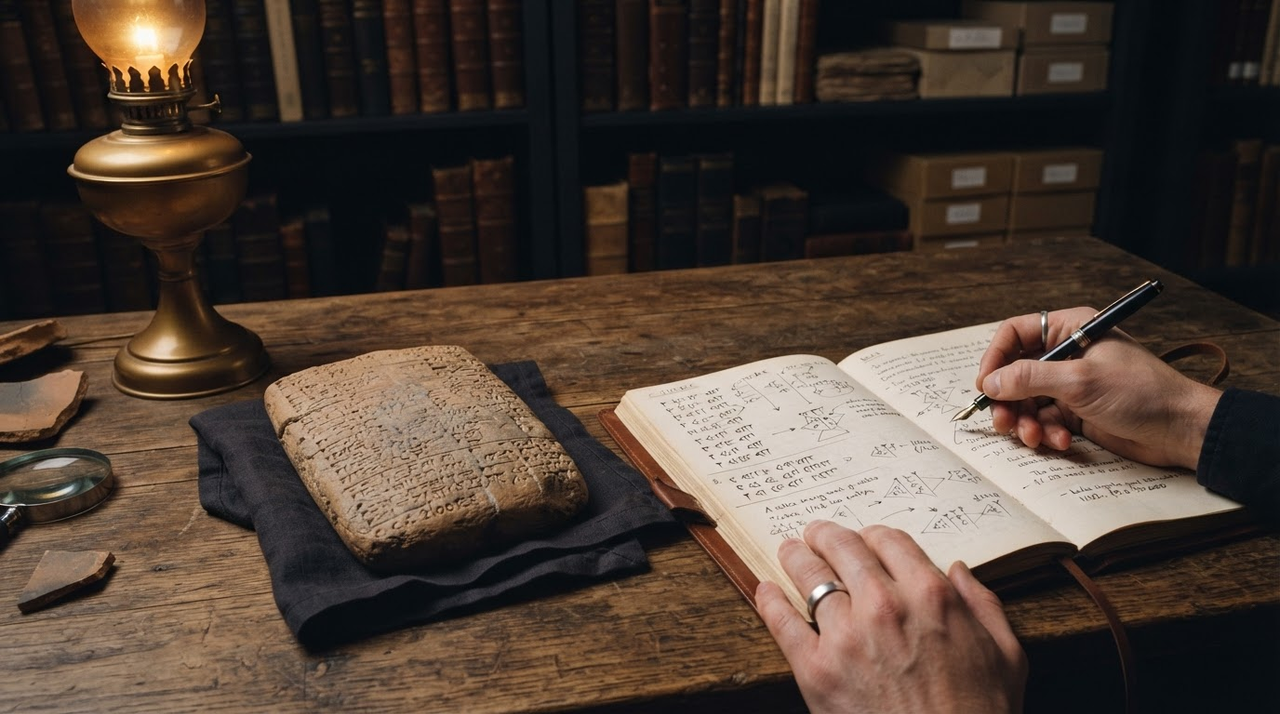
Consider ancient Mesopotamia's Code of Ur-Nammu, a Sumerian royal inscription from around 2100 BCE, the earliest known law code. Composed during Ur III dynasty institutions, its clay tablets—copied centuries later—list penalties like fines for false accusations, reflecting a practice of proportional restitution over vengeance. This wasn't philosophical treatise; it codified prevailing customs in city-state courts.
Across the Nile, Kemet's Maat discourse emerges in Old Kingdom Pyramid Texts (c. 2400 BCE), predating written judgments. Maat, embodied by the goddess of truth and balance, guided pharaonic oaths and scribal wisdom like the Middle Kingdom's Instructions of Ptahhotep (c. 2000 BCE). Here, moral practice intertwined with cosmic order: judges in temple tribunals weighed hearts against feathers, not in myth alone, but in recorded land disputes.
In the Levant, early 2nd-millennium BCE collections like the Laws of Eshnunna (Akkadian texts from ~1930 BCE) reveal institutional responses: eye-for-eye tariffs in palace archives, distinct from their Bronze Age origins, later scribal copies, and scholarly readings. These artifacts whisper of descriptive ethics at work—morals as adaptive tools, shaped by flood-prone fields and trade routes. Cross to the Anthropology Door for kinship patterns, or History Door for timeline depths.
Normative Ethics: The Forge of 'Ought' in Moral Philosophy
Reasoning Beyond Observation
Normative ethics leaps from description to prescription. It wields logic like a blacksmith's hammer: Why these rules? What justifies equity over retribution? Moral philosophy thrives here, from Aristotle's virtue in the polis to Kant's categorical imperative demanding universal maxims.
Contrast Ur-Nammu's fines—not as 'best' practice, but as observed norm—with a philosopher's query: Should restitution always scale to status, or demand equality? Normative inquiry dissects religious authority (divine commands in temple oracles), legal codes (binding precedents), and scholarly interpretations (modern deconstructions of Maat as social equity).
Distinctions That Illuminate
- Moral philosophy: Systematic arguments for ideals, like utilitarianism weighing collective good.
- Lived practice: Everyday ethics in markets or hearths, captured descriptively.
- Religious/legal authority: Edicts from priesthoods or kings, blending is and ought.
- Historical description: Contextual timelines, sans endorsement.
- Scholarly interpretation: Layered analyses of texts' intent.
- Modern application: Adapting ancient lenses to AI dilemmas or global justice.
Link to the Law Door for how these evolve into statutes. No culture crowns superior; each offers threads in humanity's ethical weave.
Bridging Doors: Ethics in Conversation
Descriptive ethics grounds normative flights, preventing philosophy from drifting into ether. A Mesopotamian thief's fine describes; normative ethics debates its fairness across eras. Together, they honor the Seeker's Code: observe without haste to prescribe.
In the quiet archive of human striving, description reveals patterns; normativity dares to dream better ones.
Reflective Prompt for Your Journal
What descriptive lens—perhaps a Levantine archive or Kemet wisdom—will you apply next to a modern moral tangle? Jot the patterns you uncover, then whisper your 'ought.'