
Ancient Art Materials Technology: Limestone, Lapis, Vermilion, and Camelid Weaving Unveiled
Imagine a pyramid block emerging from the Giza plateau, its surface polished to mirror eternity, or a thread of lapis lazuli pigment binding distant worlds in a single hue. Art materials technology isn't mere backdrop to aesthetics—it's the pulse of human intent, where constraints of stone, mineral, and fiber forge meaning from the raw stuff of existence. Beyond style, materials carry affordances that dictate form, embed cultural memory, and reveal the maker's world. In ancient craft knowledge, every chisel mark or dye trade whispers of labor, trade, and ingenuity.
Why Materials Matter: Constraints, Affordances, and Memory
Raw earth doesn't yield easily. Limestone resists but cleaves predictably; lapis demands perilous journeys. These aren't passive substrates—they impose rules. Stone carving techniques in Egypt favored massive blocks for permanence, while Andean textile arts history thrived on fiber's flexibility. Materials encode memory: a vermilion streak in a tomb recalls trade routes spanning continents. Understanding art materials technology unveils how making shapes not just objects, but civilizations.
Limestone in Old Kingdom Egypt: From Giza Quarry to Polished Eternity
Extraction and Chain of Transformation
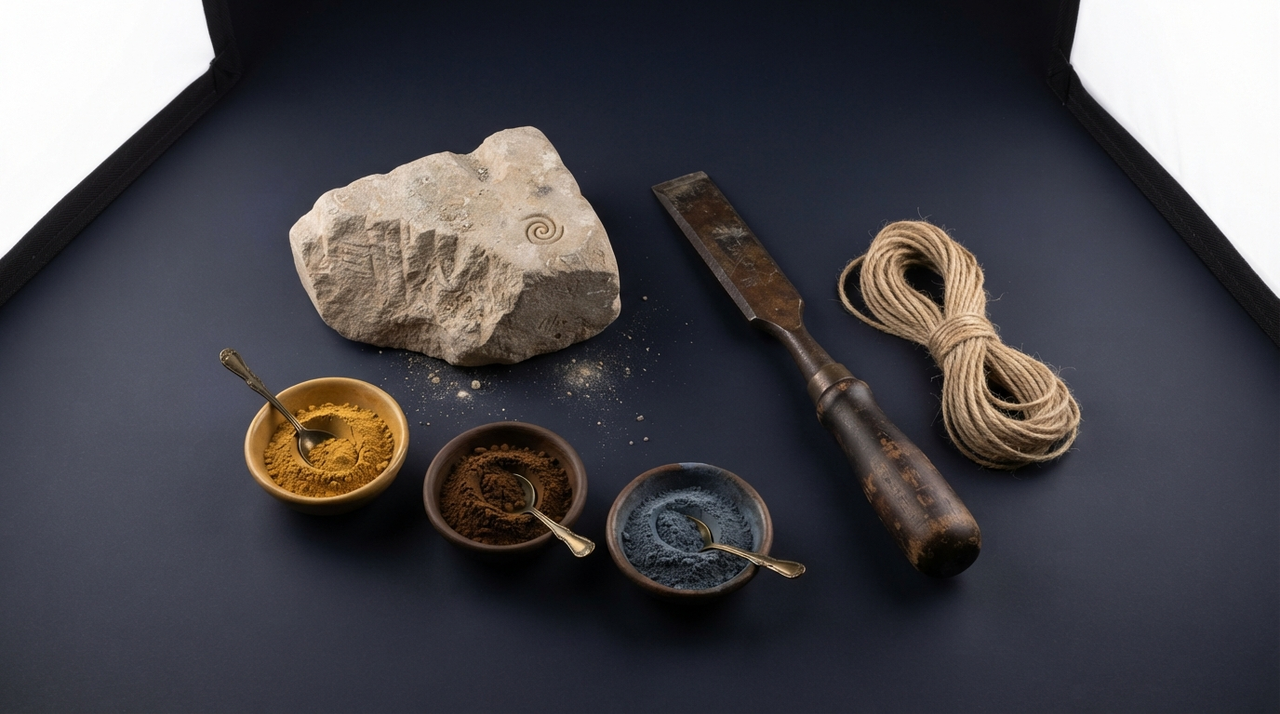
On the Giza plateau around 2589–2504 BCE, during Khufu's reign, workers quarried limestone directly from the bedrock beneath the pyramids. Massive blocks, some weighing 2.5 tons, were cut using copper chisels and diorite pounders, then levered free with wooden wedges swollen by water. Transported via sledges lubricated with wet sand, they reached workshops for dressing—rough shaping with hammers, fine tooling with abrasives like quartz sand.
Surfaces were burnished to a sheen using flat stones and slurry, casing the pyramids in Tura limestone for brilliance. Evidence lingers in quarry marks and tool traces, distinguishing raw quarry stone from processed medium, crude tools from skilled hands in organized royal workshops.
Lapis Lazuli and Vermilion: Ancient Pigments and Global Trade
Sourcing the Blues and Reds of Power
Lapis lazuli, that vivid ultramarine, hailed from Badakhshan mines in Afghanistan, trekking 4,000 miles to Egypt via Mesopotamia. Extracted as nodules, it was crushed, washed, and ground into pigment in temple workshops—evidenced by residue in New Kingdom palettes. Vermilion, mercuric sulfide, arrived from Almaden in Spain or possibly China, roasted to purify before grinding into toxic scarlet, used sparingly in elite tombs like Tutankhamun's.
These ancient pigments highlight craft knowledge: raw ore became vibrant medium through mortars and careful sifting, wielded by specialists in state-controlled ateliers. Trade inscriptions and chemical analyses trace their paths, revealing workshop hierarchies.
Andean Camelid Weaving: Fiber into Narrative Cloth
From Herd to Loom
In the Andes, from Paracas to Inca eras, camelid wool—alpaca, vicuña, llama—was sheared seasonally, cleaned, carded, and hand-spun on drop spindles into fine yarns. Natural dyes from cochineal or indigo prefixed fibers before weaving on backstrap looms, producing textiles rich in motifs. Preservation in coastal tombs shows the chain: raw fleece to dyed warps, tools like simple spindles demanding dexterous skill, organized in household or state workshops.
Textile arts history here distinguishes fiber's pliancy from stone's rigidity, with warp patterning evidencing collective craft knowledge.
Distinctions in Art Materials Technology: Raw to Refined
- Raw material: Quarry limestone, mine nodules, shear wool—abundant yet location-bound.
- Processed medium: Dressed blocks, ground pigments, spun yarns—transformed for use.
- Tools: Chisels, grindstones, spindles—simple, durable.
- Maker skill: Precision in polishing or spinning.
- Workshop organization: Royal gangs, trade guilds, communal looms.
These layers reveal art materials technology as a system, not isolated acts.
Uncertainties, Debates, and Preservation Biases
Sources spark debate: Was all vermilion imported, or local cinnabar used? Lapis routes vary in texts. Textiles decay faster than stone, biasing preservation toward monumental art. Technology—quarrying scale, trade volume—shaped availability, favoring durable limestone over fragile weaves.
Echoes Across Civilization: Cross-Doors to Regulation and Specialization
Link to The First Laws for quarry regulations in Egypt, or Civilization Room on Mesopotamian craft guilds—materials drove early governance and division of labor.
Handle with Meaning: A Reflective Prompt
Next time you touch an ancient artifact—or even modern clay—pause. What constraints did it fight? What memories does it hold? In that friction, making reveals existence itself.
Art materials technology endures, inviting us to trace how the made world makes us.