
Apprenticeship History: From Workshop Learning to Formal Schooling Origins
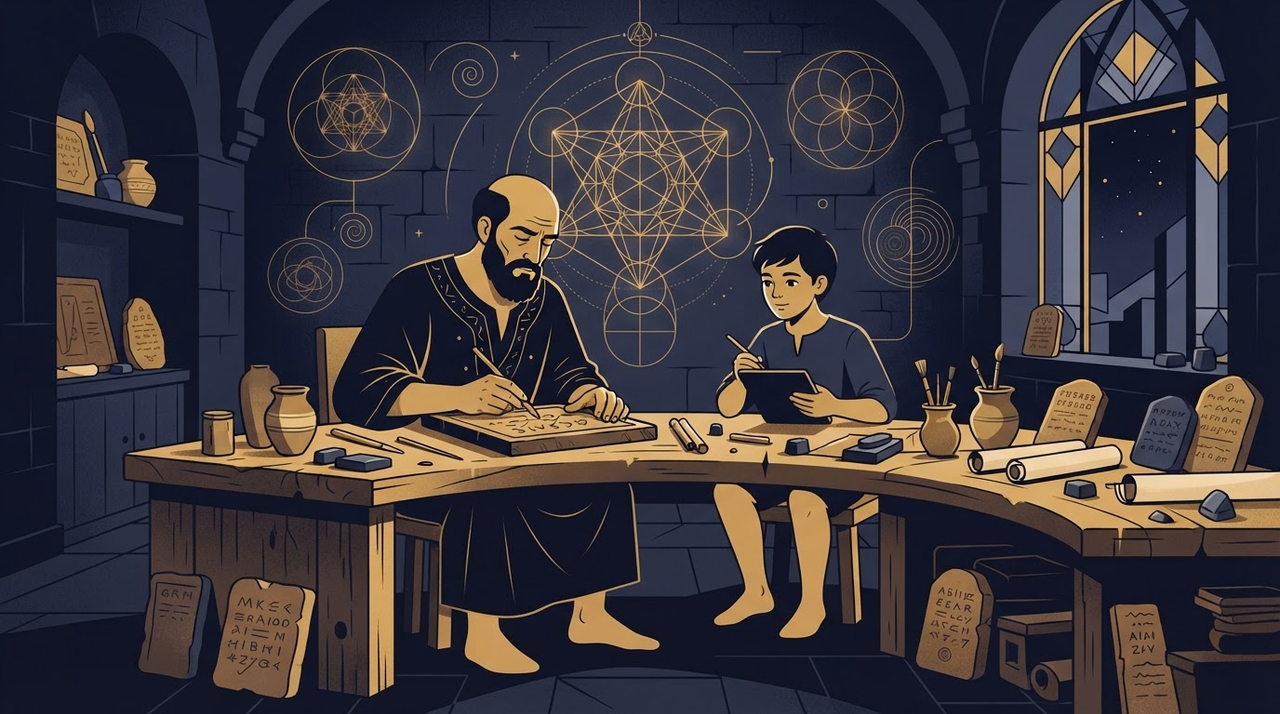
Picture a sun-baked workshop in ancient Egypt, where a boy shadows his father chiseling hieroglyphs into stone, the rhythm of hammer on chisel passing skill through generations like an unspoken inheritance. This scene captures the essence of workshop learning, a thread woven deep into the apprenticeship history that long predates the rigid rows of desks in modern classrooms. Why does this distinction matter? Because it reveals education not just as rote memorization, but as a social institution shaped by power, access, and the raw transmission of craft. Here, pedagogy—the how of skill-sharing—meets institutional history—the who organizes it—while curriculum and lived experience diverge across eras.
Apprenticeship thrived where knowledge guarded survival or status: hands-on immersion under a master's watchful eye. Formal schooling origins, by contrast, democratized (or bureaucratized) learning, prioritizing uniformity over lineage. Neither is a universal ladder; each model bent to its society's needs, with counterexamples abound—elite academies amid guilds, informal circles in literate empires.
Mesopotamian Scribal Training: Clay Tablets and Lineage
In the fertile crescent of Mesopotamia, around 3000 BCE, Sumerian edubba—'house of tablets'—blended workshop learning with early schooling. Young boys, often from scribal families, apprenticed to master scribes, grinding through cuneiform signs on wet clay. Teachers wielded rods for discipline; learners recited Sumerian and Akkadian texts aloud, mastering math for trade ledgers or omens. Access skewed elite: sons of officials, not farmers. Power flowed vertically—master to apprentice—functioning to staff temple bureaucracies. Yet counterevidence lurks: temple records hint at girls' rare inclusion, challenging the boys-only norm.
Echoes in Egyptian Workshop Lineages
Across the Nile, from 2500 BCE, artisans in Deir el-Medina villages formed hereditary workshops. A stonemason's son learned by imitation, handling tools under paternal gaze, speaking Middle Egyptian dialects laced with trade jargon. Roles rigid: learner as servant, teacher as lineage head. This model powered pharaonic monuments, access limited to guild-like families. Differences from Mesopotamia? Less literacy focus, more physical craft—no tablets, just stone and sweat.
Classical Greek Circles: Dialogue Over Drudgery
Fast-forward to 5th-century BCE Athens, where philosophical circles upended workshop rigidity. Plato's Academy and Aristotle's Lyceum gathered young men—freeborn males only—in shaded groves for Socratic questioning in Attic Greek. No chisels here; pedagogy was oral dialectic, curriculum logic and ethics. Teachers as guides, learners active arguers. Function: cultivating citizen-philosophers for the polis. Power more horizontal than hierarchical, though access barred women, slaves. Counterpoint: rhetorical schools like Isocrates' charged fees, mimicking elite apprenticeships.
Medieval Guilds: Masters, Journeymen, and the Oath
By 12th-century Europe, guilds formalized apprenticeship history's workshop learning pinnacle. In London or Florence, a 12-year-old bound by contract to a master goldsmith, speaking Middle English or Tuscan, swept floors before wielding tools. Progression: apprentice to journeyman to master, sealed by masterpiece. Roles enshrined: learner pledged obedience, teacher secrecy of trade. Access broadening slightly—urban poor entered via charity—but power monopolized by guilds regulating quality and wages. Function: sustaining crafts amid feudal flux. Differences abound: rural crafts stayed familial, unbound by charters.
Formal Schooling Origins: From Prussia to the Masses
The 19th century pivoted toward formal schooling origins. Prussia's 1763-1819 reforms under Frederick the Great mandated state schools, standardizing curriculum in German for literacy and obedience—factory-ready citizens. Pedagogy shifted: classrooms with bells, blackboards, one teacher per age cohort. Access expanded via compulsion, power centralized in state. Yet workshop echoes persisted: vocational tracks mimicked guilds. Globally, variations: France's lycées elite, America's common schools populist. Present-day context blends both—coding bootcamps revive apprenticeships amid university sprawl.
This evolution spotlights education as social institution: from guarded lineages to public utility, always negotiating inclusion and control.
Crosscurrents: Relevance Across Doors
- Business: Valuable Work—Guild models prefigure mentorship pipelines, valuing craft over credentials.
- Creativity: Craft—Workshop learning fuels intuitive making, as in Egyptian lineages.
- Writing & Memory—Scribal mnemonics underscore oral-written hybrids.
Reflecting on the Lineage
Apprenticeship history teaches no straight path, but a mosaic of adaptations. What lingers? The master's gaze in today's maker spaces, the circle's echo in online forums. Next step: Explore Aetheria's Education Door deeper—perhaps trace your own learning lineage.
Journal prompt: Recall a skill you learned hands-on versus in a classroom. How did the setting shape the knowing?