
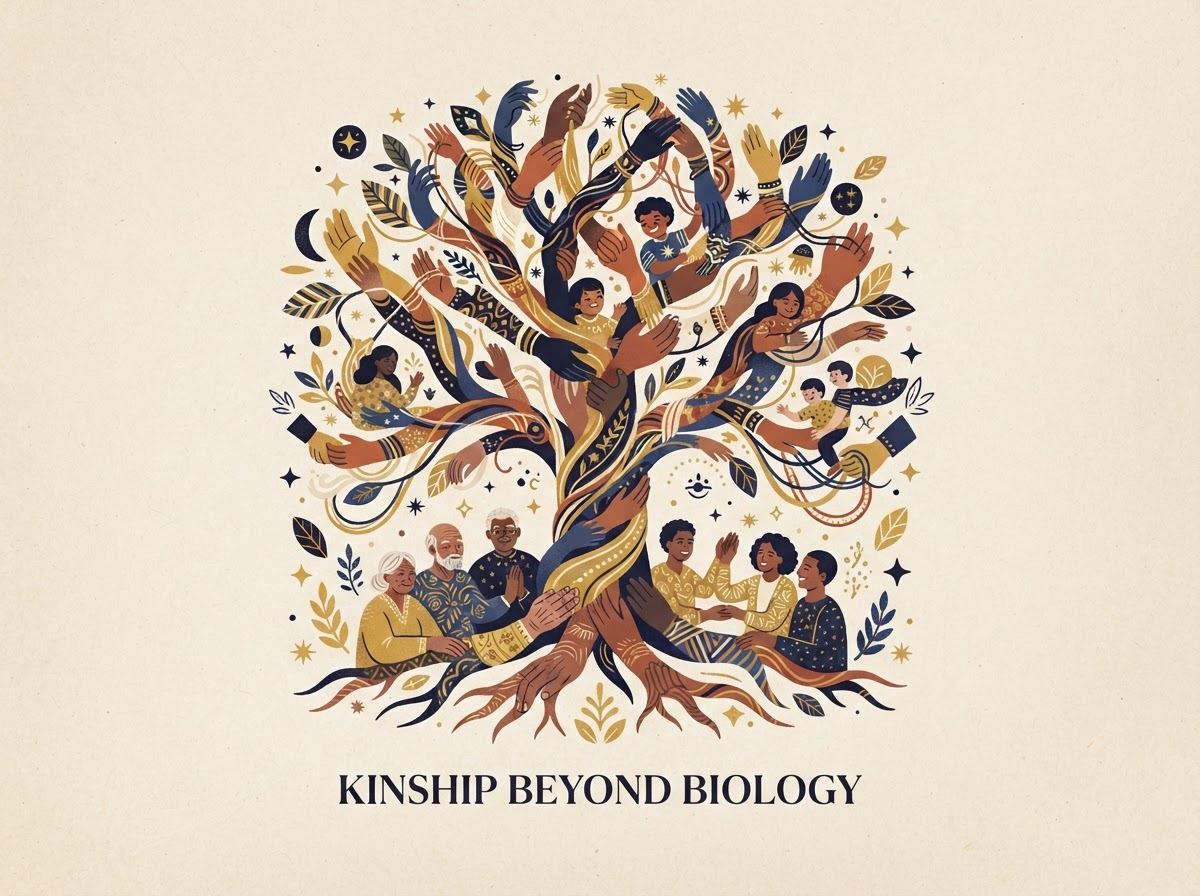
Beyond Blood Ties: Kinship Anthropology, Chosen Family History, and Cross-Cultural Lineage Traditions
Picture a bustling New York apartment in the 1980s, where friends huddle over flickering candles during the AIDS crisis, declaring each other family amid hospital visits and funerals. Or envision ancient Roman patricians extending their familia to loyal clients and slaves, forging bonds stronger than blood. In our era of blended households, surrogacy debates, and digital tribes, why does one tidy definition of family crumble under scrutiny? Kinship questions pulse today—divorces reshape lineages, migrations blur borders, chosen kin fill emotional voids. A single biological model fails because family structures cross-culturally reveal kinship anthropology as a tapestry of invention, not inevitability.
As students of existence, we probe these threads. Kinship anthropology, pioneered by figures like Claude Lévi-Strauss, defines relatives not by DNA alone but by social recognition: who shares obligations, inheritance, rituals. Contrast biology's fixed genes with history's fluid alliances—protect the journey by understanding both.
Kinship Anthropology: Social History Over Biological Models
Anthropology unmasks kinship as a cultural construct. Biologists trace descent via chromosomes; anthropologists chart maps of marriage, descent, and residence. David Schneider's 1980 work American Kinship dissected U.S. ideals—blood for nature, law for nurture—yet global cases explode this binary.
Family structures cross-cultural defy universals. Matrilineal Akan in Ghana prioritize mother's line; patrilineal Romans exalted the father. Enter chosen family history: elective bonds, like LGBTQ+ networks, echo ancient rites but defy blood primacy.
Place-Based Kinship Traditions: From Ancient Rome to Modern Chosen Families
Roman Familia: Household Empire (Ancient Rome, Latin sources)
In Republican Rome (c. 509–27 BCE), familia spanned blood kin, adopted sons, freed slaves, even property. The paterfamilias held life-and-death power, as Roman law codes like the Twelve Tables (450 BCE) attest. Lineage and adoption traditions here built empires through fictive ties—Julius Caesar adopted Octavian, birthing Augustus.
Akan Abusua: Matrilineal Clans (Ghana, Akan language ethnography)
Among Akan peoples of Ghana (pre-colonial to present), abusua matrilineages trace through mothers. Ethnographies like R.S. Rattray's 1923 Ashanti describe property vesting in uterine kin; a child belongs to mother's clan, uncles guide inheritance. Shared stools symbolize unity—kinship via descent, not just birth.
Japanese Ie System: Stem Family Endurance (Edo Period, Japan)
From 1603–1868, Japan's ie (house) bound generations to a main heir, per legal registers like village census scrolls. Hayashi Reiko's analyses show adoption of sons-in-law preserved the line; residence trumped biology, ensuring continuity amid samurai hierarchies.
Chosen Family in LGBTQ+ Organizing (United States, 1970s–1990s English archives)
In San Francisco's Castro district, 1970s–1990s ball culture and AIDS activism (documented in ACT UP records) birthed chosen families. Exiled from birth kin, queer organizers shared rent, care, mourning—bonds sealed by crisis, not courts, redefining lineage amid rejection.
Forging Kinship: Birth, Adoption, Rituals, and Power Dynamics
Kinship emerges via pathways: biological birth confers default ties; adoption (Roman adrogatio, Akan fostering) integrates outsiders legally. Naming rites bind spirits; shared food—commensality—in Akan feasts or ie hearths signals alliance. Rituals like blood oaths or Japanese ancestor veneration, plus laws (e.g., U.S. same-sex marriage post-2015), cement them.
Consent varies—children rarely choose; power tilts to elders or states. Anthropology distinguishes this from lived experience: rituals empower, yet enforce hierarchies. Seeker's Code: question who benefits.
- Birth: Innate, but culturally amplified.
- Adoption: Expands lineages deliberately.
- Ritual/Food: Elective intimacy builds trust.
- Law: State authority overrides tradition.
Comparative Table: Kinship Systems Across Time and Place
| System | Period/Location | Function | Pathway | Key Differences | Counterevidence |
|---|---|---|---|---|---|
| Roman familia | 509 BCE–Rome | Property control | Adoption, law | Patriarchal absorption | Maternal lines in plebs |
| Akan abusua | Pre-colonial–Ghana | Inheritance | Matriline birth | Uterine priority | Patrilocal marriages |
| Japanese ie | 1603–1868 Japan | Line continuity | Adoption, residence | House over blood | Biological preferences |
| LGBTQ+ Chosen | 1970s–1990s US | Emotional support | Ritual, crisis | Elective, fluid | Legal gaps persist |
This table highlights divergences: chronology shapes function, pathways evolve, yet counterevidence—like hybrid practices—shows no pure form.
Uncertainties, Impacts, and Authority in Contemporary Kinship
DNA tests unsettle oral histories; surrogacy pits contracts against tradition. Who suffers? Migrants severed from roots, children in custody wars. Authority fragments: states via law, elders via custom, individuals via choice. Anthropology observes; lived experience contests; religion interprets (e.g., ancestral spirits); legal practice enforces. Uncertainties abound—what of polyamorous networks tomorrow?
Cross-Door Explorations
Deepen your seeker's code:
The Ancestors | The First Laws | Sacred Places
Reflective Next Steps
In the dance of blood and choice, what kinships will you nurture? As students of existence, map your own—protect the journey ahead.
No model reigns supreme. Kinship anthropology invites curiosity: trace your traditions, honor the elective, question the givens. The universe unfolds in relations.