
Beyond the Lone Genius: How Collective Creativity in Workshops, Ateliers, and Guilds Shapes True Art
Picture a soaring Gothic spire piercing the medieval sky over Chartres, its stone carved with intricate tracery that defies gravity. We summon Leonardo da Vinci, the solitary polymath, brush in hand. Yet beneath that pinnacle labored generations of masons in lodges, passing chisels and secrets from master to apprentice under guild oaths. This is collective creativity at work—not a flash of individual genius, but communal making honed across bodies and years.
The lone genius myth endures, romanticizing art as the outburst of isolated brilliance. But peel back the canvas, and collaborative art reveals itself as the true forge of enduring works. From workshops and ateliers to guilds and quilting circles, creativity and society entwine, shaping skill through shared labor, authority, and transmission. In Aetheria’s library of human endeavor, we protect this journey, honoring the seeker’s code as students of existence.
Unveiling Collective Creativity in Historical Workshops and Ateliers
Medieval masons’ lodges in 12th- to 15th-century Europe exemplify this. These were not loose gatherings but structured communities where stonecutters, carvers, and glaziers dwelled in traveling workshops. Guild rules dictated progression: boys entered as apprentices at seven or eight, enduring seven years of bodily labor—fetching tools, mixing mortar, tracing templates—before journeyman status. Masters oversaw designs, but the spire rose through hundreds of hands, each imprinting muscle memory into the stone.
Across oceans and eras, Yoruba beadworking collectives in 19th-century Oyo, Nigeria, wove royal regalia from glass beads imported via trade routes. Women in family-based ateliers threaded patterns symbolizing power, their techniques guarded yet collectively refined. In the American Southwest, Pueblo pottery lineages among the Hopi and Acoma passed coiled forms and black-on-white slips through maternal lines, each vessel bearing the subtle marks of communal kilns fired in village plazas.
Kyoto’s yuzen dyeing houses, from the Edo period onward, sustained resist-dyeing for kimono silks. Artisans in master-apprentice ateliers applied rice-paste barriers with fine brushes, then layered dyes in sequence—a process demanding synchronized labor across rooms, where novices learned by watching elders’ hands move in ritual precision.
Apprenticeship: The Bodily Transmission of Craft Knowledge
From Labor to Lineage
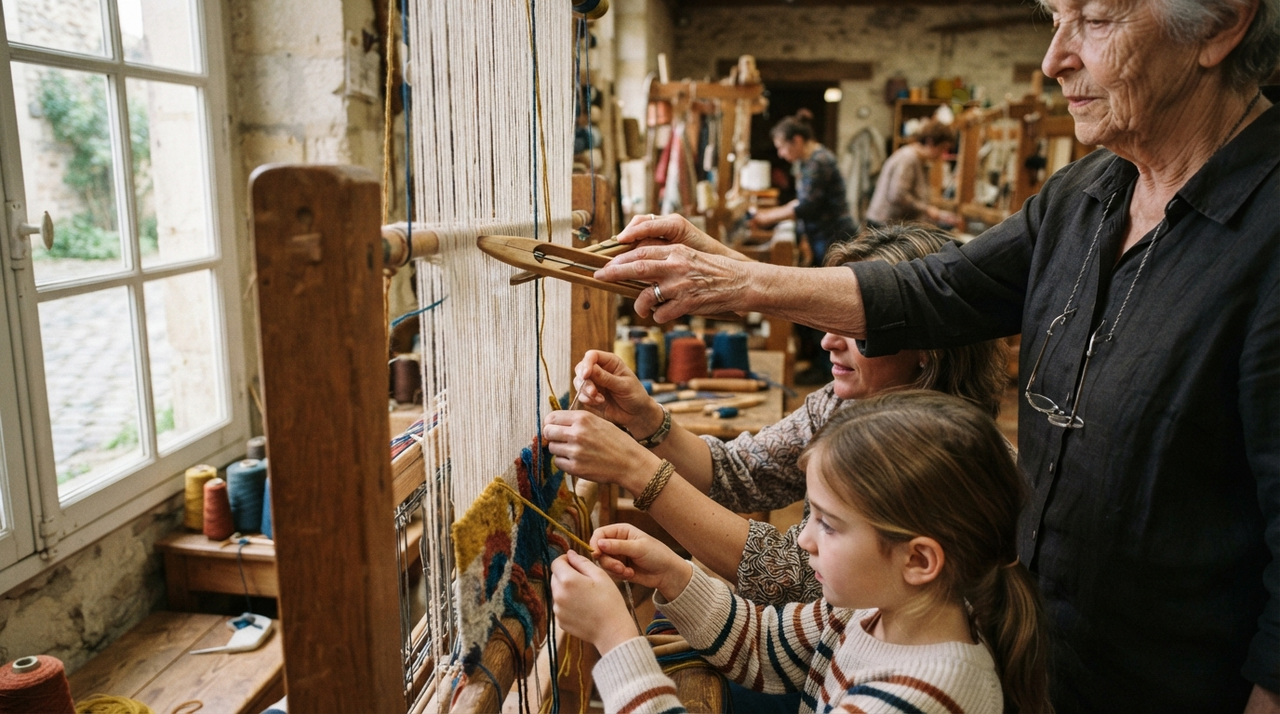
Craft knowledge travels not through words alone, but bodily—via the feel of clay yielding to thumbs in Pueblo coils or the chisel’s bite into limestone. Apprenticeship grants access: years of menial tasks build proprioception, the unspoken grammar of making. This contrasts the charismatic individual claim, where genius springs unbidden. Here, skill accrues communally, authority vested in the group’s survival.
Guilds enforced this with iron rules—fines for shoddy work, monopolies on local projects—while patrons like bishops or kings set expectations for scale and symbolism. In Oyo, community elders allocated credit to the collective, not a single bead-stringer, ensuring lineage continuity.
Credit, Authorship, and the Psychology of Distributed Cognition
Authorship shifts across cultures. European guild marks stamped cathedrals collectively, masters’ names fading beside the lodge’s emblem. Yoruba regalia credits the house or king’s court, Pueblo pots the clan. This fluidity challenges modern individualism, where the artist’s signature reigns.
Psychological theory offers a lens: distributed cognition posits intelligence as spread across people, tools, and environments—not locked in one skull. In ateliers, cognition distributes through shared templates, oral lore, and iterative critique, amplifying what solitary minds cannot.
Institutional conditions—guild charters, patron briefs—scaffold this, turning raw collaboration into lasting form.
Echoes in Business and Ancestral Doors
These patterns resonate beyond art. In Business, creative shops govern through partnerships mirroring guild ownership, balancing profit with craft preservation. The Ancestors door illuminates lineage transmission, where knowledge endures not as abstract inheritance but lived hands-on continuity.
Quilting circles in 19th-century American farms or Hollywood’s studio system of the 1930s—writers, directors, craftspeople under mogul oversight—further this thread, communal making fueling cultural icons.
A Seeker’s Reflection: Mapping the Collective Behind the Masterpiece
Next time a work captivates—a cathedral gargoyle, a beaded crown, a dyed silk panel—trace its collective hands. Who held the tools? What labors etched its form? In this mapping lies the seeker’s code: curiosity unveiling creativity and society’s quiet architecture. True art emerges not despite the many, but through them.