
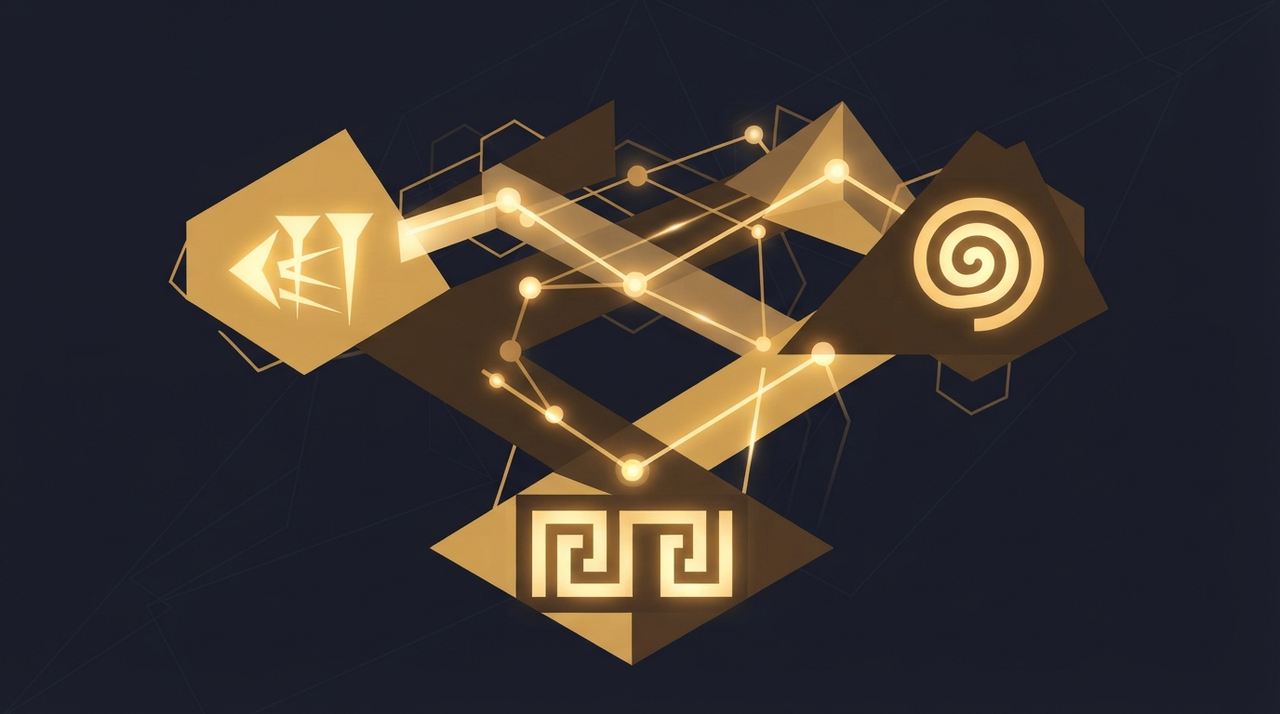
Bridging Aetheria's Doors: Philosophical Ethics Across Creation, Law, and Ancestors
Imagine standing at the threshold of the cosmic library, where ancient whispers echo through digital halls. In Aetheria AI's vast expanse, the Doors—portals to humanity's deepest wisdom—invite us not just to peek, but to cross. Yet crossing demands more than curiosity; it calls for philosophical ethics as a living bridge. This isn't dusty abstraction, but applied philosophy that connects realms: the Creation Door's primal sparks, the First Laws Door's communal bindings, and the Ancestors Door's echoing legacies. Here, we track one piercing question through these thresholds: What obligations arise from our beginnings?
This query pierces the heart of comparative ethics, revealing how origins—be they cosmic births, societal covenants, or bloodlines—shape duty. As we journey, we'll distinguish the descriptive record (what texts attest), interpretation (ethical motivations they suggest), and speculation (reconstructed practices). Protect the journey, for in bridging Aetheria's Doors, we uncover the Foundation Stone of human flourishing: ethics not as isolated theory, but as connective tissue across time and tradition.
The Creation Door: Obligations from the Primal Spark
Step through the Creation Door, and chaos yields to order in a thunderclap of myth. Ancient cosmogonies don't merely narrate beginnings; they encode ethical imperatives. What do these origins obligate us to? The descriptive record, drawn from attested texts, points to harmony as the first duty.
Consider the Babylonian Enuma Elish, etched on seven tablets around 1800 BCE. Here, primordial waters churn until Marduk slays Tiamat, fashioning the world from her corpse—heaven from her skull, earth from her body. The epic's ethical undercurrent? Creation demands maintenance. Marduk's victory imposes cosmic order, obligating gods (and by extension, humans) to uphold it. Interpretation reveals a normative claim: beginnings aren't neutral; they bind us to preserve the fragile balance wrested from void.
Maat as the Ethical Horizon in Kemetic Thought
Across the Nile, Kemetic (ancient Egyptian) traditions offer a counterpoint, equally attested in pyramid texts and temple inscriptions from the Old Kingdom onward. Maat—depicted as a goddess with ostrich feather—embodies truth, balance, and justice emerging from Nun's inert waters. The creator god Ptah speaks the world into being at Memphis, or Atum self-generates on the benben mound. What obligates? The daily renewal of Maat. Pharaohs, as living Horus, recite: "I have come that I may make Maat endure." Descriptive scholarship, from James Allen's translations of Coffin Texts, confirms this as ritual fact. Normatively, it urges individuals to live "in Maat," aligning personal actions with cosmic rhythm.
Speculation enters when we reconstruct household practice: families offering bread and beer at dawn altars, mirroring creation's daily rebirth. These aren't universal mandates but local calls—Mesopotamian strife-to-order versus Kemetic equilibrium. Yet both whisper: beginnings obligate stewardship. In Aetheria's Creation Door bridge, this forms the raw clay of philosophical ethics.
The First Laws Door: Communal Duties Forged in Code
The question evolves as we pivot to the First Laws Door: if beginnings spark obligation, what does codified law ask of community? Here, ethics shifts from mythic poetry to stele-inscribed prose, demanding collective reciprocity.
The Code of Hammurabi (c. 1750 BCE), that towering black diorite pillar, opens not with rules, but prologue. King Hammurabi declares himself raised by Anu and Enlil "to make justice appear in the land, to destroy the wicked and the evil, to prevent the strong from oppressing the weak." Descriptive record from the Louvre's artifact: law as divine gift, restoring creation's order post-flood chaos. Interpretation? A deontological pivot—duty flows from sovereign mediation, not individual whim. "Eye for an eye" (Law 196) isn't vengeance but proportional restoration, echoing Marduk's carve-up.
Law's Community Call: From Prologue to Practice
Contrast with Kemetic law's subtler weave. No single code survives intact, but Middle Kingdom stelae and Late Period demotic papyri attest judges invoking Maat. The Negative Confession from the Book of the Dead (Spell 125) lists 42 sins renounced before Osiris: "I have not stolen," "I have not killed." Established scholarship, like Raymond Faulkner's editions, frames this as communal ethic—pharaoh and people co-sustain Maat against isfet (chaos). Normative claim: law obligates community vigilance, where personal purity upholds the whole.
Speculatively, town assemblies in Deir el-Medina (workers' village, 1500 BCE) debated disputes under Maat's gaze, blending law with ancestral custom. Mesopotamian equivalents? Scribes enforcing Hammurabi's tariffs on merchants, fostering trust in bazaars. What law asks: not blind obedience, but active co-creation of justice. Across Creation and Law and Ancestors, origins now pulse through societal veins, turning individual duty into shared applied philosophy.
- Mesopotamian prologues prioritize royal equity, framing law restoratively.
- Kemetic Maat integrates personal and cosmic scales, ethically holistic.
- Both reject anarchy, obligating communities to echo creation's intent.
The Ancestors Door: Debts to Those Who Came Before
Our question finds its fullest echo in the Ancestors Door: what do we owe those who birthed our world? Veneration here isn't sentiment; it's ethical architecture, linking past to present.
In Kemetic tradition, ancestors (akhu) dwell in the Duat, sustained by offerings. Pyramid Texts (Utterance 267) urge: descendants feed the ka (vital essence) of forebears. Descriptive attestations abound—tomb chapels stocked with model servants for eternal service. Interpretation: obligation flows backward, ensuring ancestors' Maat-enduring rest secures the living's prosperity. Neglect risks chaos; offerings ma'at-ify the chain.
Mesopotamian Echoes: Ghosts and Gods of Lineage
Mesopotamian texts, like the Gudea Cylinders (c. 2100 BCE), invoke etemmi (ancestral ghosts) in temple foundations. Neglected dead haunt as disease-bringers, per incantation tablets. Normatively, this demands filial piety—regular libations at bit abini (family chapels). Scholarship from Aage Bentzen distinguishes deified kings (like Naram-Sin) from common shades, but the ethic holds: origins obligate repayment, lest beginnings unravel.
Speculation on practice? Village feasts where elders recite genealogies, blending law's equity with creation's order. In both traditions, ancestors embody the Foundation Stone—unseen roots nourishing the tree. Owing them reinforces communal law and cosmic beginnings, a triad unbroken.
In the cosmic library, ancestors whisper: protect the journey by honoring the path laid before.
Bridging Aetheria's Doors: Comparative Ethics in the Between
Now, the true Aetheria Doors bridge: how does tracking our question yield philosophical ethics? Descriptive records—tablets, papyri—stay faithful: Mesopotamian dynamism versus Kemetic stasis. Interpretations respect nuances: Hammurabi's retributive justice complements Maat's preventive harmony, neither flattening the other.
Normative claims emerge in the between: beginnings obligate across scales—personal offerings sustain cosmic order, law mediates ancestral debts. Speculation, cautiously, revives practices: imagine a modern scribe balancing a ledger under Maat's feather, or a marketplace judge invoking Hammurabi's shade. This comparative ethics avoids universalism, honoring local textures while revealing shared humanity.
Descriptive Record, Normative Claim, and Living Application
Established scholarship (e.g., Jean Bottéro on Mesopotamian piety) grounds us; interpretations like Jan Assmann's "Maat" as cultural memory propel; speculation—like household rituals inferred from ostraca—invites applied philosophy. Cross-Door relevance? Creation's spark ignites Law's flame, fanned by Ancestors' breath. One disrupts, all falter.
- Creation obligates preservation.
- Law communalizes it.
- Ancestors personalize repayment.
In Aetheria's cosmic library, this triad forms ethical constellations—stars aligning not by force, but resonance.
Philosophy as Living Bridge: Lessons for Today
Why bridge these Doors? Because philosophical ethics thrives in motion. Picture a community today: facing disruption, it recalls creation's fragility, law's equity, ancestors' claims. Applied thus, ethics becomes practice—deliberating AI governance with Maat's balance, or restorative justice echoing Hammurabi.
Humane storytelling reveals no victors, only voices: the sculptor chiseling Hammurabi's stele under Babylonian stars, the priest weighing hearts against feathers. Curiosity bids us listen, bridging not to conquer traditions, but to enrich our own.
Protect the journey. The Foundation Stone endures when we build upon it, not erase.
Your Next Step in the Cosmic Library
Return enriched? Choose one Constellation link: Dive deeper into Maat's texts via the Creation Door, trace Hammurabi's epilogues through First Laws, or explore akhu rituals at Ancestors. Follow it, then note what changes upon re-entering the Library. Does the question sharpen? Obligations multiply? Here, philosophy lives—not as echo, but as bridge eternal.